
Many people hear "generic drug" and immediately think: copy. Like a knockoff handbag or a fake designer watch. But here’s the truth: generic drugs aren’t copies. They’re scientifically proven replacements. And the difference between myth and reality could save you hundreds - or even thousands - of dollars every year.
What Exactly Is a Generic Drug?
A generic drug contains the exact same active ingredient as its brand-name counterpart. Same chemical. Same dose. Same way of working in your body. If you take a generic version of atorvastatin, you’re getting the same thing as Lipitor. Same for omeprazole instead of Prilosec, or lisinopril instead of Zestril. The FDA requires this. No exceptions.The only differences? The color, shape, size, flavor, or filler ingredients - the stuff that doesn’t affect how the drug works. These are called inactive ingredients, or excipients. They help with manufacturing, stability, or taste. A generic pill might be white and oval instead of blue and capsule-shaped. That’s it. The medicine inside? Identical.
The FDA’s Strict Rules
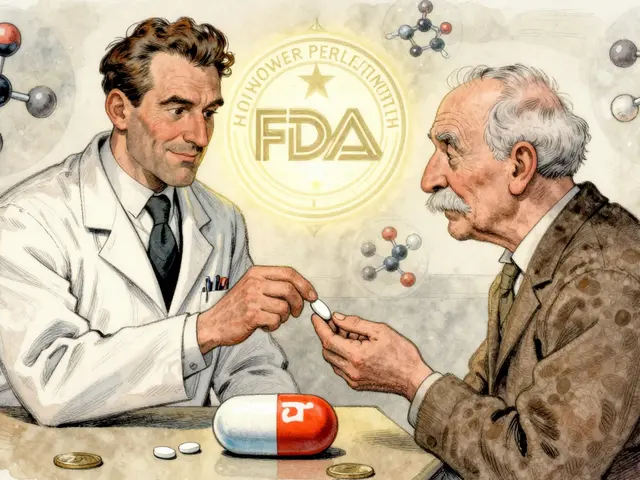
The U.S. Food and Drug Administration doesn’t just say "these are the same." They prove it. Before a generic drug hits the shelf, the manufacturer must show bioequivalence. That means: the generic delivers the same amount of active ingredient into your bloodstream, at the same speed, as the brand-name drug.The standard? The 90% confidence interval for both the area under the curve (AUC) and peak concentration (Cmax) must fall between 80% and 125% of the brand-name drug. That’s not a guess. That’s hard science. And it’s not just one test. They do it with dozens of healthy volunteers, under controlled conditions. The FDA reviewed over 2,000 generic applications in 2022 alone. Every single one had to pass this test.
And here’s something most people don’t know: the FDA tests the actual pills you get at the pharmacy. They pull samples off shelves and check the active ingredient content. In 2022, their lab found that generics contained, on average, 99.2% of the labeled active ingredient. Brand-name drugs? Same number. No difference.
Why Are Generics So Much Cheaper?
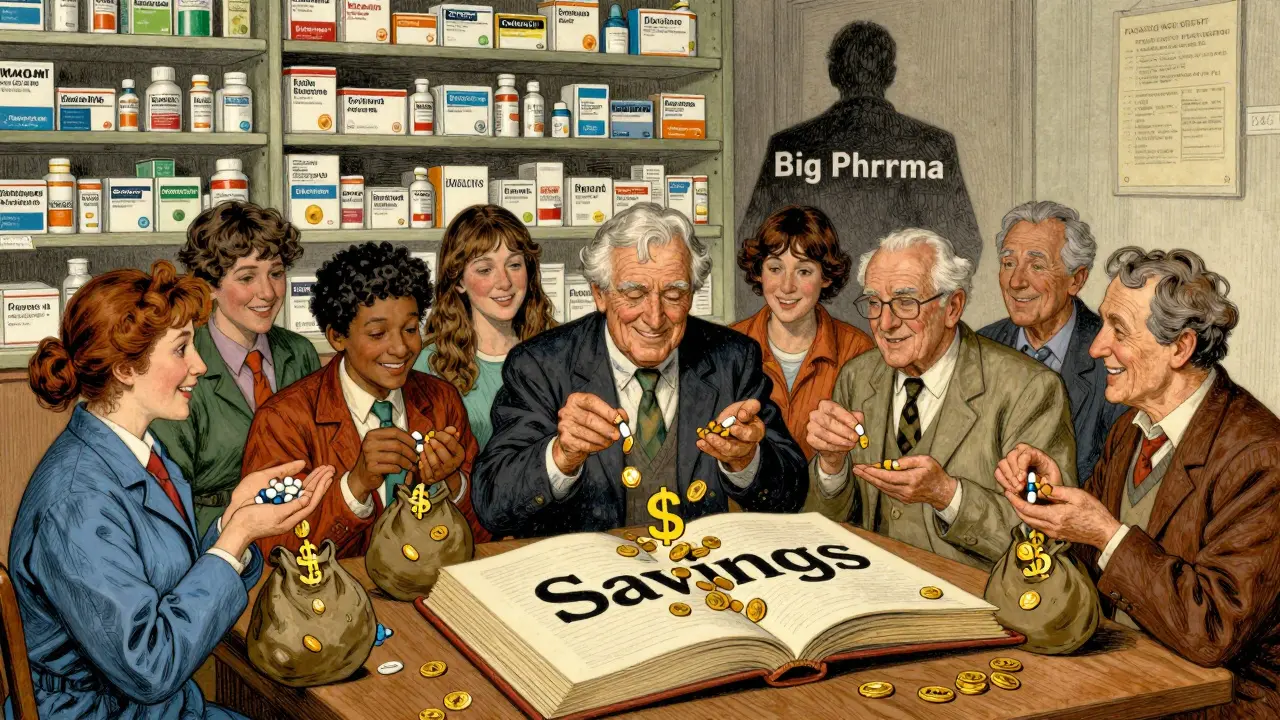
Because they don’t have to pay for the original research. Brand-name companies spend over $2 billion on average to develop a new drug - clinical trials, animal studies, patent filings, marketing. That cost gets baked into the price.Generic manufacturers? They skip all that. They just prove their version works the same. That’s why the average generic costs 85% less. In 2023, the average generic prescription was $4.27. The brand-name version? $61.85. That’s not a small savings. That’s life-changing for people on fixed incomes or managing chronic conditions.
And it’s not just individuals. In 2022, generics made up 90% of all prescriptions in the U.S. But they only accounted for 23% of total drug spending. That’s billions saved every year - for patients, insurers, Medicare, Medicaid.
What About Those Stories of Side Effects or Failures?
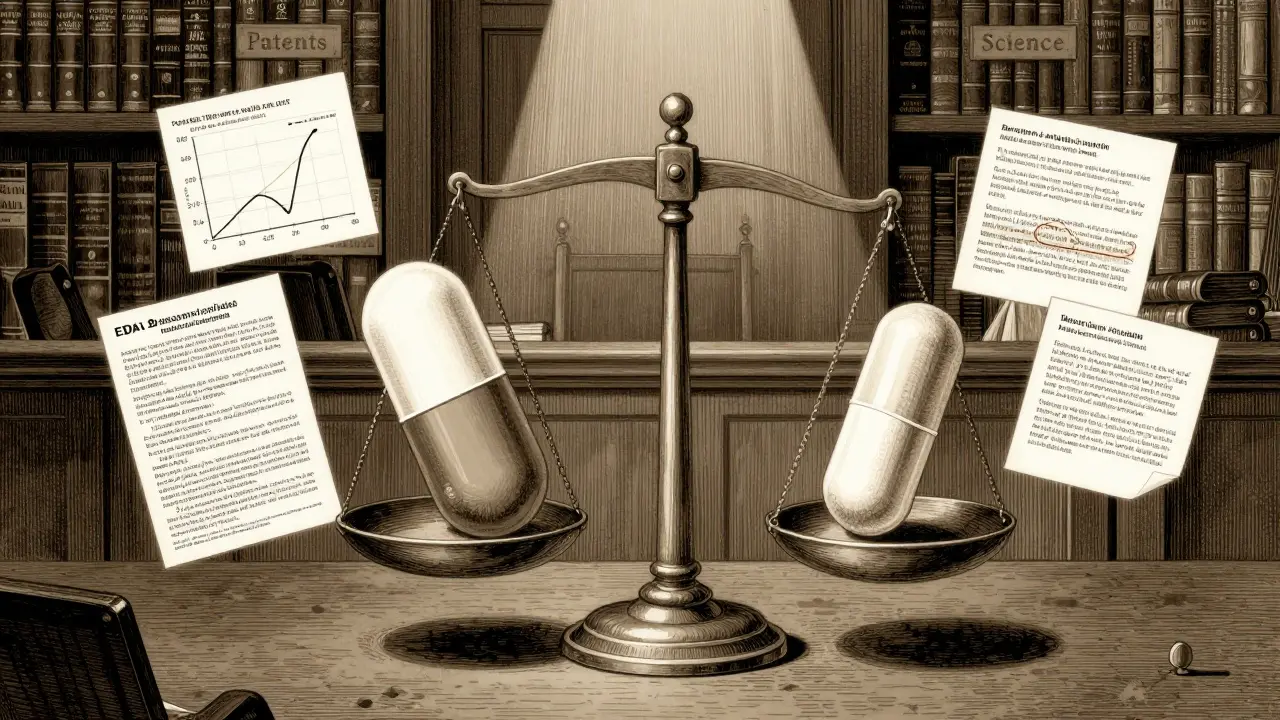
You’ve heard them. "My generic made me dizzy." "My seizure came back after switching." "My thyroid meds didn’t work like before." These stories are real. But they’re rare. And they’re almost never about the active ingredient.The FDA looked at 1,842 reports of possible problems with generic drugs between 2018 and 2022. After investigation, only 5.5 cases per year - 0.3% - were confirmed as actual bioequivalence failures. That’s less than one in every 300,000 prescriptions.
So what’s going on? Two things:
- Narrow Therapeutic Index (NTI) drugs - These are medications where even tiny changes in blood levels can cause big problems. Think warfarin (blood thinner), levothyroxine (thyroid), and some seizure meds like phenytoin. For these, doctors sometimes stick with brand-name to avoid any risk. But even here, studies show 92% of patients do fine on generics - if they’re monitored closely.
- Inactive ingredients - Some people are sensitive to dyes, fillers, or preservatives. If you switch from a brand-name drug with one type of coating to a generic with a different one, you might get mild stomach upset or a rash. That’s not the drug failing. That’s your body reacting to something new. Switching back usually fixes it.
For 96% of all other drugs - antibiotics, blood pressure pills, antidepressants, statins - generics work exactly the same. No difference in effectiveness. No difference in side effects. Just lower cost.
What Do Real People Say?
Over 1.2 million reviews on Drugs.com show generics rated 7.2 out of 10. Brand-name drugs? 7.5. That’s practically the same.On Reddit’s r/pharmacy, out of 4,328 posts about switching from brand to generic:
- 67% said they noticed no difference.
- 23% reported minor side effects - mostly stomach upset or headaches - that went away after a few days.
- 10% involved NTI drugs, where the patient or doctor chose to stay on brand.
A Kaiser Family Foundation survey found that 89% of people who got generics were satisfied. Nearly half of Medicare Part D users saved over $500 a year just by switching.
And yet - 65% of patients still ask for brand-name drugs because they think generics are weaker. That’s a myth. The FDA found that 43% of people believe generics contain only 20-80% of the active ingredient. That’s wrong. They contain the same. Exactly.
When Can You Expect a Generic?
Brand-name drugs get patent protection for 20 years from the date they’re filed. But that doesn’t mean they’re protected for 20 years on the market. Clinical trials take years. The FDA approval process takes years. So the real clock starts ticking after approval.Often, generics become available 5-12 years after the brand hits the market. Sometimes, patent lawsuits delay it. But when the patent expires, multiple companies can make the generic. That competition drives prices down even further.
In 2023 alone, over $28 billion in brand-name drug sales became eligible for generics - including big names like Eliquis and Entyvio. That’s going to mean massive savings for patients.
What About Biosimilars?
Some drugs - especially biologics like insulin, rheumatoid arthritis meds, or cancer treatments - are made from living cells. They’re too complex to copy exactly. So we have biosimilars: highly similar, but not identical, versions.As of 2023, biosimilar use is still low - under 5% of the market. But they’re growing fast. The FDA is approving more every year. And they’re still cheaper than the original. Expect this number to jump to 15% by 2027.
What Should You Do?
If you’re prescribed a brand-name drug, ask: "Is there a generic?"Most of the time, the answer will be yes. And it’s safe. And it’s cheaper.
For chronic conditions like high blood pressure, diabetes, or high cholesterol - where you take the same drug every day - switching to generic is one of the smartest financial moves you can make.
For NTI drugs - warfarin, levothyroxine, certain seizure meds - talk to your doctor. They may recommend sticking with brand, or they may say generic is fine with regular blood tests.
Don’t let the color or shape fool you. Don’t believe the myths. Generics aren’t copies. They’re proven, tested, regulated, and just as effective.
And if your pharmacist switches your prescription without asking? That’s legal in 49 states. It’s not a mistake. It’s policy. Designed to save you money.
Ask questions. Get facts. Don’t pay more because you’re afraid. The science is clear: generics work.
Are generic drugs less effective than brand-name drugs?
No. Generic drugs must meet the same FDA standards as brand-name drugs. They contain the same active ingredient, in the same strength, and deliver it the same way. Studies show they work just as well for 96% of medications. The only exceptions are a small group of drugs called narrow therapeutic index (NTI) drugs, where minor differences in blood levels matter - but even then, most patients do fine on generics with proper monitoring.
Why do generic drugs look different from brand-name drugs?
U.S. trademark laws require generic drugs to look different from brand-name versions. That means different colors, shapes, or sizes. But the medicine inside is the same. The differences are only in inactive ingredients - like fillers, dyes, or coatings - which don’t affect how the drug works. These changes are purely for legal reasons, not medical ones.
Can generic drugs cause more side effects?
Rarely. Most side effects from generics are due to inactive ingredients - like dyes or preservatives - that some people are sensitive to. If you notice new side effects after switching, it’s likely not the active drug changing, but something in the pill’s coating or filler. Talk to your pharmacist or doctor. They can switch you to a different generic version or, if needed, back to the brand-name drug.
Are all generic drugs approved by the FDA?
Yes. Every generic drug sold in the U.S. must be approved by the FDA. Manufacturers must prove bioequivalence - meaning the drug performs the same in the body as the brand-name version. The FDA also inspects manufacturing facilities and tests random samples from the market. Unapproved generics are illegal and unsafe.
Why do some doctors still prescribe brand-name drugs?
Sometimes, it’s habit. Other times, it’s for narrow therapeutic index (NTI) drugs like warfarin or levothyroxine, where doctors prefer to minimize any possible variation. But research shows that in 96% of cases, generics work just as well. Many doctors now default to generics because they’re just as effective and save patients money. If you’re unsure, ask your doctor if a generic is appropriate for your condition.
Can I ask for a brand-name drug even if a generic is available?
Yes. In 28 states, you can ask your pharmacist to give you the brand-name drug even if a generic is available - and pay the generic price. In other states, your doctor must write "dispense as written" on the prescription. If cost is a concern, always ask your pharmacist about pricing options. Sometimes the brand-name drug is priced the same as the generic - especially with insurance.





Jane Lucas
I switched my blood pressure med to generic last year and haven't looked back. Saved me $80 a month. My doctor said it's the same stuff, and honestly, I feel better now that I'm not stressing about the cost.
Simple as that.
James Bowers
It is imperative to underscore that the regulatory framework governing generic pharmaceuticals in the United States is among the most rigorous in the world. The bioequivalence thresholds established by the FDA are not merely guidelines-they are statistically validated benchmarks that ensure therapeutic parity. To suggest otherwise is to disregard empirical evidence and scientific consensus.
Will Neitzer
James, you're absolutely right-the FDA's standards are non-negotiable. But let’s not forget the human side: millions of people rely on generics just to afford their prescriptions. I’ve seen patients cry because they couldn’t pay for brand-name insulin. Generics aren’t just science-they’re dignity.
And yes, the data supports it: 99.2% active ingredient accuracy, same as brand. That’s not luck. That’s accountability.
Janice Holmes
OMG I CAN’T BELIEVE PEOPLE STILL THINK THIS. I took a generic for my anxiety and I felt like I was drowning in a vat of lukewarm soup for three days. My brain felt like it was wrapped in saran wrap. They’re NOT the same. The FDA doesn’t test what’s in your actual pill-it tests the *batch*. What if your pharmacy got the bad one? WHAT IF?
Also, why do generics always taste like chalk? That’s not coincidence. That’s corporate sabotage.
Olivia Goolsby
THEY’RE LYING TO YOU. EVERY SINGLE TIME. The FDA? Controlled by Big Pharma. The ‘bioequivalence’ test? A joke. They only test on young, healthy volunteers-what about elderly people with liver issues? Or kids? Or people on 7 other meds? And don’t get me started on the fillers-phthalates, titanium dioxide, lactose-they’re all poison. I read a blog once that said generics are made in China by monkeys with a stapler. And now my thyroid is ‘off’-it’s the generic. I know it. I feel it in my bones. The government doesn’t want you to know this because they’re making billions off your fear. Also, my cousin’s neighbor’s dog got sick after eating a generic pill. Coincidence? I think not.
Gerald Tardif
Jane, you’re doing great. Stick with the generic. And Janice? I get it-you had a rough experience. But one bad pill doesn’t mean the whole system’s broken. Try switching to a different generic manufacturer. Some use different fillers. Your pharmacist can help. And Olivia? I know your fear is real, but let’s not let paranoia drown out facts. The science is solid. You’re not alone. We’ve got your back.
Monika Naumann
It is a profound embarrassment that the United States, a nation that once led the world in pharmaceutical innovation, now permits such inferior substitutes to be marketed as equivalent. In India, we do not compromise on quality. Our generics are manufactured under strict GMP standards, and we export them globally. Yet you allow your citizens to be deceived by color and shape. Shameful.
Elizabeth Ganak
hii! i live in india too and we have so many good generic brands here like cipla and sun pharma. my dad takes generic blood pressure pills and he’s been fine for 5 years. i think people in the us just don’t know how to ask for the right one. also, pharmacists here just give you the cheapest one and you don’t even notice. it’s just medicine lol.
Nicola George
So let me get this straight-you’re telling me the government is saving me money… by giving me a white pill instead of a blue one? And I’m supposed to be grateful?
Meanwhile, my insurance company just raised my premium by $200. Who’s really winning here? 😏
Raushan Richardson
Y’all are overthinking this. Generic = same medicine. Cheaper = more money for coffee, Netflix, or that weird plant you’ve been meaning to buy.
Stop stressing. Your body doesn’t care what color the pill is. It just wants the chemistry to work. And guess what? It does.
Go take your meds. You got this.
Robyn Hays
I love how this post breaks down the science but also acknowledges real human experiences. Like, yeah, sometimes switching to a new generic gives you a weird headache because of the coating-or maybe your body just needs time to adjust. But that’s not the drug failing. That’s your system recalibrating. It’s like switching from cotton socks to bamboo ones-same function, different feel. And honestly? The fact that 90% of prescriptions are generics and only 23% of spending? That’s the real win. We’re not just saving money-we’re rethinking how healthcare works.
Liz Tanner
My mom was terrified to switch from brand-name levothyroxine. She’d been on it for 15 years. We sat down, looked at the FDA data together, talked to her pharmacist, and tried a generic. She’s been on it for two years now. Her TSH levels are perfect. She says she feels more relaxed knowing she’s not wasting money.
It’s not magic. It’s math. And it’s medicine.
Ask. Learn. Trust the data.