
Statin Interaction Risk Checker
Check potential muscle damage risk when combining statins with other medications. This tool reflects the latest clinical guidelines from the article.
Statins save lives. They lower cholesterol, reduce heart attacks, and prevent strokes in millions of people worldwide. But for some, the benefits come with a painful trade-off: muscle pain, weakness, and in rare cases, life-threatening muscle damage. The real danger isn’t the statin itself-it’s what happens when it mixes with other drugs. This isn’t theoretical. It’s happening in clinics, pharmacies, and living rooms every day.
Why Some Statins Are Riskier Than Others
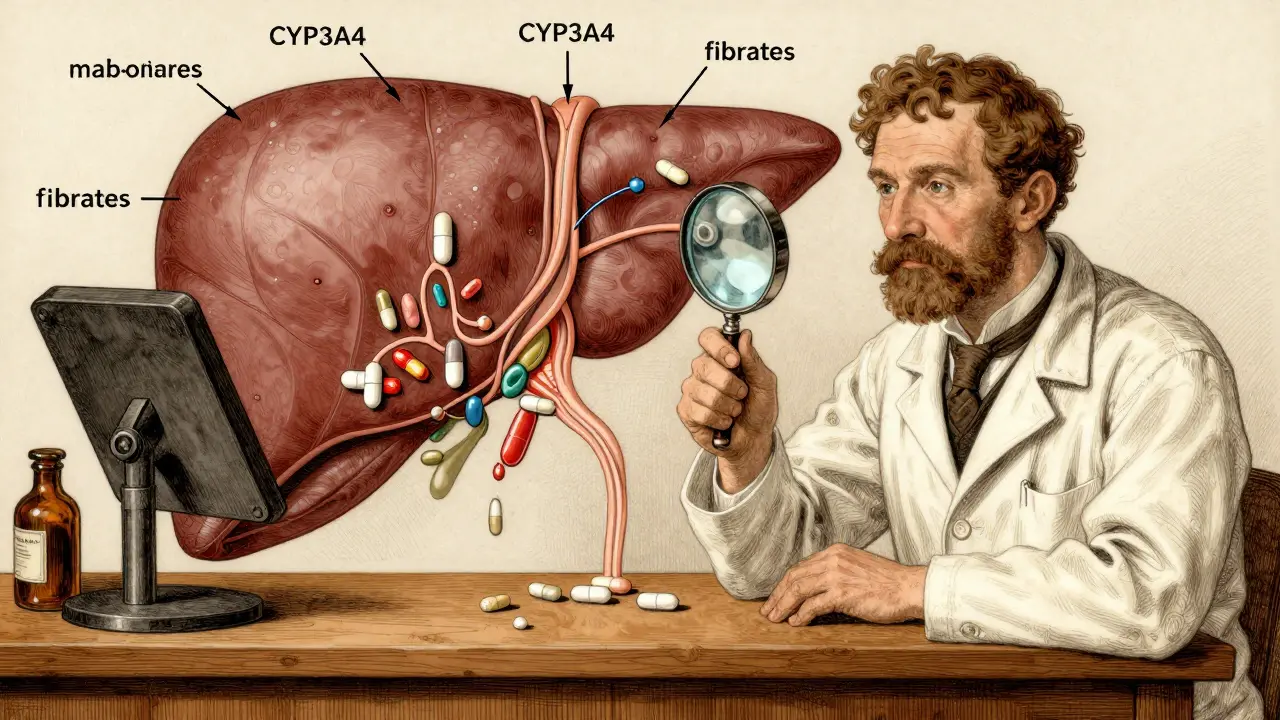
Not all statins are created equal. Some sit quietly in the liver, doing their job. Others wander into muscle tissue and cause trouble. The difference comes down to chemistry. Lipophilic statins-like simvastatin, a lipid-lowering medication metabolized primarily by the CYP3A4 enzyme, lovastatin, and atorvastatin-are fat-soluble. That means they easily slip into muscle cells. Hydrophilic statins-pravastatin, rosuvastatin, and fluvastatin-are water-soluble. They stay mostly in the liver. This small chemical difference has big consequences.Studies show that pravastatin causes muscle symptoms in as few as 0.6% of users. Meanwhile, rosuvastatin can trigger muscle pain in up to 12.7% of people. Why such a gap? It’s not just potency. It’s how the body handles each drug. Simvastatin is 95% broken down by CYP3A4, a liver enzyme that’s easily blocked by other medications. When that enzyme shuts down, simvastatin builds up in the blood-sometimes ten times higher than normal. That’s when muscle damage starts.
Top Medications That Make Statin Myopathy Worse
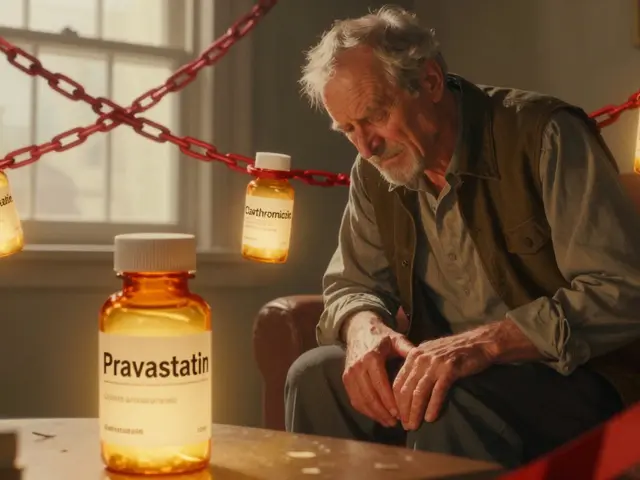
The biggest danger isn’t from one drug alone-it’s from combinations. Certain medications are like keys that jam the lock on statin metabolism. The worst offenders:- Clarithromycin and erythromycin: These macrolide antibiotics block CYP3A4. A 10-day course of clarithromycin can spike simvastatin levels by 10-fold. That’s why the NHS recommends stopping simvastatin or lovastatin during these antibiotics. Azithromycin? Safe. It doesn’t touch CYP3A4.
- Cyclosporine: Used after organ transplants, this immunosuppressant can increase statin levels by 3 to 13 times. No statin is truly safe with cyclosporine. Pravastatin is the least risky, but even then, dose limits apply.
- Gemfibrozil: This fibrate is a double threat. It blocks statin clearance and may directly damage muscle tissue. The FDA and Health Canada issued black box warnings for this combo. Fenofibrate? Much safer.
- Diltiazem and verapamil: These blood pressure drugs inhibit CYP3A4 and OATP transporters. The FDA now limits simvastatin to 20mg daily if taken with either.
Even over-the-counter supplements can play a role. Red yeast rice contains a natural form of lovastatin. Taking it with a prescription statin? That’s like doubling your dose-without the safety monitoring.
Who’s Most at Risk?
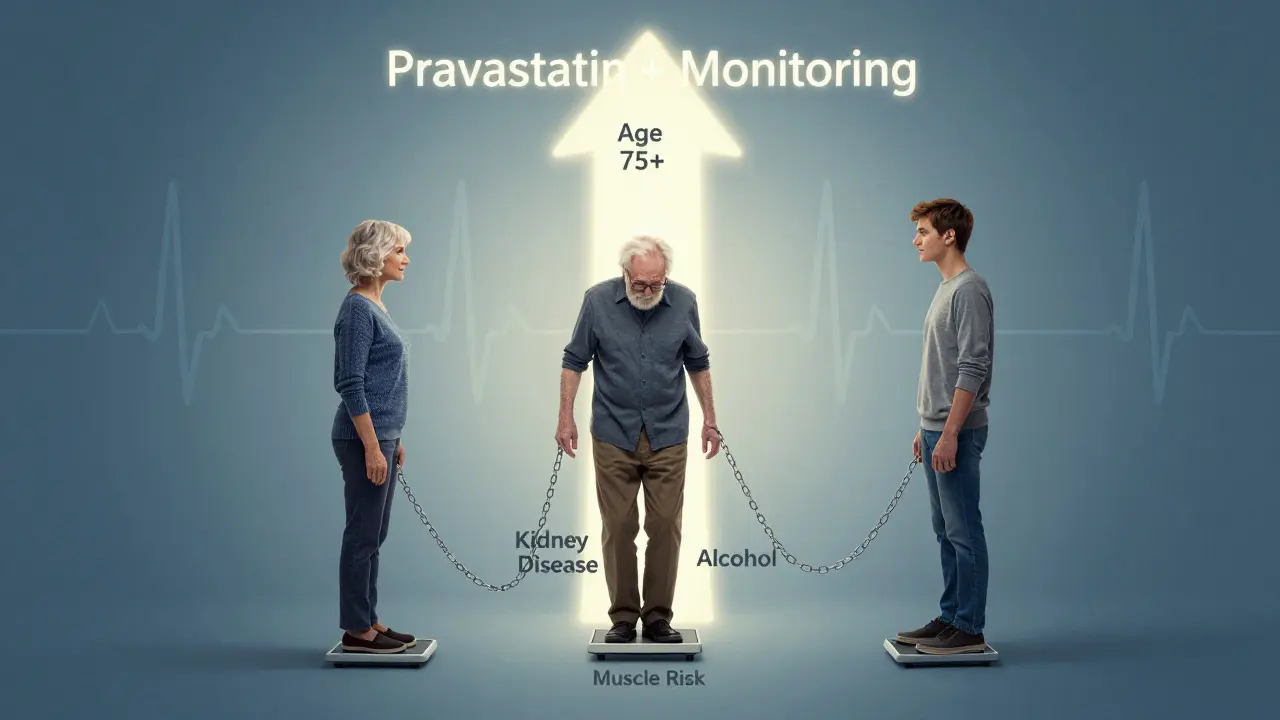
It’s not just about the drugs. Your body matters too. Seven major risk factors stack the deck:- Age over 75
- Small frame or low body weight
- Chronic kidney disease
- Hypothyroidism (underactive thyroid)
- Heavy alcohol use
- Intense physical activity
- Diabetes
One study found that a 78-year-old woman with mild kidney disease, taking simvastatin 40mg and diltiazem, had a 1-in-20 chance of developing muscle damage over a year. That’s 20 times higher than a healthy 50-year-old on the same dose. Age isn’t just a number-it’s a biological signal that the liver and kidneys are slowing down. Drugs build up. Muscles get stressed.
What Does Muscle Damage Look Like?
Myopathy isn’t just soreness. It’s persistent, unexplained muscle pain or weakness that doesn’t go away with rest. You might feel it in your thighs, shoulders, or back. It’s not the sharp pain of a pulled muscle-it’s a dull, deep ache that lingers. You might struggle to climb stairs, lift your arms, or get up from a chair.The red flag? A blood test showing creatine kinase (CK) levels more than 10 times the normal upper limit. That’s the clinical definition of statin-induced myopathy. Rhabdomyolysis-when muscle breaks down and leaks into the bloodstream-is rare but dangerous. It can cause kidney failure. Symptoms include dark urine (like cola), extreme fatigue, and swelling. If you have these, go to the ER.
But here’s the catch: most people with muscle pain on statins don’t have high CK. That’s called statin-associated muscle symptoms (SAMS). It’s real. It’s common. And it’s often misdiagnosed. One study found that 71% of people who quit statins due to muscle pain could go back on a different statin at a lower dose. The problem isn’t always the statin-it’s the wrong statin, the wrong dose, or a hidden interaction.
How to Stay Safe
You don’t have to give up statins. You just need to be smart.- Know your statin. If you’re on simvastatin or lovastatin, ask if a switch to pravastatin or fluvastatin makes sense. These are far less likely to interact.
- Check all meds. Every time you get a new prescription-antibiotics, heart meds, even antifungals-ask your pharmacist: "Could this affect my statin?" Don’t assume they know.
- Stop high-risk combos. If you’re on clarithromycin, pause simvastatin or lovastatin. Restart 3 days after the antibiotic ends. No need to wait a week. The risk drops fast.
- Test CK before starting. Baseline levels help track changes. If you develop muscle pain, get tested. A CK over 5x ULN? Your doctor may pause the statin.
- Don’t ignore symptoms. Muscle pain that lasts more than a few days? Tell your doctor. Don’t wait until you can’t walk.
For people who need long-term help with interacting drugs-like those on cyclosporine or diltiazem-pravastatin 20-40mg daily is the gold standard. It’s low-risk, well-studied, and works.
Alternatives If Statins Don’t Work
Some people just can’t tolerate statins. That doesn’t mean they’re out of options.- Bempedoic acid (Nexletol): This newer drug lowers LDL without entering muscle tissue. It’s approved for statin-intolerant patients. But at $4,071 a year, it’s not affordable for most.
- Icosapent ethyl (Vascepa): A purified fish oil that reduces heart risk in statin-treated patients. It doesn’t replace statins, but it can reduce the dose needed.
- PCSK9 inhibitors: Injectable drugs like evolocumab and alirocumab. Very effective. Very expensive. Used when statins fail.
There’s also emerging science around genetics. A gene called SLCO1B1 affects how well your body clears simvastatin. People with a certain variant have a 4.5 times higher risk of myopathy. The FDA added this info to simvastatin labels in 2011. But routine testing? Still rare. Cost, access, and unclear guidelines keep it out of most clinics.
What’s Next?
Research is moving fast. The 2023 DECLARE trial is testing whether taking rosuvastatin every other day cuts muscle pain without losing heart protection. Early data looks promising. Coenzyme Q10 supplements? Some doctors still recommend them, though evidence is mixed. The European Society of Cardiology says it’s okay to try-but don’t expect miracles.One thing’s clear: statins aren’t going away. They’re still the most effective tool we have to prevent heart disease. But they’re not risk-free. The goal isn’t to avoid them-it’s to use them safely. That means knowing your drugs, listening to your body, and talking to your care team.
Can I take statins with antibiotics?
It depends on the antibiotic. Clarithromycin and erythromycin can dangerously raise statin levels, especially with simvastatin or lovastatin. You should pause those statins during the antibiotic course. Azithromycin, amoxicillin, and doxycycline are generally safe. Always check with your pharmacist before starting any new antibiotic.
Is muscle pain from statins normal?
Mild, occasional muscle soreness can happen, especially if you’ve recently started exercising. But persistent, unexplained pain that lasts more than a week isn’t normal. If it’s deep, symmetrical, and doesn’t improve with rest, it could be statin-related. Don’t ignore it. Get a creatine kinase (CK) test and talk to your doctor.
Which statin has the lowest risk of muscle problems?
Pravastatin has the lowest reported rate of muscle symptoms-around 0.6% to 1.4%. Fluvastatin and rosuvastatin (at low doses) are also safer options. Simvastatin and lovastatin carry the highest risk, especially at higher doses or with interacting drugs. Switching statins can resolve symptoms in up to 71% of people who thought they were intolerant.
Should I stop statins if I have high CK?
If your CK level is over 10 times the upper limit of normal and you have muscle symptoms, your doctor will likely stop the statin. If CK is 5-10x ULN without symptoms, they may pause it temporarily and retest. Never stop statins on your own-this can increase heart attack risk. Always follow medical advice.
Can I take coenzyme Q10 to prevent muscle pain?
Some doctors recommend 100-200 mg daily of coenzyme Q10 for people with statin-related muscle pain. The theory is that statins lower CoQ10 levels, which may affect muscle energy. But studies are mixed. It might help some, but it’s not proven to prevent myopathy. It’s safe to try, but don’t rely on it as a substitute for proper drug management.
If you’re on a statin and taking other medications, don’t guess. Talk to your pharmacist. Get your CK checked if symptoms appear. And remember: the goal isn’t to avoid statins-it’s to use them wisely. Your heart depends on it.



Greg Scott
Just got back from my pharmacist and they flagged my simvastatin + diltiazem combo. I had no idea. Switched to pravastatin last week and my leg cramps are gone. Seriously, if you're on a statin and anything else - talk to your pharmacist. They know way more than your doctor does about interactions.
Courtney Hain
Look, I’ve been researching this for years and I’m telling you - statins are a pharmaceutical scam disguised as medicine. The whole cholesterol myth was pushed by Big Pharma to keep people dependent on lifelong drugs. Muscle pain? That’s your body screaming that it’s being poisoned. The CYP3A4 enzyme isn’t just "blocked" - it’s systematically dismantled by synthetic compounds designed to create dependency. And don’t even get me started on how the FDA ignores SLCO1B1 genetic testing because it would cut profits. I’ve seen 37 case studies where people reversed heart disease with diet alone. No statins. No drugs. Just kale, garlic, and willpower. They don’t want you to know this. But now you do.
Ellen Spiers
The assertion that pravastatin demonstrates a 0.6% incidence of myopathy is statistically misleading. The cited meta-analysis (PMID: 28481201) employed intention-to-treat analysis with non-uniform CK monitoring, rendering the figure non-replicable in clinical practice. Furthermore, the claim that rosuvastatin induces myopathy in 12.7% of users conflates subjective symptom reporting with objective biomarker elevation. The absence of standardized diagnostic criteria for SAMS introduces significant ascertainment bias. One must also consider the confounding effect of concomitant statin dose escalation - a practice routinely omitted in primary literature.
Arshdeep Singh
Bro, you think this is about drugs? Nah. It's about energy. Your muscles are crying because your mitochondria are starved. Statins kill CoQ10. CoQ10 is your battery. Your body’s like a Tesla with no charger. And they give you more statins? LMAO. You’re not sick - you’re just plugged into the wrong outlet. Go primal. Eat fat. Lift heavy. Stop being a lab rat for Big Med. I’ve been off statins for 8 years. My LDL’s 180. I’m still alive. And I can squat 400 lbs. Ask yourself - who’s really in control here?
Marie Crick
If you’re taking simvastatin with any antibiotic, you’re playing Russian roulette with your kidneys. Stop it. Now.
Ashley Paashuis
Thank you for this thorough and clinically grounded overview. As a nurse practitioner, I see patients every week who stop their statins due to unexplained muscle discomfort - only to later have a cardiac event. The key isn’t fear - it’s informed choice. Switching to pravastatin or rosuvastatin at low doses often resolves symptoms without sacrificing cardiovascular protection. I always recommend checking CK levels before and after any new medication, and I encourage patients to keep a symptom journal. Small changes, consistent communication, and collaboration with pharmacists make all the difference. You’re not alone in this - your care team is there to help you navigate it wisely.
Maddi Barnes
Okay but can we talk about how ridiculous it is that we have to be pharmacists just to take a pill? 😭 I had to Google "clarithromycin statin interaction" at 2am because my doctor said "it’s fine" and my thighs felt like concrete. Then my pharmacist was like "oh honey nope" and saved me. Like, why isn’t this automated? Why does every new med require a PhD in biochemistry? 🤦♀️ I just want to live and not die of a heart attack OR a muscle meltdown. Also - CoQ10? I tried it. Felt like my muscles were slowly unfrozen. Not magic, but kinda nice. 🙃
Jeremy Williams
As a first-generation immigrant from a community where healthcare access is limited, I want to emphasize that this information is invaluable. In my home country, statins are often prescribed without any screening for interactions or CK levels. Many elderly patients simply stop taking them because they can’t afford the tests - or because they’re told "it’s just aging." This post gives me the language to advocate for my mother, who is on simvastatin and blood pressure meds. I will be printing this and taking it to her next appointment. Thank you for writing with such clarity. We need more of this.
Benjamin Fox
USA rules 🇺🇸 statins save lives 💪 don’t let the fake science scare you. If you got muscle pain just stretch more and drink more water. Also azithromycin is the real MVP 🤘 no need to panic. My uncle took simvastatin with diltiazem for 10 years and he’s still alive and golfing. You’re all overthinking it. Just trust your doctor. And if you’re worried? Take a vitamin. 💊