
Every year, over 150,000 pets in the U.S. end up in emergency vet clinics because they swallowed human medication. Dogs are the most common victims-85% of cases-but cats are just as vulnerable, even if they eat just one pill. The problem isn’t rare. It’s happening in homes where pills are left on nightstands, dropped on the floor, or stored in open purses. And most owners don’t realize how fast things can go wrong. Recognizing overdose in pets isn’t about waiting for them to collapse-it’s about spotting the early signs before it’s too late.
What Happens When Pets Ingest Human Medications?
Pets don’t process human drugs the same way we do. Their bodies lack the enzymes needed to break down many common medications. A single ibuprofen tablet can cause stomach ulcers and kidney failure in a dog. One acetaminophen pill can kill a cat. Even medications that seem harmless-like allergy pills or sleep aids-can trigger life-threatening reactions.
Time is the biggest factor. If treatment starts within two hours of ingestion, survival rates jump to 93%. But if you wait until your pet is having seizures or can’t breathe, it’s often too late. That’s why knowing what to look for-right away-is more important than anything else.
Key Medication Classes and Their Warning Signs
Not all overdoses look the same. The symptoms depend on what kind of drug your pet ate. Here’s what to watch for, grouped by the most common culprits.
Antidepressants: SSRIs and SNRIs
Drugs like Prozac, Lexapro, and Effexor are among the top causes of pet poisonings. Dogs and cats react differently. In dogs, you’ll often see:
- High fever (103-106°F)
- Restlessness, pacing, or vocalizing
- Tremors or shaking
- Dilated pupils
- Seizures (if untreated)
Cats are even more sensitive. Just one extended-release Effexor capsule can cause liver failure. Signs in cats include:
- Extreme vocalization
- Clumsiness, bumping into walls
- Yellowing gums or skin (jaundice)
- Lethargy or collapse
These symptoms usually show up within 30 minutes to 12 hours. If your pet ate antidepressants and starts acting "off," don’t wait. Call your vet immediately.
ADD/ADHD Medications: Adderall, Concerta, Ritalin
These stimulants are extremely dangerous. A single pill can send a dog’s heart rate over 220 beats per minute (normal is 60-140). Symptoms hit fast-within 15 to 60 minutes:
- Extreme hyperactivity or agitation
- Body temperature above 107°F
- Severe tremors or muscle rigidity
- Fast, shallow breathing
- Dilated, fixed pupils
Many owners mistake this for an "anxiety attack" or "excitement." But this isn’t normal behavior. If your dog ate Adderall and is shaking, panting, and acting frantic, it’s a medical emergency. Death can occur within hours without treatment.
Benzodiazepines: Xanax, Ambien, Valium
You’d think these calming drugs would make pets sleepy. But in dogs, they often do the opposite. About half of cases show paradoxical reactions:
- Aggression or extreme restlessness
- Hyperactivity
- Loss of coordination
Cats, on the other hand, develop severe liver damage. Their ALT liver enzyme levels can spike above 1,200 U/L (normal is 10-100). Signs include:
- Loss of appetite
- Vomiting
- Jaundice
- Lethargy
Even if your pet seems calm after eating Xanax, don’t assume they’re fine. Liver damage can take 24-72 hours to show up.
NSAIDs: Ibuprofen, Naproxen, Aleve
These are the #1 cause of pet poisonings. One Advil tablet can be fatal for a small dog. Symptoms start within 1-6 hours:
- Vomiting (92% of cases)
- Black, tarry stools (sign of internal bleeding)
- Lethargy
- Loss of appetite
- Increased thirst and urination (early kidney damage)
By 24-72 hours, kidney failure kicks in. Blood tests show BUN levels over 120 mg/dL (normal is 10-25). If you see vomiting and black stools together, it’s a red flag. Don’t wait for more symptoms.
Acetaminophen: Tylenol
This is the most dangerous drug for cats. Just 10mg per kg can kill them. Dogs can handle more-but not much. Signs differ by species.
In cats:
- Brown or blue-tinged gums (methemoglobinemia)
- Swelling in face or paws
- Difficulty breathing
- Weakness, collapse
In dogs:
- Vomiting
- Dark urine
- Jaundice
- Lethargy
Acetaminophen toxicity is silent at first. Your cat might seem fine for hours-then suddenly crash. Brown gums are a telltale sign. If you see them, go to the vet right now.
How to Act Fast: The 5-Minute Recognition Checklist
When you suspect your pet swallowed something, don’t panic. Don’t wait. Don’t Google symptoms for 20 minutes. Use this quick checklist:
- Look for evidence. Are there pill fragments? A broken bottle? Spilled powder? This confirms exposure.
- Check their temperature. Use a rectal thermometer. Anything above 103.5°F means stimulant or SSRI toxicity.
- Look at their pupils. Dilated, fixed pupils are a red flag for ADD/ADHD drugs.
- Check their gums. Normal is pink. Brown, blue, or pale gums mean acetaminophen or severe shock.
- Time the onset. When did you last see them normal? Symptoms appearing within 30 minutes? It’s likely a stimulant. 2-12 hours? Antidepressants. 12+ hours? NSAIDs or acetaminophen.
If two or more signs match, treat it as an emergency. Call your vet or the Pet Poison Helpline (1-800-213-6680) immediately. Don’t wait for more symptoms.
Why Dogs and Cats React Differently
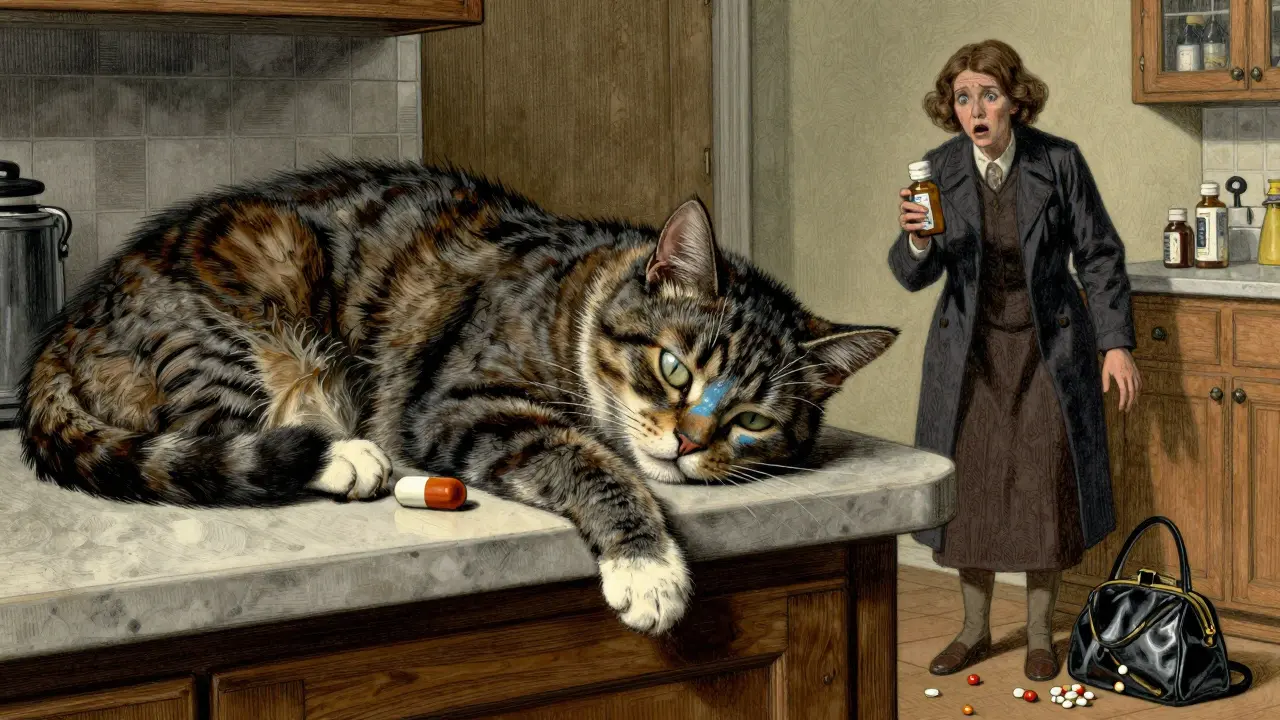
Cats lack a key liver enzyme (glucuronyl transferase) that breaks down acetaminophen and some other drugs. That’s why a single Tylenol can kill them. Dogs can metabolize more-but they’re terrible at handling NSAIDs. Even a small dose of ibuprofen can wreck their kidneys.
Also, pets don’t know what pills are. If it’s sweet, chewy, or smells like food, they’ll eat it. Extended-release pills are especially dangerous because they keep releasing poison over hours, making symptoms last longer and harder to treat.
What Not to Do
Don’t try to make your pet vomit unless a vet tells you to. Some drugs cause more damage coming back up. Don’t give activated charcoal without professional advice. Don’t wait to see if they "get better on their own."
And don’t assume your pet is fine just because they’re not acting sick yet. Acetaminophen and NSAIDs can cause internal damage for days before symptoms appear.
How to Prevent This From Happening
The best way to handle a pet overdose? Avoid it entirely.
- Keep all medications in closed cabinets-never on counters or nightstands.
- Use child-proof containers, even if you don’t have kids.
- Never give human meds to pets without vet approval-even if it "worked" for another dog.
- Put purses and bags up high. Many pets get into meds that way.
- Dispose of expired pills safely-don’t flush them or leave them in trash.
Also, consider using a pill organizer with separate compartments. If you take meds daily, keep your pet’s space completely separate.
When to Call for Help
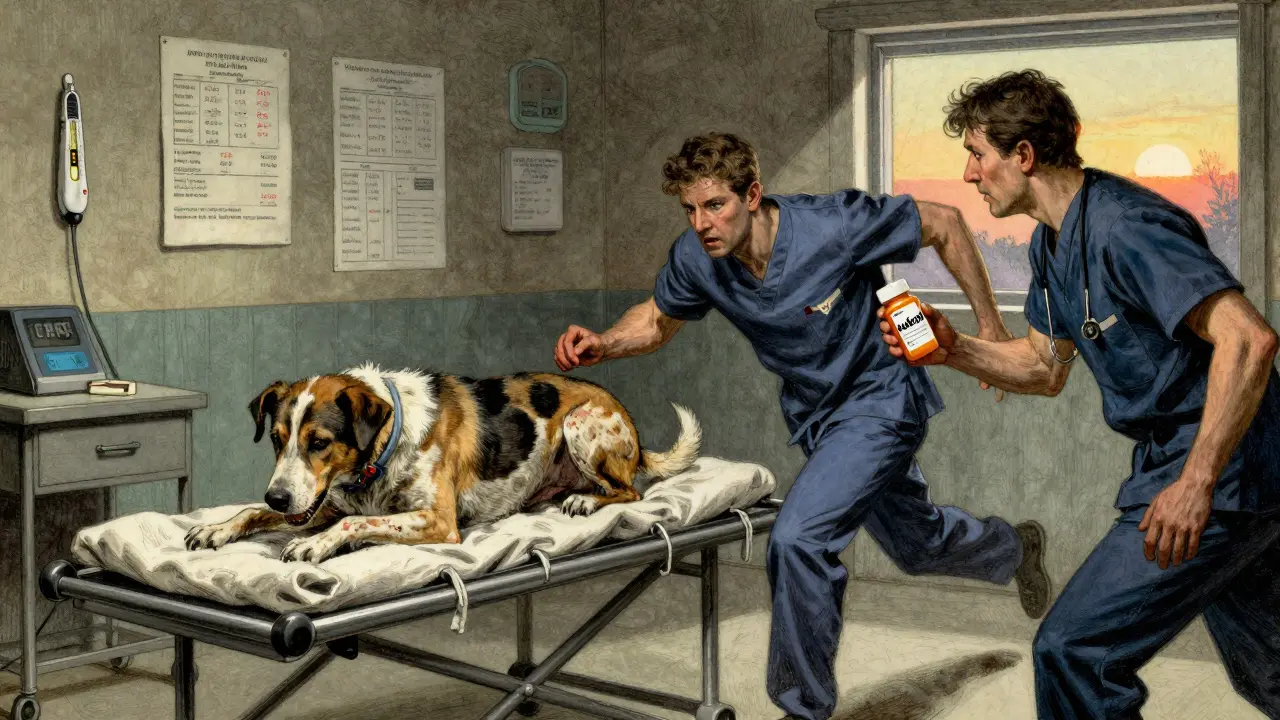
Call the Pet Poison Helpline or ASPCA Animal Poison Control anytime you suspect ingestion-even if your pet seems fine. Both offer 24/7 support. The Pet Poison Helpline handled over 432,000 cases in 2022 with an average response time of 47 seconds.
If your vet isn’t available, go to the nearest emergency clinic. Bring the medication bottle if you can. Even an empty bottle helps them identify the drug and dose.
Real Stories: What Worked and What Didn’t
A Labrador mix ate a single ibuprofen tablet. The owner noticed vomiting and black stool within 90 minutes. They rushed to the ER. Activated charcoal was given. The dog recovered fully.
A cat ate a single Effexor capsule. The owner thought the cat was "just acting weird"-vocalizing and bumping into walls. They waited four hours. By then, liver damage was severe. The cat survived after five days in the hospital.
A dog ate Adderall. The owner thought it was "hyperactive from play." By the time they went to the vet, the dog’s temperature was 107°F. It didn’t survive.
These stories aren’t rare. They’re common. And they all started with a delay in recognition.
What’s Changing in 2026
More vets are using AI-powered symptom checkers. The American College of Veterinary Emergency and Critical Care launched a tool in 2023 that correctly identifies overdose types in 89% of cases. The ASPCA is rolling out species-specific symptom checkers in 2024-targeted for cats first.
But technology won’t replace you. The most effective tool is still your ability to notice the first sign: something’s off.



Selina Warren
This post is LIFE-SAVING. I almost lost my beagle last year after he ate my Lexapro. I thought he was just "acting weird"-turns out he was having seizures. If you have meds in your house, you are one distracted moment away from a funeral. Stop being lazy. Lock them up. Now.
christian Espinola
Actually, the statistics here are misleading. The 150,000 figure includes accidental ingestion by wildlife and stray animals-not just owned pets. Also, the claim that "one pill kills a cat" is outdated; modern veterinary tox databases show LD50 varies by weight, formulation, and metabolism. And why is no one talking about the pharmaceutical industry’s role in designing sweet, child/pet-friendly coatings? This is corporate negligence disguised as owner error.
Chuck Dickson
Hey everyone-just wanted to say thank you for this. I’m a vet tech, and I see this every week. I’ve held dogs while they vomited blood, and I’ve held cats who never woke up. It’s not about blame. It’s about awareness. If you read this and you keep your pills on the nightstand? Move them. Right now. Your pet doesn’t know the difference between candy and poison. But you do. Be their voice.
Naomi Keyes
While I appreciate the intent of this article, there are several grammatical inconsistencies: "your pet ate Adderall and is shaking, panting, and acting frantic"-should be "you" not "your"; also, "10mg per kg" lacks proper unit spacing; and "BUN levels over 120 mg/dL" should be "120 mg/dL" with a space after the number. Additionally, the phrase "Don’t wait for more symptoms." is redundant-"wait" implies delay, so "more symptoms" is implied. Minor, but critical for credibility.
kenneth pillet
Had a dog eat a naproxen last year. Vomited at 3am. Took him to ER. They gave him charcoal. He’s fine now. Just… keep meds locked up. Seriously. It’s not hard.
Jodi Harding
My cat ate a single Xanax. Thought she was just being dramatic. Turned out she was dying inside. No one told me liver damage takes days to show. I didn’t know until her eyes turned yellow. Don’t wait. Ever.
Danny Gray
Isn’t it interesting how we blame owners for pet poisonings but never ask why these drugs are even designed to taste like candy? Is it really the pet’s fault for being a dog? Or is it the system that makes pills look like treats? We’ve turned medicine into a game of Russian roulette-and called it responsibility.
Zoe Brooks
Thank you for this. I just put all my meds in a locked cabinet tonight. My rescue pup is a pill thief. I used to think "he’s just curious"-now I know he’s one mistake away from never coming back. 🙏
Kristin Dailey
USA needs stricter drug packaging laws. This isn’t just pet care-it’s national negligence. Other countries lock meds by law. We let people kill their animals because they’re too lazy to buy a lockbox. Pathetic.