
You packed your pills, double-checked your prescription labels, and thought you were ready. But when you landed in Tokyo, Dubai, or Bangkok, your medicine was taken away-and you were questioned, fined, or even detained. This isn’t a rare nightmare. Every year, thousands of travelers face exactly this situation, not because they’re breaking the law on purpose, but because they never checked if their meds were legal where they were going.
What You Think Is Legal Might Be a Crime Abroad
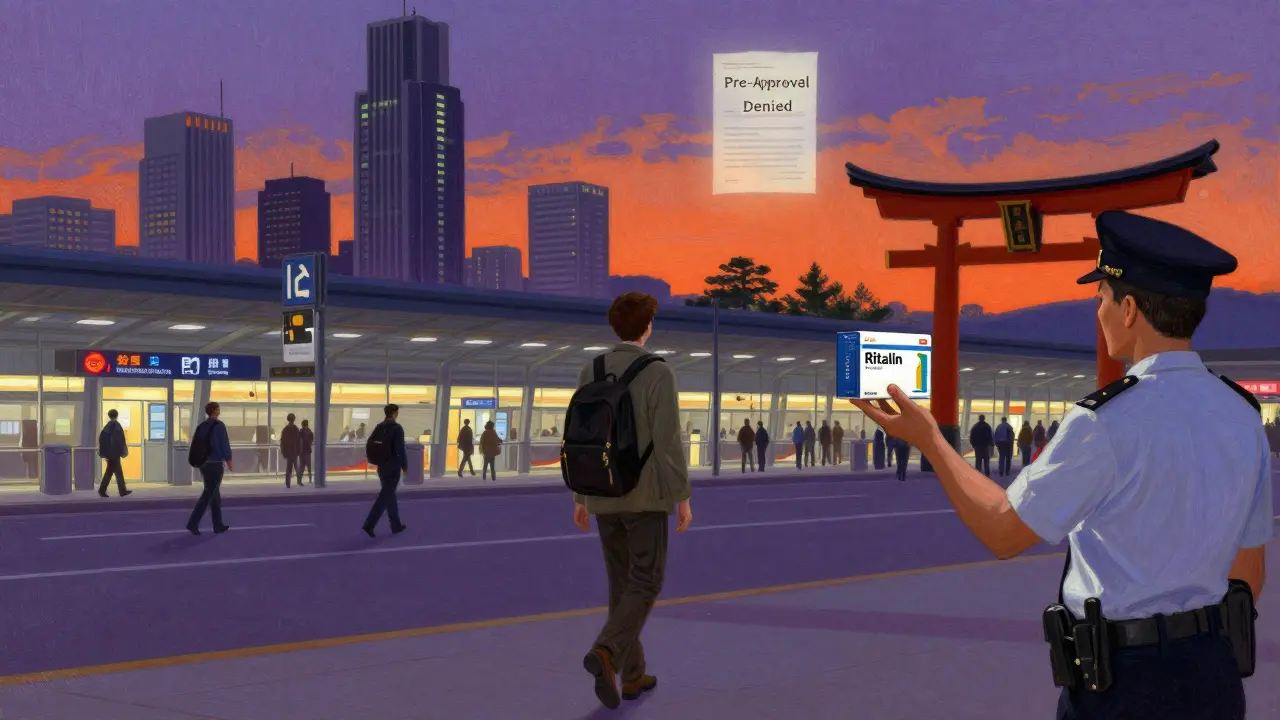
Many common prescription drugs you take without a second thought are banned in other countries. That painkiller with hydrocodone? Illegal in Japan, Singapore, and the UAE. Your ADHD medication like Adderall or Ritalin? Banned in China, Thailand, and Saudi Arabia. Even over-the-counter decongestants like Sudafed, which you grab at any pharmacy back home, are controlled substances in Japan and Australia because they can be used to make methamphetamine. The U.S. Drug Enforcement Administration lists 562 controlled substances. Germany has 464. Japan has 328. And those are just the ones they officially track. In many countries, even having a valid prescription doesn’t protect you. The law doesn’t care if you’re using it for pain, anxiety, or focus. If it’s on their banned list, it’s illegal to bring in-even one pill.The Most Dangerous Medications to Carry
Some drugs are far more likely to get you into trouble than others. Based on global incident reports from the CDC and international health agencies, these are the top offenders:- ADHD medications (Adderall, Concerta, Ritalin): Banned in 68.75% of the 16 countries with strictest controls. Japan and China enforce zero tolerance-even with a doctor’s note.
- Painkillers with opioids (hydrocodone, oxycodone, codeine): Prohibited in 9 out of 16 countries. The UAE treats codeine like heroin. Carrying 10 tablets without approval can mean a year in jail.
- Sedatives and anti-anxiety meds (Valium, Xanax, Klonopin): Banned in half of the countries studied. Thailand increased penalties for these to 5-10 years in prison in 2023.
- Sleep aids (zolpidem): Illegal in countries like the UAE and Singapore. Even if you’re using it for jet lag, it’s considered a controlled substance.
- Decongestants (pseudoephedrine in Sudafed, Vicks inhalers): Confiscated in over 37% of all medication incidents. Japan alone seized over 1,200 cases in 2023.
These aren’t street drugs. These are prescriptions your doctor wrote. But abroad, they’re treated like contraband.
Country-Specific Rules You Can’t Afford to Ignore
Not all countries are the same. Some have clear rules. Others are vague-and dangerous to guess.Japan: You can bring up to one month’s supply of most medications if you have a doctor’s letter and original prescription. But amphetamines? Zero tolerance. No exceptions. Even if your doctor says you need Adderall for ADHD, Japan considers it a narcotic. You must apply for special permission months in advance-or leave it home.
United Arab Emirates: Codeine, diazepam, methylphenidate, and even some cough syrups are Class A controlled substances. You need pre-approval from the Ministry of Health before you fly. Apply through their online portal at least 10-14 days ahead. Without it, you risk prison. Over 70% of arrests here involve travelers who didn’t know they needed approval.
Thailand: Stimulants like Adderall and Ritalin are illegal. So are benzodiazepines. Penalties went up in 2023: fines up to 1 million THB ($28,500) and 5-10 years in prison. Thai customs scan luggage at all international airports. They don’t ask. They take.
China: ADHD meds are banned nationwide. No exceptions. Even if you have a U.S. prescription and a doctor’s letter, Chinese customs will seize them. Some travelers with HIV have been denied entry because their antiretrovirals were flagged-even though the meds themselves aren’t banned. The system is unpredictable.
Germany: You can bring a 30-day supply of most medications without paperwork. But if you’re staying longer, you need official documentation. They’re strict about quantities. Bring 60 days’ worth? You’ll be questioned.
India and the Philippines: Both now require digital pre-approvals for controlled substances. The Philippines cut approval time from two weeks to three days in early 2025. But if you skip this step, you’re risking detention.

What You Need to Bring (and What You Should Leave Behind)
If you’re traveling with prescription meds, here’s what actually works:- Original prescription bottles with your name and the doctor’s details. Pharmacy labels alone aren’t enough.
- A letter from your doctor on official letterhead. It should state your diagnosis, the medication name, dosage, and that it’s for personal use.
- International Certificate for Psychoactive Substances (for Japan and some European countries). Get this from your country’s health authority-it’s free, but takes time.
- Country-specific forms. The UAE requires their online application. Japan requires English-language documentation. Don’t assume your home country’s paperwork is enough.
Leave these at home:
- Any medication not prescribed to you-even if it’s the same drug.
- Extra pills beyond your trip length. Most countries allow only what you’ll use while there.
- Over-the-counter meds with pseudoephedrine, dextromethorphan, or codeine. Check the list for your destination.
- Supplements with unlisted ingredients. Some herbal products contain banned stimulants.
How to Check Before You Go
Don’t rely on Google searches or advice from friends. Use official sources:- U.S. State Department Travel Advisories: They now include medication warnings in 87.5% of country pages.
- UK Foreign Office ‘Medicines Abroad’ Portal: Search by drug name and destination. Updated monthly.
- International Narcotics Control Board (INCB) Database: The most authoritative global source. Lists banned substances by country.
- DocHQ Travel Medicine Checker: Used by over 200,000 travelers in 2023. It cross-checks your meds against 150+ countries’ laws and generates a printable checklist.
Start this process 8-12 weeks before departure. It takes time to get approvals, translations, and certificates. One traveler spent 3.7 hours just preparing for one country. You don’t want to be scrambling at the airport.
What Happens If You Get Caught?
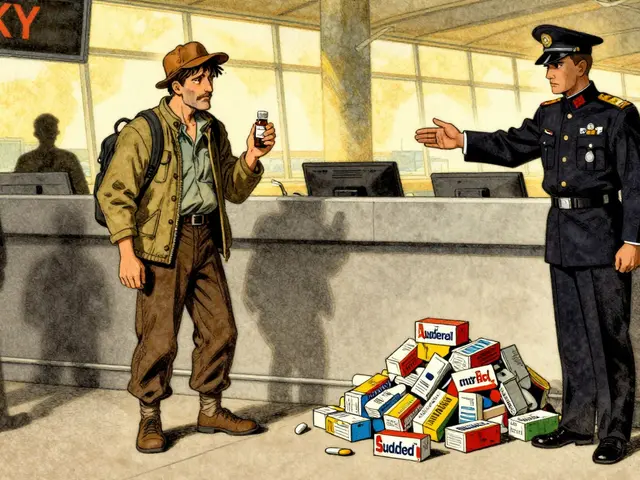
The consequences vary wildly. In some places, you’ll get a warning and your meds will be taken. In others, you’ll be arrested, jailed, or deported.In Dubai, a traveler was held for 72 hours after carrying 10 codeine pills. In Thailand, a tourist was fined $28,500 and banned from re-entry for bringing Ritalin. In Japan, a woman with Adderall was detained for three days before being deported.
Even if you’re not arrested, your meds are gone. No refunds. No replacements. If you’re on a chronic medication, you might be stranded without treatment. Travel insurance won’t cover this. Most policies exclude “illegal substances,” even if you thought they were legal.
Why This Is Getting Worse
Countries are tightening rules, not loosening them. Thailand raised penalties by 200% in 2023. China expanded its banned list in 2021. The UAE upgraded airport scanners to detect 98.7% of controlled substances.Meanwhile, more people are traveling. Over 1.4 billion international trips were made in 2023. And 63.4% of travelers didn’t know their meds could be illegal abroad, according to the American Pharmacists Association. That number is rising because people assume their home country’s rules apply everywhere.
The World Health Organization has proposed a global standard to simplify this mess. But only 31% of countries support it. Until then, you’re on your own.
Real Travelers, Real Mistakes
A Reddit user from Seattle shared how their 30-day supply of Adderall was confiscated at Narita Airport-even with a doctor’s letter. They had to fly home early because they couldn’t function without it. Another traveler, a nurse from Texas, brought her anxiety meds to the UAE. She thought her prescription was enough. She spent three days in detention before her embassy intervened. On the flip side, a man from Ohio successfully traveled through 8 countries over six months by using the DocHQ tool. He printed every approval, carried all documents, and never had a problem.The difference? Preparation.
Bottom Line: Don’t Risk It
Your medication might be legal in your country. But it’s not legal everywhere. The cost of getting caught isn’t just a fine or a lost pill-it’s your freedom, your trip, your health.Before you book your flight, check your meds. Use official sources. Get the paperwork. Ask questions. Don’t assume. Don’t hope. Don’t risk it.
Traveling with medication isn’t about being paranoid. It’s about being smart.
Can I bring my prescription meds on an international flight?
Yes-but only if they’re legal in your destination country. Always carry the original prescription, a doctor’s letter on letterhead, and any required official forms. Never rely on pharmacy labels alone. Some countries require pre-approval months in advance.
Is Adderall illegal in other countries?
Yes, in many. Adderall (amphetamine/dextroamphetamine) is banned in China, Japan, Thailand, Saudi Arabia, Singapore, and the UAE. Even with a U.S. prescription, you cannot legally bring it into these countries without special permission-which is rarely granted. Always check your destination’s rules before packing it.
What happens if I get caught with banned medication abroad?
Consequences vary. You could lose your medication, be fined, detained for days, deported, or even jailed. In the UAE and Thailand, prison sentences of 1-10 years are possible for carrying even small amounts of controlled substances like codeine or Ritalin. There’s no guarantee your embassy can help you.
Are over-the-counter cold medicines safe to bring?
No. Many OTC cold meds contain pseudoephedrine, dextromethorphan, or codeine-all banned or restricted in countries like Japan, Australia, and the UAE. Sudafed, Vicks inhalers, and some cough syrups can get you arrested. Always check the active ingredients against your destination’s list.
How far in advance should I check my meds?
At least 8-12 weeks before departure. Some countries require pre-approvals that take 10-14 business days. Others need official translations or certificates that take weeks to process. Waiting until the last minute risks being stranded without your medication.
Can travel insurance cover me if my meds are confiscated?
Almost never. Most travel insurance policies exclude coverage for illegal substances-even if you thought they were legal. Even if you have a prescription, if the drug is banned in your destination, insurers won’t pay for replacement meds or medical care resulting from withdrawal.
Do I need to declare my meds at customs?
It depends on the country. In places like the UAE and Japan, you’re legally required to declare controlled substances. In others, you’re not asked-but if they find them and you don’t have documentation, you’re in trouble. Always carry proof. Better to declare and be safe than hide and risk arrest.




Hilary Miller
Just got back from Tokyo and learned the hard way-my Adderall got confiscated. No warning, no second chance. Don’t be me.
Sarvesh CK
It’s astonishing how many assume their domestic legal framework is universally applicable. The global pharmacopeia operates under vastly divergent regulatory paradigms, often rooted in cultural, historical, and political contexts that transcend mere medical utility. A substance deemed therapeutic in one jurisdiction may be perceived as a societal threat in another-this is not irrationality, but sovereignty in action. To navigate this landscape with integrity requires humility, research, and deference to local law, regardless of personal convenience or perceived moral justification.
arun mehta
Been there, done that. Took my Xanax to Thailand in 2022-got flagged at customs, spent 8 hours in a room with no windows while they called the embassy. 😔 They took it all. No fines, no jail, but I cried on the plane home. Now I carry a printed copy of the INCB database in my wallet. No more guessing. 🙏
Oren Prettyman
Let’s be honest: this entire article reads like a government propaganda pamphlet disguised as public service. The real issue isn’t that travelers are ignorant-it’s that countries are arbitrarily criminalizing pharmaceuticals for political posturing under the guise of public safety. Why is codeine a Class A narcotic in the UAE but available over the counter in Canada? Because power, not science, dictates policy. This isn’t about safety. It’s about control. And the burden is unfairly placed on the traveler, not the state that enforces absurd laws.
Malik Ronquillo
Y’all really think this is that hard? Just don’t bring the drugs. Problem solved. Why is this even a conversation? You want to fly with a prescription? Fine. But if your country says it’s illegal, then guess what? You don’t get to bring it. Simple. Stop acting like you’re being persecuted because you can’t get your fix abroad. It’s not a right. It’s a privilege. And you don’t get to break the law because you’re lazy.
Brenda King
I’m a nurse and I travel every quarter. I always carry my meds in original bottles with the prescription label, plus a doctor’s note. I’ve never had an issue-even in Dubai. Just do the prep. It takes 20 minutes. Don’t be the person who ruins their trip because they didn’t check a website. 🤷♀️
Keith Helm
Did you know that 78% of travelers who get caught with banned meds didn’t even check the country’s customs website? This isn’t rocket science. You have 30 seconds to Google it. Stop being irresponsible.
Daphne Mallari - Tolentino
One must lament the increasing commodification of personal health autonomy in the face of global regulatory fragmentation. The erosion of pharmacological sovereignty-where an individual’s therapeutic regimen is subject to the whims of foreign bureaucratic apparatuses-is not merely inconvenient, but ethically troubling. One wonders whether the state’s interest in chemical control outweighs the fundamental right to bodily integrity, especially when the substances in question are legally prescribed and non-abused.
Neil Ellis
Traveling with meds isn’t about paranoia-it’s about being a responsible global citizen. Think of it like packing a visa: you don’t just assume your passport works everywhere. Same with your pills. I used DocHQ before my 8-country trip last year. Printed checklists for each stop. Walked through customs like a boss. No drama. Just peace of mind. 🌍💊
Alec Amiri
Wow. So now we’re treating people like criminals for needing medicine? Next they’ll arrest you for breathing too hard in Singapore. This is ridiculous. You’re not smuggling heroin-you’re carrying your anxiety pills. Get real.
Lana Kabulova
What about people who need insulin or heart meds? Are they supposed to stop taking them? Or just risk death because some country thinks Adderall is a street drug? This system is broken. There’s no global standard, no reciprocity, no safety net. And the worst part? The people who suffer most are the chronically ill. This isn’t about law-it’s about neglect. Someone needs to fix this before someone dies.