
Every year, over 100,000 people in the U.S. die from drug overdoses. Most of these deaths involve opioids - especially synthetic ones like fentanyl - and many happen at home, where no one knows what to do until it’s too late. The good news? You can change that. A simple, well-prepared family overdose emergency plan can turn a fatal situation into a survivable one. You don’t need to be a doctor. You don’t need special training. You just need to know what to do, where to find the tools, and how to act before panic sets in.
Why This Plan Matters More Than You Think
Most people assume overdoses only happen to strangers or people with severe addiction. That’s not true. In 2022, over 51 million U.S. adults were prescribed opioid painkillers. Many of those prescriptions are taken as directed - but accidents still happen. A missed dose, a mix with alcohol, a change in tolerance after a hospital stay, or even a child finding a pill bottle can lead to an emergency. Fentanyl is so potent that a tiny amount - less than a grain of salt - can stop someone’s breathing in under three minutes. The window between when someone stops breathing and when brain damage begins is just 4 to 6 minutes. Emergency responders take 7 to 10 minutes on average to arrive. That’s why your household must be ready to act before 911 gets there. Naloxone - the medication that reverses opioid overdoses - works in 2 to 5 minutes when given correctly. But only if it’s nearby and someone knows how to use it.Step 1: Know the Signs of an Overdose
You can’t respond to something you don’t recognize. An overdose doesn’t always look like someone slumped on the floor. Look for these three clear signs:- Unresponsive: Shake their shoulder hard. Call their name loudly. If they don’t wake up or move, it’s not sleep - it’s danger.
- Abnormal breathing: Are they gasping, snoring, or making no sound at all? Normal breathing is 12 to 20 breaths per minute. Less than 12 means trouble.
- Pinpoint pupils: Shine a light in their eyes. If the black center of the eye is tiny like a pinprick, it’s a strong sign of opioid overdose.
Step 2: Get Naloxone - and Keep It Accessible
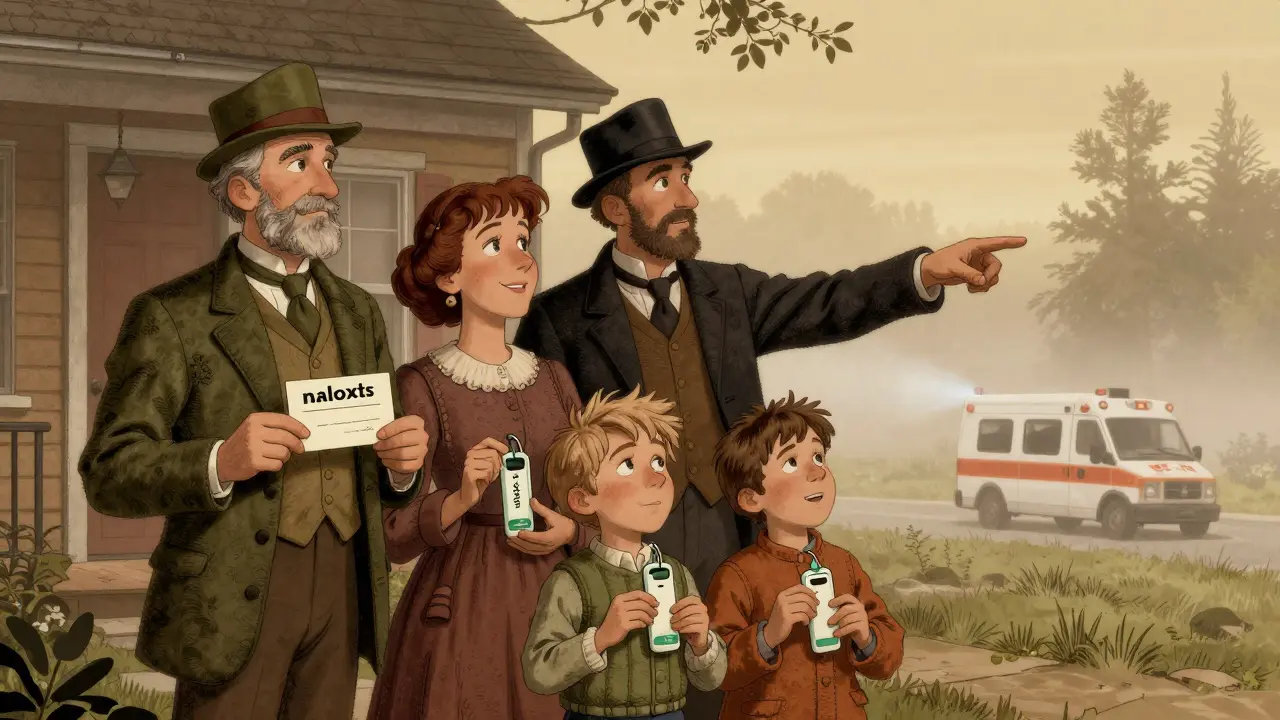
Naloxone (sold as Narcan, Kloxxado, or generic nasal spray) is the only medication that can reverse an opioid overdose. It’s safe, non-addictive, and works only if opioids are in the system. It won’t hurt someone who didn’t take opioids. Where to get it: In 46 states, you can walk into any pharmacy - CVS, Walgreens, Rite Aid - and ask for naloxone without a prescription. Most pharmacies give it for $25 or less with insurance. Thanks to the 2024 Inflation Reduction Act, Medicare Part D covers it with $0 copay. If you’re uninsured, many city health departments give it away for free. New York City, Washington State, and dozens of other areas run free distribution programs. How much to keep: Keep at least two doses in the house. Fentanyl is so strong that one dose of naloxone often isn’t enough. Some people need three or more. Keep one in the bedroom, one in the kitchen, and one in your car or purse if someone travels often. Storage: Store naloxone at room temperature (68-77°F), away from direct sunlight. Don’t leave it in the car in summer or the bathroom where it gets steamy. It lasts 18-24 months. Write the expiration date on the box with a marker. Set a phone reminder to check it every six months.Step 3: Build Your Emergency Response Plan
Your plan isn’t just about naloxone. It’s a sequence of actions everyone in the house knows by heart. Use the A.N.C.H.O.R. method:- Assess: Check for unresponsiveness, slow or no breathing, pinpoint pupils.
- Naloxone: Administer one dose of nasal spray into one nostril. If no response in 3 minutes, give a second dose in the other nostril.
- Call 911: Do this immediately after giving naloxone. Say: “Someone has overdosed on opioids. I’ve given naloxone. They’re not breathing.”
- Have more ready: Keep the second dose in hand. If they don’t wake up or start breathing again, give it.
- Observe: Stay with them. Even if they wake up, they can relapse into overdose as the naloxone wears off (2-4 hours). Watch for breathing changes.
- Review: After the emergency, talk as a family. What worked? What was confusing? Update your plan.
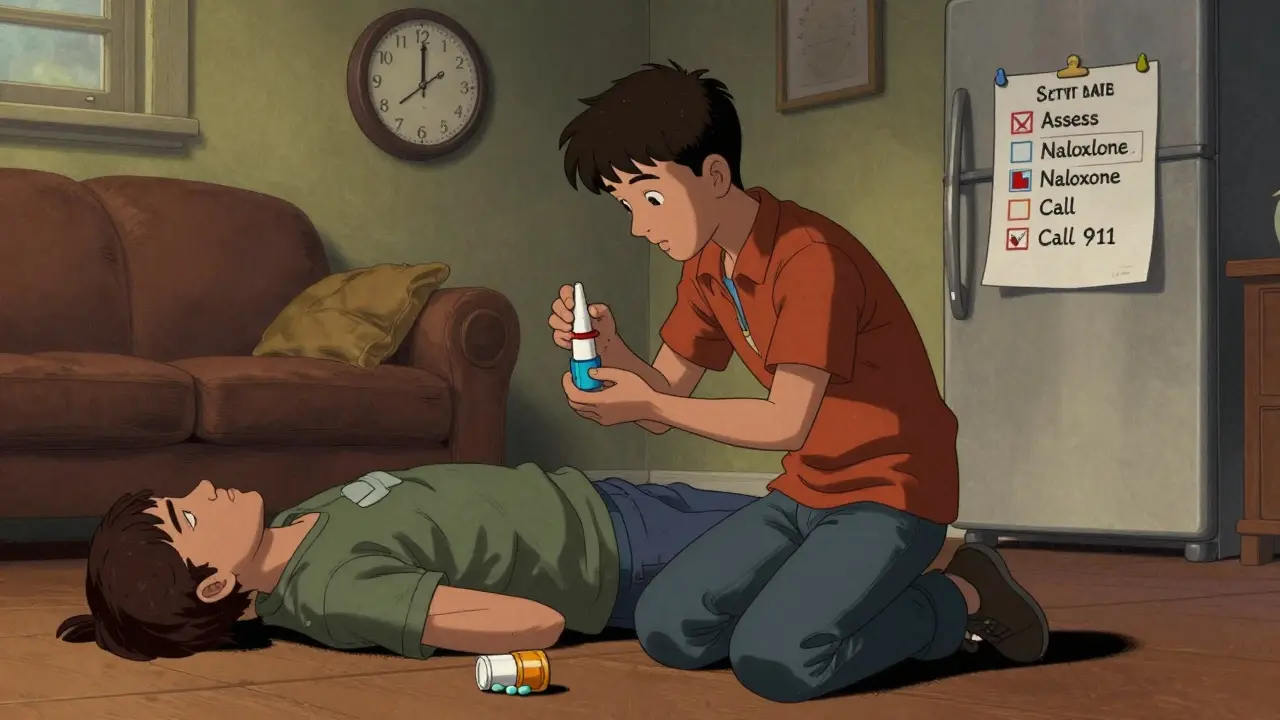
Step 4: Prepare a Quick-Reference Card
In a crisis, people forget. Write down your plan on a small laminated card. Include:- Names and phone numbers of everyone in the household
- Names and dosages of all opioids or sedatives taken in the home
- Prescribing doctor’s name and number
- Location of naloxone kits
- Step-by-step instructions for naloxone use (with pictures if helpful)
Step 5: Train Everyone - Even the Kids
You can’t assume your partner or teen will know what to do. In 2023, a survey found that 87% of families who had naloxone said they were confident - but only 52% could actually demonstrate the correct steps when asked. Take 15 minutes to watch the American Red Cross free online training. It’s available on their website or YouTube. Then, practice with the training kit they sell for under $20. It includes a dummy nasal spray that doesn’t contain medicine - perfect for drills. Teach teens. They’re often the first to find someone unresponsive. The 2023 National Youth Risk Behavior Survey found 34% of teens aged 14-17 know someone who’s overdosed. If they know how to respond, they can be the difference between life and death.What This Plan Doesn’t Do
This plan saves lives during the emergency. But it doesn’t fix addiction. That’s why some experts warn against “false security.” Naloxone is not a cure. It’s a bridge. After someone is revived, they need medical care - and eventually, treatment. The good news? Studies show 89% of people who survive an overdose with naloxone go on to seek treatment. That’s because the experience changes everything. It’s a wake-up call - for them and for the whole family.Common Mistakes and How to Avoid Them
- Expired naloxone: 31% of failed attempts were due to outdated kits. Check dates. Set calendar alerts.
- Wrong administration: 24% of users didn’t spray fully into the nostril or didn’t hold the plunger long enough. Practice with the trainer.
- Waiting too long to call 911: 63% of preventable deaths involved delays in calling. Call immediately - even while giving naloxone.
- Thinking it’s just sleep: 19% of families ignored signs because they assumed the person was drunk or passed out. Don’t assume. Check.
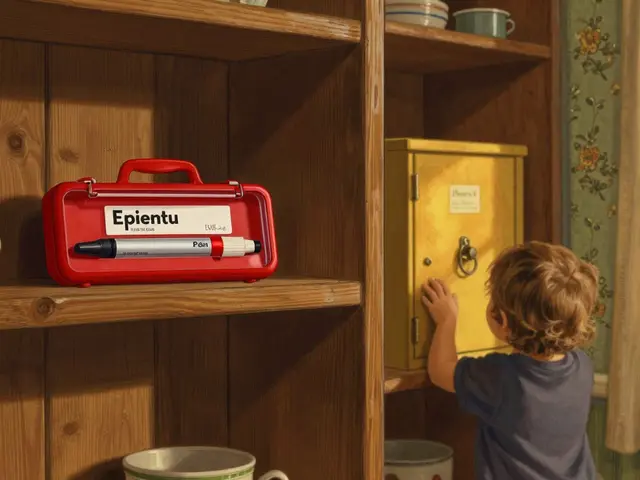
- Keeping naloxone locked up: If it’s in a locked cabinet or high shelf, it’s useless in an emergency. Keep it visible and reachable.
What to Do After the Emergency
If you use naloxone and save someone:- Stay with them until EMS arrives.
- Give the paramedics the naloxone box - they need to know what was used.
- Ask for a referral to addiction services. Many hospitals have counselors on-site.
- As a family, schedule a quiet talk. This isn’t about blame. It’s about safety.
Where to Get Help Right Now
- Free naloxone: Visit naloxonefinder.org to find free kits near you.
- Training: The American Red Cross offers free 15-minute online courses.
- Support: The SAMHSA National Helpline (1-800-662-4357) offers free, confidential help 24/7.
- Apps: The Overdose Guardian app (released Jan 2024) gives real-time alerts for overdoses in your ZIP code and links to nearby naloxone.
Frequently Asked Questions
Can I get naloxone without a prescription?
Yes. In 46 states, you can walk into any pharmacy - CVS, Walgreens, Rite Aid - and ask for naloxone without a prescription. Pharmacists are trained to give you instructions on how to use it. Some states even allow online ordering with in-store pickup.
Will naloxone hurt someone who didn’t take opioids?
No. Naloxone only works if opioids are in the system. It has no effect on alcohol, benzodiazepines, or other drugs. It’s safe to give even if you’re unsure. Giving it won’t cause harm.
How long does naloxone last, and can the overdose come back?
Naloxone lasts 30 to 90 minutes. Many opioids, especially fentanyl, last much longer. This means someone can wake up after naloxone, then slip back into overdose as the naloxone wears off. That’s why you must keep monitoring them for at least 2-4 hours - even if they seem fine.
Is it legal to give naloxone to someone else?
Yes. All 50 states and D.C. have Good Samaritan laws that protect anyone who gives naloxone in good faith from legal liability. You cannot be sued or arrested for helping someone during an overdose.
What if I’m afraid to talk about this with my family?
It’s normal to feel uncomfortable. But this isn’t about fear - it’s about care. Say it simply: “I love you, and I want to make sure we’re ready if something happens.” Many families say the conversation brought them closer. You’re not predicting disaster. You’re preparing for safety.
Can I use naloxone for non-opioid overdoses, like alcohol or sleeping pills?
No. Naloxone only reverses opioid overdoses. If someone overdosed on alcohol, benzodiazepines, or other drugs, naloxone won’t help. But you should still call 911 immediately. Emergency responders can treat other types of overdoses. Don’t delay help because you think naloxone won’t work.
How often should we practice our plan?
Do a quick 10-minute drill every month. Check the expiration date on naloxone. Review where it’s stored. Go over the steps with everyone. It takes less time than checking your email - but it could save a life.
Next Steps: Start Today
You don’t need to wait for a crisis to act. Here’s what to do right now:- Call your pharmacy and ask if they carry naloxone. Walk in today.
- Buy two nasal spray kits. Keep one in the house, one in your bag.
- Watch the American Red Cross 15-minute video on YouTube.
- Write your family’s plan on a card. Tape it to the fridge.
- Set a calendar reminder: check naloxone expiration in six months.

Catherine Scutt
Naloxone is great and all, but why are we treating a symptom instead of fixing the root cause? This whole system is broken-pharmacies handing out life-saving drugs like candy while Big Pharma still pushes opioids like soda. We’re bandaging a gunshot wound with duct tape and calling it a plan.
Darren McGuff
As someone who’s trained EMS for 18 years, this is one of the most practical guides I’ve seen. Seriously. The A.N.C.H.O.R. method? Brilliant. Simple, sequential, and stickable. I’ve seen families freeze because they didn’t know where the naloxone was-or worse, it was locked in a cabinet. This isn’t just advice-it’s a blueprint for survival. Print it. Laminate it. Tape it to the fridge like a fire drill poster. No excuses.
Kiruthiga Udayakumar
My cousin overdosed last year. We didn’t have naloxone. We panicked. We called 911. We waited. He didn’t make it. This post? It’s not theoretical. It’s the difference between burying someone and having them eat pancakes with you next Sunday. I just ordered two kits. I’m printing the card. I’m telling my whole family tonight. No more pretending this won’t happen to us.
Maggie Noe
Just got my naloxone from CVS today 😭💖. Zero copay thanks to the Inflation Reduction Act. I kept one in my purse, one by the coffee maker. My 16-year-old just asked me why we have it. I said, ‘Because I love you more than I love being scared.’ He hugged me. We practiced with the trainer kit. He got it right on the first try. 🙌 We’re ready. 💪
Aron Veldhuizen
Let’s be precise here. The claim that ‘fentanyl is less than a grain of salt’ is misleading. Fentanyl’s LD50 is measured in micrograms, not milligrams, and its potency varies wildly by formulation. Also, ‘pinpoint pupils’ aren’t exclusive to opioids-sedatives and certain poisons cause the same. This guide is well-intentioned, but it’s dangerously oversimplified. Emergency response requires context, not checkboxes. And why is no one discussing the role of mental health infrastructure? You can’t reverse an overdose if the person has zero reason to live after they wake up.
Elisha Muwanga
Why are we giving out naloxone like it’s a free government perk? This isn’t a public health campaign-it’s enabling. People need to take personal responsibility. If you’re taking opioids, you should be monitored. If you’re not, why are you even keeping this stuff in the house? This plan treats addicts like victims, not people who made bad choices. We need consequences, not convenience.
Chris Kauwe
Let me break this down with some real talk. You’re telling families to keep naloxone in the kitchen, bedroom, and car? That’s not preparedness-that’s institutionalizing failure. We’ve turned America into a nation of passive bystanders who think a nasal spray fixes systemic collapse. This isn’t safety. It’s a placebo for guilt. The real solution? Stop prescribing opioids like candy. Shut down fentanyl smuggling. Fix mental health access. Not this performative CPR for the dying culture.
Micheal Murdoch
Hey-this isn’t about politics or blame. It’s about love. My sister’s a nurse. She told me about a 14-year-old who saved her dad’s life last winter because they’d practiced the steps like a video game. He knew where the naloxone was. He called 911 before crying. He didn’t panic. He acted. That kid didn’t get a medal. He got his dad back. That’s the point. You don’t need to be a hero. You just need to be ready. And if you’re reading this, you already care. So do something. Now. Not tomorrow. Now.
Gregory Clayton
Y’all are making this way too serious. I just got my naloxone. I put it in my glovebox next to my gum and my spare socks. My dog knows where it is. I told my girlfriend, ‘If I die, just spray me.’ She laughed. Then she cried. Then she hugged me. We’re good. Life’s short. Be ready. Don’t overthink it.
Jerian Lewis
So now we’re teaching kids to administer life-saving drugs? What’s next? Kindergarten CPR? This isn’t empowerment-it’s normalization. If your family needs a plan like this, maybe you shouldn’t have opioids in the house at all. This is a Band-Aid on a hemorrhage. And honestly? It’s a little creepy how casually people talk about keeping overdose kits in their cars like they’re spare tires.