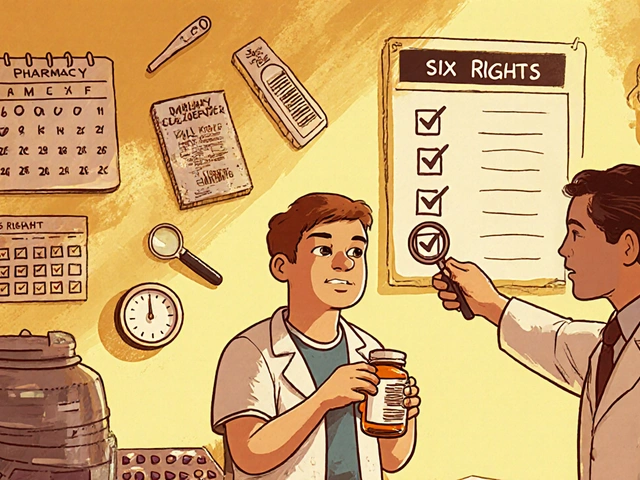
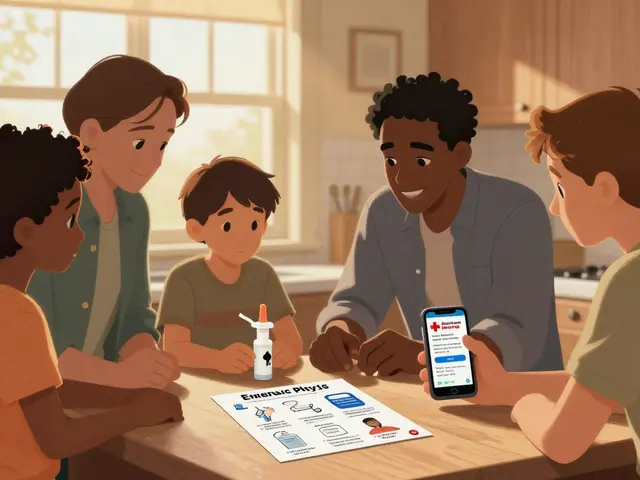
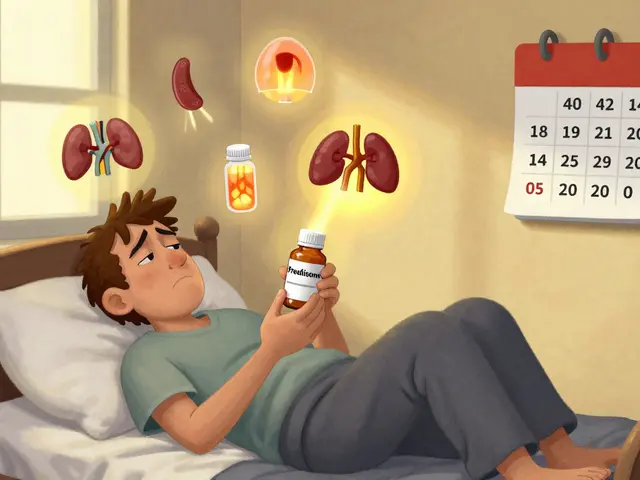
When you walk into a doctor’s office, emergency room, or hospital, the most important thing you can bring isn’t your insurance card or ID-it’s an accurate list of everything you’re taking. Not just prescriptions. Not just the ones you remember. Everything: pills, patches, injections, over-the-counter painkillers, herbal supplements, vitamins, even that gummy you take for sleep. Missing one thing can lead to a dangerous reaction, a hospital stay, or worse.
Medication errors are one of the leading causes of preventable harm in healthcare. In the U.S. alone, they contribute to 7,000 to 9,000 deaths every year. The good news? Most of these errors happen because of incomplete or incorrect medication lists-not because doctors made a bad call. The fix is simple: you need to share your full medical history clearly and consistently.
Why Your Medication List Matters More Than You Think
Think of your medication list like a GPS for your health. If the map is wrong, you’ll end up somewhere dangerous. When you’re admitted to a hospital, your care team doesn’t know what you’re taking unless you tell them. Even if your doctor’s office has your records, those records might be outdated, incomplete, or stuck in a system that doesn’t talk to the hospital’s.
Studies show that nearly half of all medication errors happen during transitions of care-when you move from one provider to another, like going from home to hospital or from hospital to rehab. At least 20% of those errors cause real harm. For people taking five or more medications, the risk of a mistake jumps by 88%. That’s not a small number. That’s someone’s life.
Electronic systems like Surescripts now pull medication data from 98% of U.S. pharmacies and all major pharmacy benefit managers. But here’s the catch: those systems still miss about 15-20% of medications because they’re paid for in cash, bought overseas, or taken without a prescription. And 67% of patients don’t tell their doctors about over-the-counter drugs like ibuprofen, antacids, or sleep aids-even though those can interact dangerously with blood thinners, heart meds, or antidepressants.
What You Need to Include on Your List
A good medication list isn’t just a note on your phone. It needs to be detailed, current, and easy to share. Here’s exactly what to include:
- Prescription drugs: Name, dose, how often you take it, and why (e.g., "Lisinopril 10mg once daily for high blood pressure").
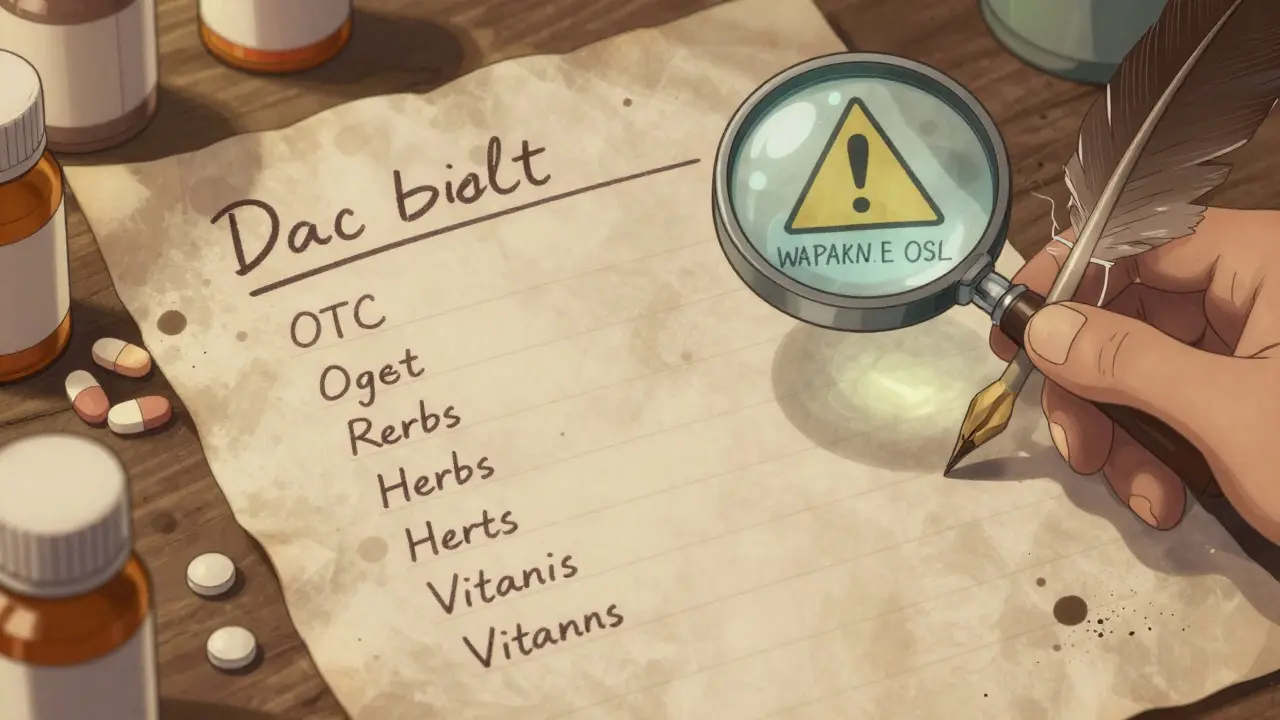
- Over-the-counter (OTC) meds: Tylenol, Advil, antihistamines, laxatives, cough syrup-even if you only take them "once in a while."
- Herbs and supplements: Turmeric, fish oil, melatonin, St. John’s wort, magnesium. These aren’t "just natural"-they can interfere with surgery, blood pressure meds, or chemotherapy.
- Vitamins and minerals: Especially iron, calcium, and vitamin K, which affect how blood thinners work.
- Topical and inhaled meds: Creams, eye drops, inhalers, patches. People forget these all the time.
- When you last took each one: Did you skip your blood pressure pill yesterday? Did you take an extra painkiller for your back? That matters.
Don’t rely on memory. Write it down. Update it every time your doctor changes something-even if it’s just adding a new antibiotic.
The Brown Bag Method: A Simple Trick That Saves Lives
One of the most effective ways to make sure your list is accurate? Bring your actual meds to every appointment.
This is called the "brown bag method." You dump everything you take-pills, bottles, patches, gummies-into a bag and bring it with you. No guesswork. No "I think I take two of those."
A 2023 study from the American Society of Health-System Pharmacists found that patients who used the brown bag method had 40% fewer medication discrepancies than those who just told their doctor what they took. Nurses and pharmacists can instantly spot duplicates, expired meds, or dangerous combinations you didn’t even know about.
And here’s a bonus: if you’re seeing multiple specialists, bring your brown bag to each visit. Your cardiologist might not know you’re taking a sleep aid your dermatologist prescribed. Your primary care doctor might not know you stopped your cholesterol pill because it gave you muscle pain. The brown bag makes it visible.
How Technology Helps-And Where It Falls Short
Hospitals and clinics now use electronic health records (EHRs) and health information exchanges (HIEs) to pull your medication history automatically. Systems like Surescripts deliver over 3 billion medication histories every year. That sounds impressive. But here’s the reality: those systems still miss things.
Electronic reconciliation tools catch 1.1 extra medications per patient that manual checks miss. That’s huge. But they also miss cash-pay prescriptions, international meds, and supplements bought online. And they’re not perfect at flagging interactions. Clinicians override nearly half of all drug interaction alerts because too many are false alarms.
Plus, not all systems talk to each other. If you fill your blood thinner at CVS, your heart doctor’s system might not see it if your diabetes meds come from Walgreens and your supplements from Amazon. That’s why patient involvement is still the most reliable layer of safety.
The good news? The 2023 ONC Cures Act now requires patients to be able to view their medication lists in online portals. More than 76% of patients can already do this. Use it. Check your list every month. If something’s wrong, call your doctor’s office and ask them to fix it.
What Your Provider Should Do-And What They Often Don’t
Healthcare providers are supposed to reconcile your meds at every transition: admission, discharge, transfer, even after a specialist visit. That means comparing your list to what’s in the system, asking you to confirm, and documenting changes.
But in practice? Many providers rush. They’re overwhelmed. They assume the EHR is right. They don’t ask about supplements. They don’t check if you’ve stopped a med.
Don’t wait for them to ask. Say it yourself: "I’ve been taking X, Y, and Z. I stopped the Z last week because it made me dizzy. Can you check if that’s okay?" Use the SBAR method: Situation ("I’m here because my blood pressure spiked"). Background ("I take A, B, and C. I stopped D last Tuesday."). Assessment ("I think it might be the missing med."). Recommendation ("Can we try restarting it?").
It’s not rude. It’s necessary. And it’s your right.
Common Mistakes That Put You at Risk
Here are the top five mistakes patients make-and how to avoid them:
- Only listing prescriptions. OTCs and supplements are just as dangerous. If you take melatonin every night, tell your doctor. It can interact with blood thinners and antidepressants.
- Forgetting to update your list. If you stop a med, cross it off. If you start one, add it immediately. Don’t wait for your next appointment.
- Assuming your doctor knows. Even if you’ve seen them for years, things change. A new med from a different provider? They might not know.
- Not asking about interactions. If you’re prescribed something new, ask: "Can this interact with anything I’m already taking?" Don’t assume they’ve checked.
- Ignoring expired meds. Old antibiotics, leftover painkillers, or supplements from last year can be dangerous if accidentally taken.
What to Do If You’re a Caregiver
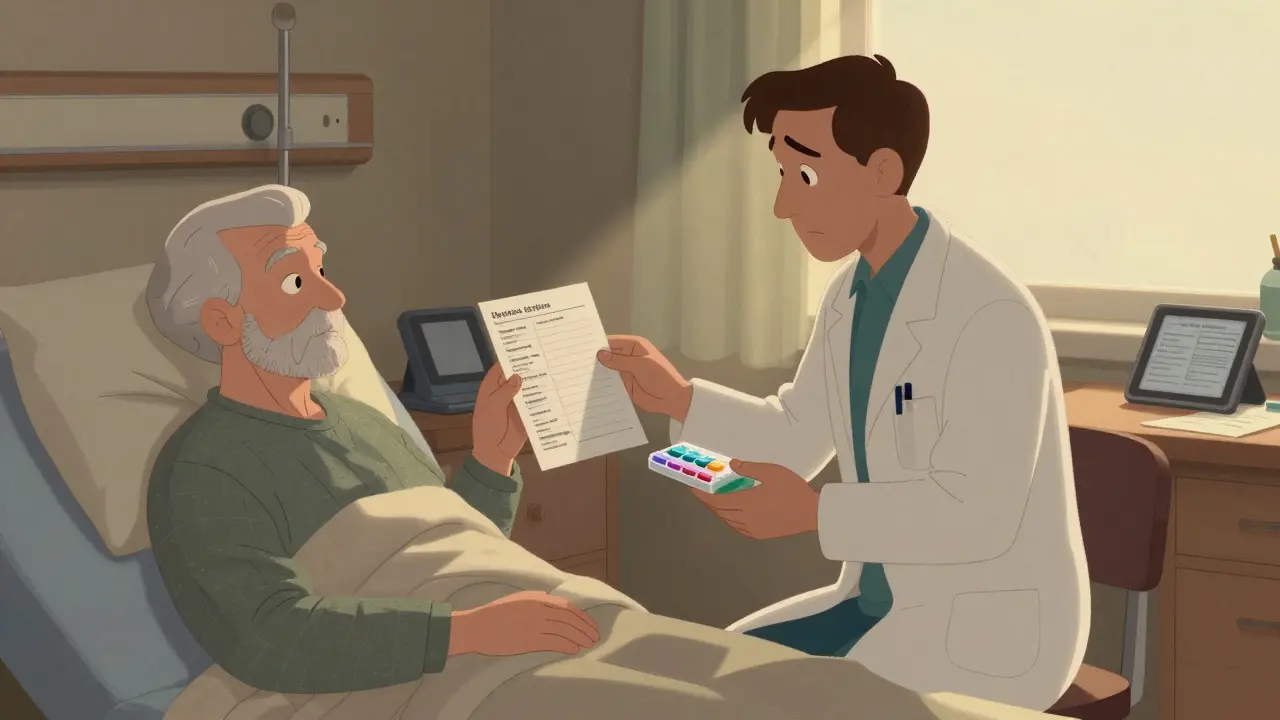
If you’re managing meds for an elderly parent, a child with chronic illness, or someone with dementia, your role is even more critical. A 2023 survey found that 83% of family caregivers struggle to track multiple medications-and 41% have experienced a medication error in the past year.
Here’s what works:
- Use a pill organizer with alarms.
- Keep a printed list in your wallet and on your phone.
- Call the pharmacy and ask for a printed list of all meds filled under their name.
- Attend appointments with the patient-even if they’re supposed to go alone.
- Ask the pharmacist to review all meds for interactions. Most pharmacies offer this for free.
Don’t be afraid to be the advocate. You’re the one who knows what’s really happening at home.
Your Next Steps: A Simple Action Plan
You don’t need to be a medical expert to keep yourself safe. Here’s what to do this week:
- Gather everything. Collect every pill bottle, patch, and supplement container in your home.
- Make a list. Write down the name, dose, frequency, and reason for each. Use a notebook or a free app like MyTherapy or Medisafe.
- Update it. Cross out anything you stopped. Add anything you started.
- Bring it next time. Next time you see a doctor, nurse, or pharmacist-bring the list and the brown bag.
- Check your portal. Log into your health provider’s patient portal. Is your list correct? If not, message them and ask for an update.
This takes 30 minutes. It could save your life.
Final Thought: Your Voice Is Your Safest Medicine
No system is perfect. No EHR catches everything. No pharmacist remembers every interaction. But you? You know your body. You know what you took yesterday. You know when something made you feel strange.
Doctors rely on you to tell the truth. Don’t hold back. Don’t downplay. Don’t assume it’s "not important." That gummy you take for sleep? That’s important. That herbal tea you drink for digestion? That’s important. That old painkiller you keep in your drawer? That’s important.
Safe medication decisions don’t happen in a lab or in a hospital database. They happen when you speak up. When you show up with your bag. When you ask, "What does this interact with?"
Your health isn’t just about what’s prescribed. It’s about what you actually take-and whether the people treating you know it.
Why do I need to tell my doctor about vitamins and supplements?
Many supplements can interact with prescription medications. For example, St. John’s wort can reduce the effectiveness of birth control, blood thinners, and antidepressants. Fish oil and vitamin E can increase bleeding risk before surgery. Even common ones like calcium or magnesium can interfere with thyroid meds or antibiotics. Your doctor needs to know everything to avoid dangerous combinations.
What if I forget to bring my meds to an appointment?
If you can’t bring your meds, have your list ready with names, doses, and how often you take them. Call your pharmacy and ask them to email or print a current list of all filled prescriptions. Many pharmacies offer this for free. Don’t rely on memory-mistakes happen. Even a rough list is better than nothing.
Can I share my medication list with a new doctor without my primary care provider’s permission?
Yes. Under HIPAA, you have the right to share your health information with any provider for treatment purposes. You don’t need permission from your primary care doctor. You can hand them a printed list, send it via secure messaging, or give them consent to access your records through your patient portal. Your safety comes first.
How often should I update my medication list?
Update it every time you start, stop, or change a medication-even if it’s temporary. Also review it every 30 days. Many people forget they stopped a med after a few weeks. Regular updates prevent dangerous gaps or overlaps in your treatment.
What if I’m in an emergency and can’t communicate?
Keep a printed copy of your medication list in your wallet or phone case. Some people use medical ID bracelets or apps like ICE (In Case of Emergency) that emergency responders can access. You can also store a digital copy in your phone’s health app and set it to be visible from the lock screen. In an emergency, first responders look for these.