
Most people with gallstones never know they have them. That’s the scary part. These hard deposits form in your gallbladder-often without warning, without pain, without any sign at all. They’re called silent gallstones, and they affect up to 20% of adults over 60. For many, they stay harmless for life. But for others, they suddenly turn dangerous. The key isn’t waiting for pain. It’s knowing when to look.
What Are Silent Gallstones?
Gallstones are made of cholesterol or bilirubin-waste products your liver sends to your gallbladder to help digest fat. When there’s too much cholesterol or not enough bile salts, crystals form. Over time, they grow into stones. Most are smaller than a grain of rice. Some are as big as a golf ball.
They’re silent because they don’t block the ducts. No inflammation. No infection. No pain. That’s why doctors call them asymptomatic. You might live 30 years with them and never feel a thing. But if one slips into the bile duct? That’s when trouble starts.
Who’s at Risk?
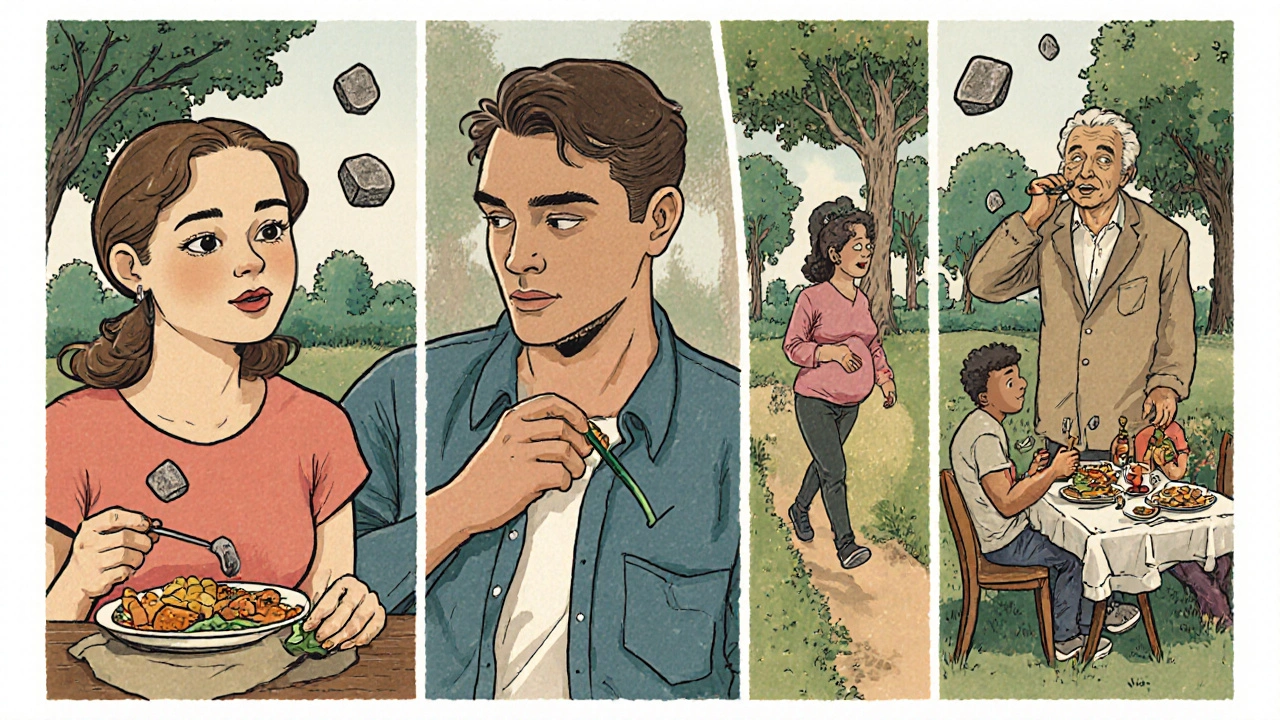
Not everyone gets gallstones. But some groups are far more likely to have them-and not even realize it.
- Women over 40, especially after pregnancy or hormone therapy
- People with obesity or rapid weight loss
- Those with type 2 diabetes or high triglycerides
- People of Native American or Mexican American descent
- Anyone over 60
- People who eat a lot of fried foods or refined carbs
One study from the UK’s National Health Service tracked 12,000 adults over five years. Nearly 18% had gallstones detected by ultrasound-yet only 3% ever had symptoms. That means 15 out of every 100 people walking around with gallstones don’t know it.
How Are Silent Gallstones Found?
You won’t feel them. You won’t see them. So how do you find them?
Most often, they’re discovered by accident. Someone gets an ultrasound for another reason-maybe a routine checkup, a stomach ache that turned out to be gas, or an abdominal scan after an injury. The radiologist spots a few dark shapes in the gallbladder and says, “You’ve got stones.”
There are three main ways doctors detect them:
- Abdominal ultrasound - the gold standard. It’s painless, safe, and catches 95% of stones.
- CT scan - shows larger stones, but misses smaller ones. Used if something else is suspected.
- MRI or MRCP - used if there’s concern about stones blocking the bile duct.
Don’t get an ultrasound just because you’re worried. Most doctors won’t recommend it unless you have risk factors or symptoms. But if you’ve had unexplained bloating, nausea after fatty meals, or mild right-side discomfort, ask about it.
Do Silent Gallstones Need Treatment?
No. Not unless they cause problems.
That’s the biggest myth: “If you have gallstones, you need them removed.” Not true. In fact, the American College of Gastroenterology says: “Asymptomatic gallstones should not be treated.” Why? Because surgery carries risks-and most stones never cause harm.
Think of it like a loose tooth. If it doesn’t hurt, you don’t pull it. You watch it. Same with gallstones.
But here’s the catch: if you’re about to have major surgery-like bariatric surgery or a heart transplant-doctors may remove the gallbladder at the same time. Why? Because if gallstones flare up during recovery, it could be life-threatening. Prevention beats crisis.
When Do Silent Gallstones Become Dangerous?
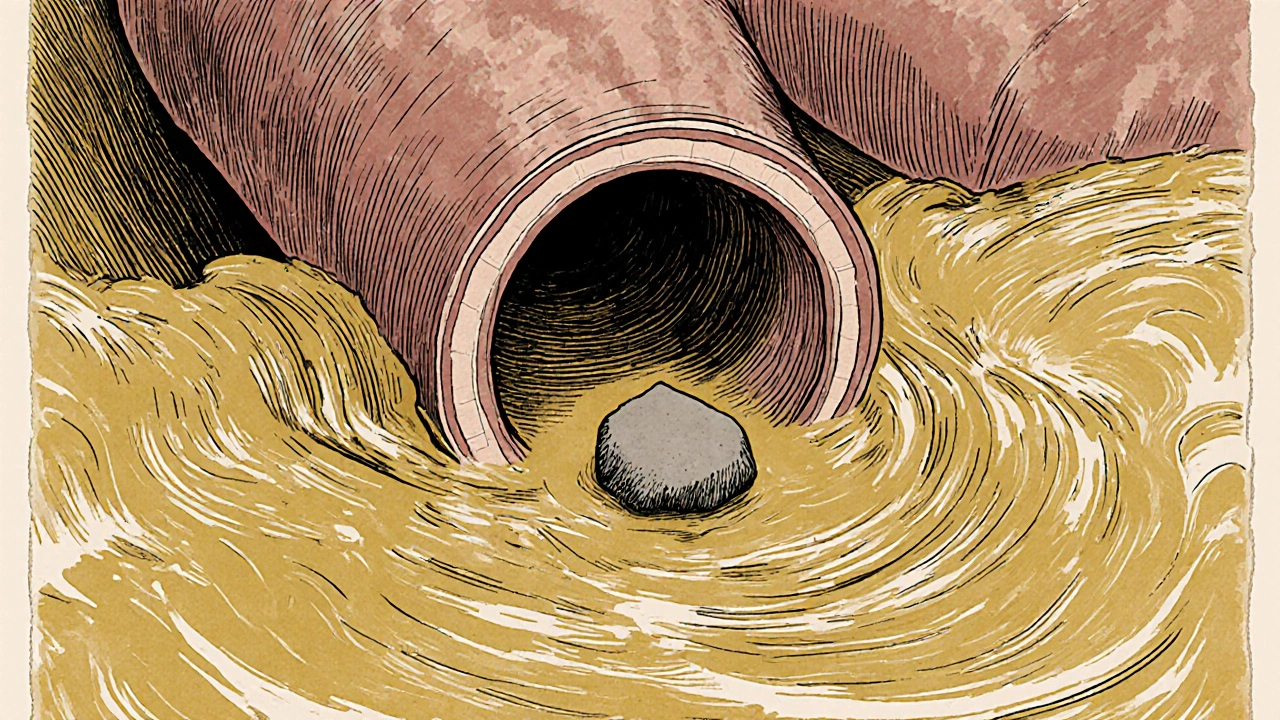
They turn dangerous when they move. A stone blocks the cystic duct? That’s acute cholecystitis-inflammation of the gallbladder. Symptoms: sharp pain under your right ribs, fever, nausea, vomiting. It’s an emergency.
Block the common bile duct? That’s choledocholithiasis. You’ll turn yellow (jaundice), your pee turns dark, your stool turns pale, and you’ll itch all over. This can lead to pancreatitis or liver damage.
These aren’t “wait-and-see” situations. If you feel sudden, severe pain lasting more than 4 hours, or notice yellow skin, go to the hospital.
How Are Symptomatic Gallstones Treated?
If your gallstones start causing pain or complications, the only reliable fix is surgery.
Laparoscopic cholecystectomy - removing the gallbladder through small cuts-is the standard. It’s done under general anesthesia. Most people go home the same day. Recovery takes about a week. You’ll feel fine afterward.
Why remove the whole gallbladder? Because stones almost always come back if you leave it. The gallbladder isn’t essential. Your liver still makes bile-it just flows directly into your intestine. Most people adapt perfectly. You might have looser stools for a few weeks, but that settles.
There are no proven pills to dissolve gallstones. Ursodeoxycholic acid can work for tiny cholesterol stones-but only if you take it for months or years, and even then, stones return in 50% of cases within 5 years. It’s not worth the hassle unless you can’t have surgery.
Shockwave therapy? Used in rare cases for kidney stones. Doesn’t work well for gallstones. Avoid clinics that promise “non-surgical removal.” They’re selling hope, not science.
Can You Prevent Silent Gallstones?
You can’t stop them completely. But you can lower your risk.
- Don’t lose weight too fast. Losing more than 3 pounds a week increases gallstone risk by 50%.
- Eat regular meals. Skipping meals lets bile sit too long, letting crystals form.
- Choose healthy fats. Olive oil, avocados, nuts help your gallbladder contract regularly.
- Limit sugar and refined carbs. High insulin levels boost cholesterol in bile.
- Stay active. Even 30 minutes of walking a day cuts risk by 20%.
One 2023 study from the University of Manchester followed 5,000 adults for 8 years. Those who ate at least three balanced meals daily and walked 10,000 steps had 40% fewer gallstones than those who skipped breakfast and sat most of the day.
What Should You Do If You’re Diagnosed?
If your ultrasound shows silent gallstones and you feel fine:
- Don’t panic.
- Don’t rush into surgery.
- Do make a plan with your doctor.
Keep track of your symptoms. If you start feeling:
- Pressure or dull ache under your right ribs after eating
- Bloating or nausea after fatty meals
- Unexplained fatigue or light-colored stools
-then get checked again. These could be early signs your stones are becoming active.
Get an ultrasound every 2-3 years if you’re over 60 or have multiple risk factors. It’s quick, free on the NHS, and could catch a problem before it becomes an emergency.
Myths About Silent Gallstones
There’s a lot of misinformation out there.
- Myth: “Gallstones cause bad breath.” Truth: No link. Bad breath is from oral hygiene or acid reflux.
- Myth: “Apple cider vinegar dissolves gallstones.” Truth: Nothing you drink dissolves them. It might soothe bloating, but that’s it.
- Myth: “You can’t eat fat if you have gallstones.” Truth: You need fat to trigger bile flow. Avoiding it makes stones worse.
- Myth: “Only overweight people get them.” Truth: Thin people get them too-especially if they’ve lost weight fast or have diabetes.
Stick to facts. Don’t trust Instagram healers or YouTube detox videos. Your gallbladder doesn’t need cleansing. It needs care.
Final Thoughts: Watch, Don’t Worry
Silent gallstones aren’t a death sentence. They’re a common, often harmless condition. The goal isn’t to eliminate them-it’s to know when they might become a problem.
If you’ve been told you have them and feel fine: live your life. Eat well. Move often. Don’t fear your gallbladder. But pay attention to your body. If something changes-new pain, new symptoms-don’t ignore it.
Most people with silent gallstones never need surgery. But for those who do, it’s one of the safest, most effective procedures in modern medicine. The real danger isn’t the stones. It’s waiting too long to act.
Can silent gallstones turn into cancer?
Rarely. Chronic inflammation from long-standing gallstones increases gallbladder cancer risk slightly-but the overall chance is less than 1 in 1,000. Most people with gallstones never develop cancer. The bigger risk is blockage and infection, not cancer.
Do gallstones go away on their own?
Sometimes. Tiny stones can pass into the intestine and exit with stool. But they usually don’t disappear completely. If they’re still in the gallbladder, they’re still there. Most stay for life unless removed surgically.
Can I still eat pizza or fried chicken if I have silent gallstones?
Yes-but in moderation. Eating a large, greasy meal might cause temporary bloating or discomfort as your gallbladder works harder. It won’t harm you. But if you notice consistent nausea or pain after fatty foods, it’s a sign your gallbladder is struggling. Reduce portions, not entire food groups.
Is there a blood test for gallstones?
No. Blood tests can show signs of complications-like elevated liver enzymes or bilirubin if a stone is blocking a duct-but they can’t detect the stones themselves. Ultrasound is still the only reliable method.
Should I get my gallbladder removed if I’m planning to lose weight?
If you have silent gallstones and plan to lose more than 20 pounds quickly-especially through surgery like gastric bypass-your doctor may recommend removing the gallbladder at the same time. Rapid weight loss increases gallstone formation by 30-50%. Prevention is safer than emergency surgery later.


Mary Follero
So many people panic when they hear 'gallstones'-but honestly, if you're asymptomatic, it's like having a mole on your back. You don't cut it off unless it starts changing shape. I've seen patients freak out over ultrasound results only to realize they'd never felt a thing. The body's smarter than we give it credit for.
Brad Samuels
I love how this post treats gallstones like a quiet roommate-not the enemy, just someone who's been there a long time. You don't kick them out unless they start throwing parties at 3 a.m. I had silent stones for 12 years. Never a single symptom. Just kept eating avocado toast and walking after dinner. Life went on.
Freddy Lopez
There's a philosophical tension here between intervention and acceptance. Medicine often rushes to remove what it cannot understand. But nature does not rush. The gallbladder, like the appendix, exists for a reason-even if we don't fully comprehend it. To remove it preemptively is to impose order on chaos that may never have been chaotic to begin with. Perhaps the real disease is our fear of the unknown body.
Will Phillips
Gallstones are a government ploy to sell surgeries and ultrasound machines... big pharma owns the AMA and the NHS and they want you scared so you'll pay for removal... i saw a video on gab where a guy cured his stones with lemon juice and cayenne... they dont want you to know this... also your liver is a magnet for toxins and if you dont detox you get stones... the system is rigged
william volcoff
Fun fact: you can survive without a gallbladder, but you can't survive without a functioning liver. That’s why I always tell people: don’t fix what isn’t broken. But also, if you’re about to lose 50 pounds in six months? Yeah, maybe get it out. Don’t be that guy who needs an ER trip during recovery. Smart prevention beats panic.
Arun Mohan
Look, I’ve been to Johns Hopkins. I’ve read the journals. Most of this is basic med school material. The real issue is that Western medicine is obsessed with scanning everything. In India, we treat symptoms-not shadows on a screen. If you feel fine, why are you even here? This is overdiagnosis disguised as prevention.
Tyrone Luton
It’s not about gallstones. It’s about control. We’ve been conditioned to fear anything inside us that we can’t see or name. A stone is just a stone. But the medical-industrial complex turns it into a crisis. You don’t need a scan. You need to listen. Your body has been whispering for years. You just stopped hearing it because you were too busy scrolling.
Jeff Moeller
I got mine found during a CT for a car accident. Zero pain. Still here. Still eating pizza. Still alive. Just don't be a hypochondriac.
Herbert Scheffknecht
Think about it-your gallbladder is like a silent orchestra conductor. It doesn’t make the music, it just tells the instruments when to play. When it’s gone, the music still plays, just differently. The body adapts. We don’t need to fix every imperfection. We need to stop seeing our bodies as machines that break and start seeing them as ecosystems that evolve. Silent stones aren’t a flaw. They’re a signature.
Jessica Engelhardt
Let’s be real-this is all just a capitalist scam to sell cholecystectomies. Meanwhile, real health problems like chronic fatigue and mold toxicity are ignored. And don’t get me started on how the FDA is in bed with Big Pharma. You think they want you to know that turmeric and fasting can dissolve stones? Nah. They profit from your fear. Stay woke. Your liver is your first line of defense-and they want you to cut it out.
Freddy Lopez
Interesting how the commentariat has turned a medical condition into a metaphor for modern anxiety. We fear what we cannot control. The stone is silent, yes-but so are our unspoken fears about mortality, about the fragility of the body, about the illusion of medical certainty. Perhaps the real treatment isn’t surgery or ultrasound-but quiet acceptance. To live with the unknown without needing to remove it.