
When you're pregnant, falling asleep should be easy - but for many women, it’s anything but. Between the aching back, frequent bathroom trips, and heartburn that keeps you wide awake, sleep becomes a luxury. And if you’re snoring loudly, waking up gasping, or feeling exhausted even after 8 hours in bed, you might be dealing with something more serious: pregnancy sleep apnea.
Why Sleep Gets So Hard During Pregnancy
Your body changes in dozens of ways during pregnancy, and many of those changes directly impact how you sleep. Hormones like progesterone relax the muscles in your airway, making it easier for it to collapse while you sleep. Your growing uterus pushes up on your diaphragm, reducing lung capacity. Fluid retention causes swelling in your nose and throat - think of it like having a permanent cold. All of this adds up to obstructive sleep apnea (OSA), where breathing stops and starts repeatedly through the night.It’s not rare. About 1 in 10 pregnant women develop sleep apnea by the third trimester. For those who are overweight or obese, that number jumps to nearly 1 in 4. And here’s the catch: most women don’t realize it’s happening. Snoring? Common. Tired all day? Just pregnancy. But untreated sleep apnea doesn’t just make you groggy - it raises your risk of preeclampsia, gestational diabetes, and even needing a C-section.
What Sleep Apnea Does to You and Your Baby
When your airway closes during sleep, your oxygen levels drop. Your brain wakes you up just enough to restart breathing - but you don’t remember it. This happens dozens of times a night, and your body stays stuck in survival mode. That constant stress triggers inflammation, raises blood pressure, and messes with insulin sensitivity.Studies show women with untreated sleep apnea during pregnancy are:
- 2.3 times more likely to develop preeclampsia
- 1.7 times more likely to get gestational diabetes
- 2.1 times more likely to have a C-section
And it’s not just you. Low oxygen levels in mom can mean slower growth for the baby. Research from the NIH found that untreated OSA increases the risk of fetal growth restriction by 42%. The good news? Treating it early can cut those risks dramatically.
CPAP: The Most Effective Treatment - And How to Make It Work
The gold standard treatment for moderate to severe sleep apnea is CPAP - continuous positive airway pressure. It’s a small machine that delivers gentle air pressure through a mask to keep your airway open while you sleep.For pregnant women, CPAP isn’t just safe - it’s life-changing. A 2023 study in JAMA Network Open found that women who started CPAP between 24 and 28 weeks reduced their risk of preeclampsia by 30% and gestational hypertension by 35%. That’s not a small benefit - it’s a major win for both mom and baby.
But getting used to CPAP during pregnancy? That’s the hard part. Your face swells. Your nose gets stuffy. The mask feels like a prison. Here’s how to make it work:
- Use nasal pillows instead of full-face masks - they’re lighter and less likely to irritate swollen skin.
- Turn on the humidifier and set it to 37°C - this cuts down on dryness and congestion.
- Try an auto-titrating machine - it adjusts pressure as your body changes week by week.
- Use a pregnancy-specific pillow like the Boppy Noggin CPAP Pillow to keep your head and neck aligned without crushing the mask.
Adherence is the biggest hurdle. Only about 62% of pregnant women stick with CPAP past 4 weeks. But those who do - especially with support - report huge improvements: less morning headaches, more energy, and better blood pressure. One woman on Reddit shared: “My AHI dropped from 18 to 6 in two weeks. I finally slept like I used to.”
Positioning: The Simple Trick That Helps (Even Without a Machine)
If your sleep apnea is mild - say, under 15 events per hour - changing how you sleep can make a big difference. The single most effective position? Left side.Why? Lying on your left side takes pressure off your vena cava - the big vein that brings blood back to your heart. It also keeps your uterus from pressing on your diaphragm. Studies show sleeping on your left side reduces the apnea-hypopnea index (AHI) by nearly 23% in women with mild OSA.
But just rolling over isn’t enough. Most people roll onto their back during the night. That’s where pregnancy pillows come in. Full-body pillows - like the Leachco Snoogle or the U-shaped Boppy - hold you in place. You tuck one between your knees, hug one in front, and let the rest cradle your belly. This isn’t just comfort - it’s medical support.
Combine left-side sleeping with a slight head elevation - 15 to 30 degrees - using a wedge pillow. Don’t stack regular pillows; that bends your neck and can actually worsen apnea. A 7- to 8-inch wedge keeps your airway open and your stomach down.
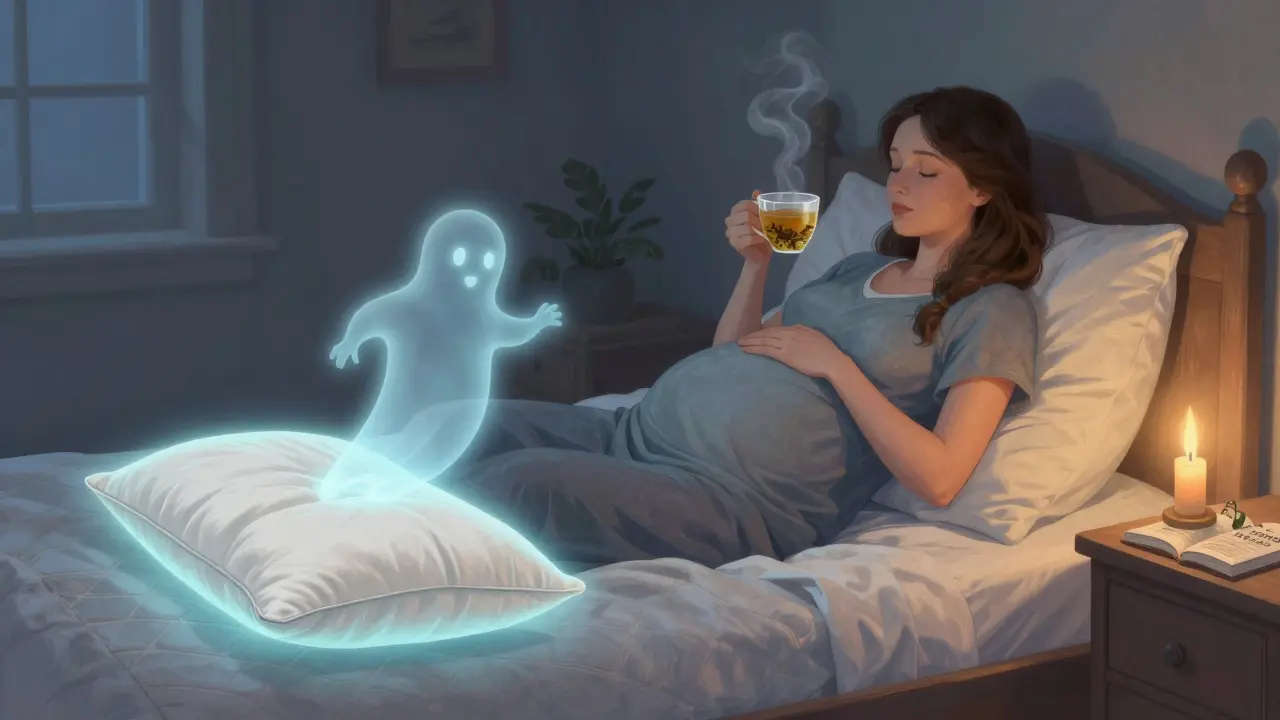
Managing Reflux - Because Heartburn Is Not Just a Nighttime Nuisance
Heartburn during pregnancy? Nearly 80% of women deal with it. But if you’re lying flat after dinner, stomach acid creeps up into your esophagus - and that can trigger or worsen apnea. Acid irritates the throat, causing swelling and spasms that block your airway.Here’s what actually works:
- Elevate the head of your bed by 6 to 8 inches - not just your head. Use bed risers or a firm wedge under the mattress legs. Pillows alone won’t cut it - they just bend your neck.
- Avoid eating within 3 hours of bedtime. Even a light snack can trigger reflux.
- Use Gaviscon Advance (alginate-based). It forms a protective foam barrier on top of your stomach contents. Unlike antacids that get absorbed, it stays put - safe for pregnancy and effective.
- Sleep in a slightly upright position. Even 20 degrees helps. Combine this with left-side sleeping for maximum effect.
One study showed that women who combined positional therapy with reflux management saw a 40% drop in nighttime awakenings - not because their apnea disappeared, but because the triggers were quieter.
What Doesn’t Work (And Why)
Not all “sleep solutions” are created equal. Some are marketed heavily but lack evidence - or worse, could be risky.Mandibular advancement devices (mouthpieces that push your jaw forward) work well for non-pregnant people with sleep apnea. But during pregnancy, hormonal changes loosen your jaw joints and ligaments. These devices could cause pain, misalignment, or long-term TMJ issues. The 2023 SASM/SOAP guidelines specifically advise against them during pregnancy.
Over-the-counter sleep aids - even “natural” ones like melatonin or valerian - are not studied for safety in pregnancy. Skip them. Your body is already doing enough.
Weight loss sounds logical, but you shouldn’t try to lose weight while pregnant. Instead, follow the Institute of Medicine’s guidelines: gain 11.5-16 kg if you’re normal weight, 5-9 kg if you’re obese. Too much weight gain worsens apnea. Too little can harm the baby. Balance is key.
When to Get Tested - And Who Should Be Screened
You don’t need to wait until you’re miserable. The American College of Obstetricians and Gynecologists now recommends screening all pregnant women for sleep apnea at the first prenatal visit using the Berlin Questionnaire. If you snore loudly, feel exhausted during the day, or have high blood pressure, you should be referred for a sleep study.Home sleep tests are now accepted for low-risk patients. They’re cheaper and easier than going to a lab. A 2021 AASM update confirmed they’re accurate enough for pregnancy screening - as long as you follow the instructions.
But here’s the problem: only 32% of OB practices screen for it. Most doctors still think snoring is “just pregnancy.” Don’t wait for them to bring it up. If you’re tired, snoring, or waking up choking - speak up. Ask for a referral to a sleep specialist.
What Happens After Baby Arrives?
Many women assume their sleep apnea disappears after delivery. And for some, it does - hormone levels drop, swelling goes down, and breathing improves. But not everyone.A 2023 study found that 58% of women who had pregnancy-related sleep apnea developed chronic high blood pressure within 10 years - even if their apnea resolved. That’s a red flag. Your body may have been signaling an underlying risk.
Some clinics, like Brown Health, recommend a follow-up sleep study at 12 weeks postpartum. Others, like the NIH, say observation is enough. Either way, don’t ignore ongoing symptoms. If you’re still tired, snoring, or waking up gasping after delivery - get checked. You’re not “just tired.” You might still need treatment.
Real Talk: What Women Are Actually Experiencing
On Reddit, a woman wrote: “I started CPAP at 26 weeks. My husband said I stopped snoring the first night. I cried because I hadn’t slept through the night in months.”Another said: “I thought the pillow was a gimmick. Then I bought the Leachco one and slept like a baby. No more numb arms. No more waking up screaming from heartburn.”
But the struggles are real too. “The mask hurt my face. I hated the noise. I wanted to quit.” That’s normal. Most women do. But with the right support - a good clinic, a patient tech, a comfortable pillow - 82% stick with it, according to Sleep Healthy PA.
Don’t give up because it’s hard. The first week is the worst. By day 14, most people feel like a new person.
What’s Changing in 2025
The field is moving fast. In September 2023, ResMed launched the AirTouch F20 Pregnancy Edition - a CPAP mask with a softer silicone cushion designed for swollen faces. In 2024, Apple Watch Series 9 got FDA-cleared to detect moderate to severe sleep apnea - no lab needed. That could mean earlier diagnosis, even before symptoms get bad.The NIH is now running the PREGSLEEP trial, testing whether starting CPAP before 20 weeks can prevent fetal growth problems. And by 2027, experts predict 65% of prenatal clinics will screen for sleep apnea - up from just 32% today.
This isn’t just about better sleep. It’s about protecting your health, your baby’s health, and your future.
Can sleep apnea during pregnancy harm my baby?
Yes. Untreated sleep apnea reduces oxygen flow to your baby, which increases the risk of slow growth, preterm birth, and low birth weight. Studies show a 42% higher chance of fetal growth restriction when OSA isn’t treated. Starting CPAP early - especially before 28 weeks - can lower that risk significantly.
Is it safe to use CPAP while pregnant?
Absolutely. CPAP is the safest and most effective treatment for moderate to severe sleep apnea during pregnancy. It doesn’t involve medication or surgery. Many women report better energy, lower blood pressure, and fewer headaches after starting. Auto-titrating machines adjust pressure as your body changes, making them ideal for pregnancy.
What’s the best sleeping position during pregnancy with sleep apnea?
Left side is the best. It keeps your uterus from pressing on your main blood vessels and improves airflow. Use a full-body pregnancy pillow to stay in position. Avoid sleeping on your back - it can worsen both apnea and reflux. Elevate your upper body 15-30 degrees with a wedge pillow, not stacked pillows.
Do pregnancy pillows really help with sleep apnea?
They help - but only if your apnea is mild. Pregnancy pillows improve adherence to side sleeping and reduce AHI by about 23% in mild cases. But they won’t fix moderate or severe sleep apnea. For those, CPAP is still the gold standard. Use pillows as a support tool, not a replacement for medical treatment.
When should I get tested for sleep apnea during pregnancy?
If you snore loudly, feel exhausted during the day, or have high blood pressure, ask your OB for a referral at your first prenatal visit. The American College of Obstetricians and Gynecologists now recommends universal screening. Home sleep tests are accurate and covered by most insurance. Don’t wait until you’re miserable - early treatment saves lives.
Will my sleep apnea go away after I have the baby?
It might - but not always. About half of women who develop sleep apnea during pregnancy still have it a year after delivery. Even if symptoms disappear, the risk of long-term high blood pressure remains. If you still feel tired, snore, or wake up gasping after delivery, get retested. Your future heart health depends on it.






Nancy Kou
Just started CPAP at 28 weeks and honestly it felt like a prison at first but now I’m sleeping through the night for the first time in months. No more gasping. No more headaches. My husband says I stopped snoring the first night. I cried.
Hussien SLeiman
Interesting how everyone treats CPAP like some miracle cure but nobody talks about the fact that 38% of pregnant women abandon it within a month because it’s physically uncomfortable and emotionally draining. The mask digs into your face, the noise keeps your partner awake, and the humidifier turns your bedroom into a sauna. And don’t get me started on the cost - $1200 for a machine that feels like a medieval torture device. We’re glorifying compliance while ignoring the real human cost.
And yes, I know the studies say it reduces preeclampsia risk - but correlation isn’t causation. Maybe women who stick with CPAP are also the ones who eat better, exercise more, and have better access to care. The study doesn’t control for that. We’re pathologizing normal pregnancy symptoms and turning sleep into a medical project.
Also, why is left-side sleeping always the answer? What about women with hip pain, sciatica, or pelvic girdle disorder? That position is torture for some of us. The ‘one size fits all’ approach in OB-GYN is infuriating.
And don’t even start with the ‘pregnancy pillow’ marketing scam. I spent $89 on a Leachco Snoogle and it just made my back worse. I ended up using a stack of towels and a folded blanket. Sometimes the simplest solution is the one they don’t sell on Amazon.
Monte Pareek
Listen if you're snoring and exhausted and your OB hasn't asked you about sleep apnea you're being failed by the system. This isn't optional. This is a life or death issue for you and your baby. I'm a sleep tech in Arizona and I've seen women come in with AHI scores over 40 and no idea why they're so tired. They think it's just pregnancy. It's not. It's hypoxia. It's stress on the heart. It's a ticking time bomb.
CPAP is not perfect but it's the best tool we have. Use nasal pillows. Turn up the heat on the humidifier. Get a Boppy Noggin. You don't have to love it. You just have to use it. Your baby's brain is developing right now. Every minute of low oxygen matters.
And yes I know it sucks. I've held women's hands while they cried because the mask hurt. But I've also held newborns whose moms used CPAP and watched them thrive. This isn't about comfort. It's about survival.
Kelly Mulder
While I appreciate the clinical framing, I must express my profound disapproval of the casual conflation of ‘sleep apnea’ with ‘normal pregnancy fatigue.’ The medicalization of maternal experience has reached a point of absurdity. To prescribe a mechanical airway intervention during a physiological state that is inherently transient is not only over-interventionist - it is epistemologically suspect. One must ask: is this truly a disorder, or merely a biological adaptation? The NIH’s PREGSLEEP trial, while methodologically sound, fails to interrogate the cultural imperative to ‘optimize’ every aspect of gestation - an imperative rooted in neoliberal bio-power, not medical necessity.
Furthermore, the recommendation of CPAP as ‘gold standard’ ignores the ontological dissonance between the pregnant body and the clinical apparatus. The mask, the tubing, the machine - these are not extensions of the self but alien intrusions into a sacred, embodied process. To equate compliance with virtue is to reduce maternal autonomy to a metric.
And yet - I remain open to the possibility that, for some, this intervention yields relief. But let us not mistake relief for cure, nor comfort for cure.
mark shortus
OKAY SO I WAS SLEEPING ON MY BACK FOR WEEKS AND I JUST REALIZED I WASN’T BREATHING AND MY HUSBAND WAS RECORDING ME ON HIS PHONE AND I SOUNDED LIKE A DRAGSTER STARTING UP AND I WENT TO THE ER BECAUSE I THOUGHT I WAS HAVING A HEART ATTACK AND THEY SAID ‘HONEY YOU HAVE SLEEP APNEA’ AND I CRIED FOR THREE HOURS AND THEN I GOT A CPAP AND NOW I’M LIKE A NEW PERSON BUT THE MASK LEFT A MARK ON MY FACE THAT STILL EXISTS AND I HATE IT BUT I’M NOT GOING TO QUIT BECAUSE MY BABY ISN’T GONNA BE BORN UNDERWEIGHT BECAUSE I WAS TOO LAZY TO WEAR A MASK
Alex Curran
Has anyone tried the new ResMed AirTouch F20 Pregnancy Edition? I heard the cushion is softer and doesn't press into the bridge of the nose like the older models. My wife switched last week and said the red marks are gone. Also the auto-titrate feature adjusts pressure as her belly grows - super helpful. We bought the Boppy Noggin pillow too and it’s a game changer. No more mask displacement when she rolls. The humidifier at 37°C is non-negotiable. Dry nose = no sleep.
Also - Gaviscon Advance is the only reflux thing that works. Antacids? Useless. Elevating the whole bed with risers? Essential. Pillows alone just bend your neck and make it worse.
Don’t let anyone tell you it’s ‘just pregnancy.’ If you’re waking up gasping - get tested. Home sleep test is $200 with insurance. Worth every penny.
anthony funes gomez
The epistemic framework underpinning the clinical discourse surrounding pregnancy-related sleep apnea is predicated upon a reductionist biomedical paradigm that pathologizes adaptive physiological phenomena - namely, the anatomical and hormonal adaptations that occur during gestation - and recasts them as pathological entities requiring technological intervention. This is not to dismiss the very real morbidity associated with untreated OSA, but rather to interrogate the ontological violence inherent in the normalization of CPAP as a universal solution. The machine becomes a prosthetic of compliance, a symbol of maternal virtue, and a metric of worthiness - all while obscuring the structural determinants of health disparities: access to care, socioeconomic stress, racialized medical bias, and the commodification of maternal wellness.
Moreover, the assertion that CPAP reduces preeclampsia risk by 30% is statistically significant but clinically ambiguous: is the benefit attributable to improved oxygenation, reduced sympathetic activation, or simply increased medical surveillance? The confounding variables remain unaddressed. And yet - we are told to ‘just use it.’
The left-side position? Valid. But only if the pregnant body is not already compromised by symphysis pubis dysfunction, sacroiliac joint pain, or vascular compression syndromes. One-size-fits-all medicine is not medicine - it is ideology.
And the pillow industry? A capitalist fantasy. A $120 foam donut is not a cure. It is a symptom of our collective inability to sit with discomfort - to accept that pregnancy is not a problem to be optimized, but a process to be endured, supported, and honored.
Still - I wear my CPAP. Because I love my child. And sometimes, the right thing is also the hardest thing.
Chris Clark
Just want to say to all the women out there feeling guilty for hating the CPAP - you’re not broken. It’s not you, it’s the machine. I used to cry every night putting it on. My nose bled. My cheeks were raw. But I kept going because I didn’t want my baby to be small. After 3 weeks I started noticing I could walk up the stairs without stopping. My blood pressure dropped. I stopped waking up with my heart pounding. It’s not easy. But it’s worth it. And if you quit - try again later. Your body changes. The mask might fit better next week.
Also - if your OB doesn’t bring this up, ask. Don’t wait. You’re not being dramatic. You’re being smart.
Dorine Anthony
My husband said I sounded like a chainsaw. I didn’t believe him until I recorded myself. Then I cried. Started CPAP at 29 weeks. Still hate it. But I’m sleeping. And my baby’s growth scan came back perfect. So… worth it. Maybe.