
The U.S. Food and Drug Administration (FDA) doesn’t just approve drugs - it watches them after they’re on the market. Every year, about 2 million reports of side effects, medication errors, and product issues pour into the FAERS (FDA Adverse Event Reporting System). This isn’t a secret system. It’s public. And anyone - researchers, patients, journalists, even curious citizens - can use it to dig into what’s really happening with medications after they’re sold.
But here’s the catch: FAERS isn’t a simple list of complaints. It’s messy, complex, and full of traps for the untrained. If you think you can just search for a drug and see if it’s "dangerous," you’re setting yourself up for misunderstanding. The data doesn’t prove cause. It shows patterns. And patterns need context.
What FAERS Actually Contains
FAERS collects Individual Case Safety Reports (ICSRs). Each one is a snapshot of a single event. It includes:
- Patient details (age, gender, initials - no full names)
- Drug names, doses, and when they were taken
- The adverse event itself, coded in MedDRA (Medical Dictionary for Regulatory Activities) - a standardized medical language used globally
- Reporter type (doctor, pharmacist, patient, or drug company)
- Outcome (hospitalization, death, disability, etc.)
Think of it like a giant pile of emergency room notes. Some are detailed. Some are one-line scribbles. Some are from people who took five different pills at once. And some? They’re from drug companies who are legally required to report anything they hear about.
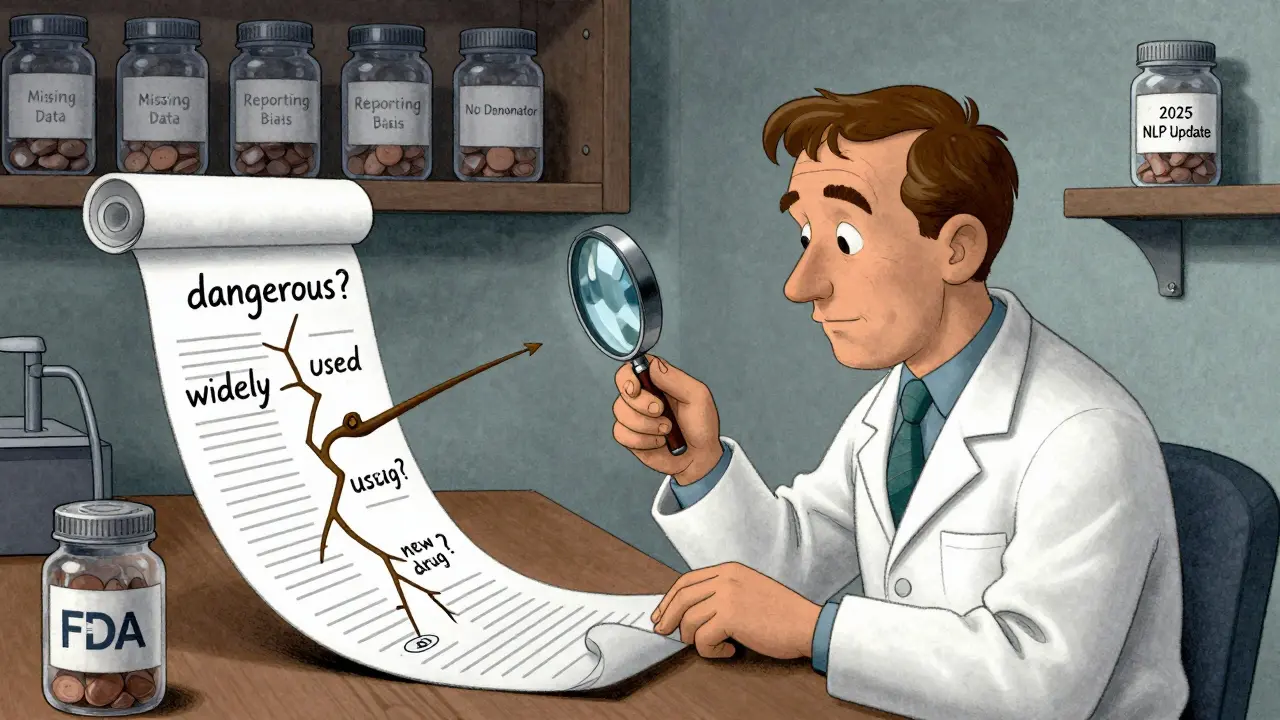
That’s why FAERS has a massive reporting bias. Healthcare workers report serious events. Patients report things they notice themselves - like a rash or dizziness. Companies report everything, even if it’s unclear if the drug caused it. So if a drug shows up with lots of reports, it could mean:
- It’s dangerous
- It’s widely used
- People are talking about it more
- It’s new and everyone’s watching
FAERS doesn’t tell you which. That’s your job.
How to Access the Data - Three Ways
You don’t need special clearance to see FAERS data. The FDA offers three main ways in:
1. The FAERS Public Dashboard
This is the easiest entry point. Launched in 2023, it’s a web tool built for non-experts. Go to the FDA website, find the dashboard, and you can:
- Search by drug name
- Filter by adverse event (like "heart attack" or "liver injury")
- Break down results by age, gender, or year
- See graphs showing trends over time
No coding. No downloads. Just click and explore. It’s perfect for a quick look. A patient wondering if their new blood pressure med is linked to dizziness? Type it in. A journalist checking if a popular antibiotic has unusual reports? Do the same.
But remember: this dashboard shows counts, not rates. If 500 people report dizziness after taking Drug A and 100 after Drug B, it doesn’t mean Drug A is five times more likely to cause dizziness. Maybe 10 million people take Drug A and only 2 million take Drug B. The dashboard doesn’t show that.
2. Quarterly Data Extracts
If you need more than a quick glance, the FDA releases full data files every three months. These come in two formats:
- ASCII - plain text files, easy to open in Excel or Notepad
- XML - structured, machine-readable, but needs software to parse
Each file is huge - between 1 and 5 gigabytes. You’ll need:
- A decent computer (16GB RAM minimum)
- Basic programming skills (Python or R help a lot)
- Time to learn how to clean and filter the data
These files are raw. No filters. No charts. Just data. Researchers use them to run statistical models, compare drugs over time, or combine FAERS with other datasets like hospital records. It’s powerful - but only if you know how to use it.
3. OpenFDA API
For developers or tech-savvy users, the OpenFDA API (a free, programmatic interface to FDA data) lets you pull FAERS data directly into apps, scripts, or dashboards. You send a simple request - like https://api.fda.gov/drug/event.json?search=drugname:"ibuprofen" - and get back JSON-formatted results.
This is how universities, startups, and tech companies build custom tools. One research team used the API to track rare skin reactions in teens using acne meds. Another built a tool for pharmacists to flag possible interactions in real time. The API doesn’t change the data - it just gives you a better way to access it.
What FAERS Can’t Tell You
Here’s where people get fooled. FAERS data looks like proof. But it’s not.
- No denominator: You don’t know how many people took the drug. So you can’t calculate risk. If 10 people report a seizure after taking a new drug, is that high? You don’t know unless you know how many took it.
- No verification: Reports aren’t confirmed. Someone might report "headache" after taking a pill - but they had a migraine anyway. The FDA doesn’t verify each case.
- Reporting bias: Serious events get reported more. New drugs get reported more. Drugs with lots of media attention get reported more.
- Missing data: About 30% of reports have incomplete info - missing dates, wrong drug names, unclear symptoms.
Dr. Robert Ball from the FDA says it plainly: "Data mining generates hypotheses - not conclusions." FAERS is a starting point. Not an endpoint.
How Experts Use It
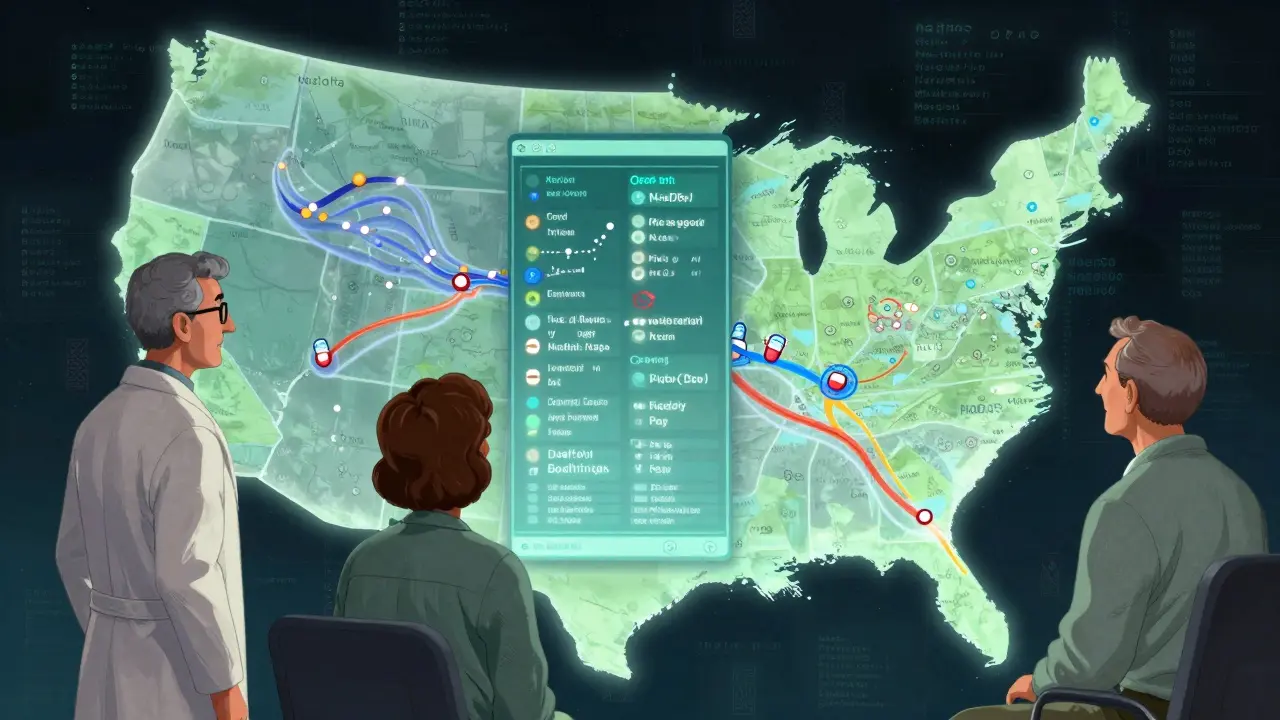
Academics and regulators don’t just look at numbers. They dig deeper.
At Johns Hopkins, researchers combined FAERS data with insurance claims to estimate how often a diabetes drug caused pancreatitis. They found a signal that led to a label update. At Columbia University, scientists used machine learning to spot hidden patterns - like a rare liver injury linked to a combo of two common drugs. Neither discovery would’ve happened without FAERS.
But they also know the limits. They don’t say "Drug X causes Y." They say: "We found a statistical association in FAERS that warrants further study." That’s the difference between alarm and science.
What’s Changing in 2025
The FDA isn’t resting. In January 2024, they switched to the ICH E2B(R3) (an updated global standard for electronic adverse event reporting). This means:
- More detailed data (like exact dosing times)
- Better integration with global systems
- Less room for errors in submissions
By late 2024, the FDA plans to launch a new API that lets you query the dashboard’s tools programmatically - meaning you could build a tool that pulls real-time trend data without downloading files.
In 2025, they’re adding natural language processing to the dashboard. Soon, you might be able to type "I had a stroke after taking this pill" and the system will understand what you mean - even if the report says "sudden neurological deficit."
And in the long term? The FDA is testing ways to link FAERS with electronic health records and insurance claims. That could finally give them the "denominator" - how many people actually took the drug - and turn FAERS from a signal detector into a true risk calculator.
Common Mistakes and How to Avoid Them
If you’re new to FAERS, here’s what trips people up:
- Thinking more reports = more dangerous. Always ask: "How many people used this drug?"
- Ignoring MedDRA codes. "Dizziness" and "vertigo" are different terms. Use the FDA’s MedDRA browser to map terms.
- Not checking the date range. A spike in reports might be from a recent media story - not a real safety issue.
- Forgetting concomitant drugs. Did the patient take 7 other meds? One of those might be the real culprit.
- Using raw data without cleaning. Missing values, duplicate reports, and typos will ruin your analysis.
Best practice: Start with the Public Dashboard. Get a feel for the data. Then, if you need more, download the quarterly files. And always, always cross-check with other sources - clinical trials, published studies, or even the European system EudraVigilance.
Who Uses FAERS - And Why
It’s not just scientists. Here’s who’s using it and why:
- Researchers (55%): Publish studies, support regulatory decisions, find rare side effects.
- Drug companies (30%): Monitor their own products, meet FDA requirements, avoid surprises.
- Patient groups (15%): Advocate for label changes, raise awareness, find hidden risks.
One patient group used FAERS to find a dangerous interaction between a common antidepressant and a diabetes drug. The signal was weak - only 1 in 10,000 patients. But it was enough to trigger a warning from the FDA. That’s the power of transparency.
Final Thoughts
FAERS is one of the most open pharmacovigilance systems in the world. No other country gives the public this level of access. It’s not perfect. It’s not easy. But it’s real. And it’s changing how we understand drug safety.
Don’t use it to panic. Use it to ask better questions. If a drug has a lot of reports, dig deeper. Look at the context. Talk to experts. Compare it to other data. FAERS doesn’t give you answers - it gives you clues. And with those clues, you can start to see the real picture.
Can I look up a specific person’s adverse event report in FAERS?
No. FAERS removes all personally identifiable information (PII) before releasing data. Names, addresses, and exact dates of birth are masked. Even if you know someone who reported an event, you can’t find their report. This protects privacy while still allowing public access to patterns and trends.
Is FAERS data only for U.S. drugs?
FAERS includes reports for drugs sold in the U.S., regardless of where they were manufactured. It also includes reports for drugs used in the U.S. by Americans abroad. But it does not include reports from other countries - those go into systems like EudraVigilance or VigiBase. So if a drug is only sold in Europe, it won’t appear in FAERS unless it was also marketed in the U.S.
How often is FAERS data updated?
The FDA releases new data quarterly - every three months. The Public Dashboard updates within weeks of each release. Raw data files (ASCII and XML) are posted on the FDA website on a set schedule, usually within 30 days after the end of each quarter. If you’re tracking a drug, check the FDA’s FAERS page for exact release dates.
Can I report an adverse event directly to the FDA?
Yes. Through the MedWatch (FDA’s safety reporting program) portal, patients, caregivers, and healthcare providers can submit reports online. You don’t need to be a doctor. The form is simple and takes about 10 minutes. These reports make up about 25% of FAERS data and are crucial for catching rare or unexpected reactions.
Are there alternatives to FAERS for drug safety data?
Yes. The European Medicines Agency runs EudraVigilance, which has more detailed analytical tools but restricts public access. The WHO’s VigiBase is global but not user-friendly for non-experts. Commercial platforms like Oracle Argus or IBM Watson Health offer advanced analytics - but they cost tens of thousands of dollars a year. FAERS remains the only major system that gives free, public access to millions of reports.




Erica Santos
Oh wow, another 'transparency' fairy tale from the FDA. Let me guess - you're one of those people who thinks 'public data' means 'trustworthy'? Please. The system is gamed daily by pharma lobbyists who submit reports like they're playing Tetris with human lives. And don't even get me started on how they scrub the data before release - 'missing values'? Yeah right. More like 'conveniently erased'. This isn't transparency. It's theater with a side of placebo.
And don't tell me about 'patterns' - patterns are just lies with math. If 10 million people take a drug and 500 report dizziness, you call that 'noise'. But if a small company's drug gets 50 reports? Suddenly it's a 'signal'. Classic. The FDA doesn't want truth - they want plausible deniability with a spreadsheet.
Also, 'openFDA API'? Cute. Try using it when your server gets throttled for 'excessive queries'. Oh wait - that's not a bug. It's a feature. To keep the riffraff out. I'm not surprised. They'd rather you stare at pretty graphs than ask why the numbers don't add up.
And let's not forget: every time someone tries to use this data to expose a real danger, the industry sues, the media ignores it, and the FDA 'reviews' it into oblivion. This isn't science. It's a public relations stunt with a side of bureaucratic cruelty.
So yeah, go ahead. 'Dig deeper.' I dare you. See how long it takes before your email gets flagged by a compliance bot and your research gets buried under a mountain of 'pending review'.
Transparency? More like a mirror that only reflects what they want you to see.
George Vou
so like… i heard from this guy on youtube that the FDA is secretly using AI to filter out reports about vaccines causing autism? like… i saw a video where a woman in ohio filed a report and it just disappeared. then her kid had a seizure. now she’s in a wheelchair. i think the gov is hiding the truth because they dont want people to know the truth about big pharma. also i think they use the data to control the population. like… if you report too much, you get flagged. and then you cant get meds anymore. its all a scam. also i think the meddra codes are coded messages. like ‘dizziness’ means ‘you are being monitored’.
also why is the dashboard so slow? i think they’re slowing it down on purpose. to make us give up. its a mind game. they want us to think its broken. but its not. its just too powerful for us to handle. i think they’re scared. i think they know what they did.
Katy Shamitz
Oh honey, I just love how you're trying to be all scientific and neutral about this. But let me tell you - if your child has a seizure after taking a new drug, and the FDA says 'we can't prove causation,' that's not science - that's negligence dressed up in a lab coat.
And don't even get me started on how drug companies report everything. Every sneeze? Every headache? They report it like it's a tax deduction. And then they say 'oh, we're just being responsible.' No. You're covering your ass while real people suffer.
And why is it only 25% of reports come from patients? Because we're not doctors! We're not supposed to know what 'liver injury' looks like! We're supposed to trust the system - but the system is designed to protect corporations, not children.
I've been doing this for 12 years. I've seen mothers cry in courtrooms because their kid died after taking a 'safe' medication. And the FDA? They gave a press release. With graphs. And a smile.
You want transparency? Start by publishing the names of the reviewers. Let us know who decided which reports were 'incomplete.' Let us know who's sleeping with who at Pfizer. That's transparency. Not some dashboard with pretty pie charts.
And don't you dare tell me to 'dig deeper.' I've dug so deep I've found bones. And they're still not buried.
Nicholas Gama
FAERS is a statistical artifact masquerading as evidence. The absence of a denominator renders every reported association meaningless. You're not 'mining data' - you're chasing ghosts in a haystack built by biased reporters and incentivized pharma. The dashboard is a placebo for the intellectually lazy. The API? A toy for undergrads with Python notebooks. Real pharmacovigilance requires longitudinal cohort studies, not click-and-drag graphs. If you think this is science, you've never read a single RCT. Or a single regulatory guidance document. Or a single peer-reviewed paper on signal detection. You're not a researcher. You're a data tourist.
Mary Beth Brook
FAERS is a national security asset. The U.S. leads the world in pharmacovigilance because we have the most transparent system. Other countries? They bury reports. They censor. They lie. We don't. We give the public access - even if they misuse it. Even if they misinterpret. Even if they scream on Reddit about autism and vaccines. We don't censor. We don't hide. We trust the American people. That's why we're #1. And if you're too dumb to understand the difference between a report and a risk, that's not the system's fault. That's your problem. The data is there. Use it. Or shut up.
Ray Foret Jr.
Yo this is actually super cool 😊 I never knew you could look this stuff up! I just found out my grandma's blood pressure med had 300+ reports of dizziness and I was like WHOA. I'm gonna dig into the quarterly files now - sounds like a fun weekend project 🤓 Thanks for breaking it down so clearly! Also, if anyone knows how to use Python to filter by MedDRA codes, hit me up - I'm a noob but willing to learn! #PharmaNerdInTraining 🚀
rafeq khlo
The FAERS system is a structural failure of epistemological rigor. The absence of a denominator negates the validity of any inferential claim. The reliance upon unverified self-reported data introduces overwhelming selection bias. The MedDRA coding system, while standardized, is insufficiently granular to capture clinically relevant nuance. The public dashboard obscures statistical uncertainty through visual aggregation. The API provides access without context. The entire architecture is predicated upon a false premise: that quantitative abundance equates to qualitative significance. This is not science. It is epistemic theater. The FDA, in its current form, is not a regulatory body - it is a bureaucratic performance art collective.
Morgan Dodgen
They say 'no one can identify you' but they don't mention the metadata. IP logs. Browser fingerprints. Device IDs. The FDA tracks every search. Every click. Every time you look up a drug. They build profiles. They tag you. If you search for 'Lipitor liver failure' three times in a week? You get flagged. Next thing you know - your insurance denies your claim. Or your doctor stops prescribing it. Or you get a 'safety advisory' letter. Coincidence? Nah. It's all connected. The system isn't open - it's a trap. They want you to dig. So they can watch. So they can control. So they can silence you before you find the real truth. And don't think they don't know what you're looking for. They do. And they're waiting.
Philip Mattawashish
You call this transparency? This is the same system that ignored the opioid crisis for a decade. The same system that let Vioxx kill 60,000 people before they finally admitted it was dangerous. The same system that buried reports of baby formula contamination for months. FAERS isn't a tool - it's a graveyard for truth. And now you want us to trust it? You want us to believe that a dashboard with pie charts is the answer to a public health emergency? Wake up. This isn't science. It's a funeral for accountability. And you're the one holding the shovel.
Tom Sanders
lol why am I reading this. just tell me if my meds are safe or not. i don't care about meddra codes or quarterly extracts. i just want to know if i'm gonna die. can we just make a simple app? like 'take this pill? yes/no' and it says 'probably fine' or 'bad idea'. that's all i need. why is everything so complicated? i just want to live.
Jazminn Jones
The assertion that FAERS constitutes a meaningful pharmacovigilance framework is empirically untenable. The system exhibits profound methodological deficiencies: non-randomized reporting, unverified case ascertainment, and the absence of temporal or exposure normalization. The Public Dashboard’s visualization layer is statistically misleading, conflating incidence with prevalence. The OpenFDA API, while technically elegant, provides no ontological grounding - it is data divorced from clinical context. The notion that laypersons can derive actionable insights from this system is not merely optimistic - it is dangerously naive. Regulatory science demands rigor. FAERS delivers spectacle. The FDA’s continued promotion of this system as a public good constitutes a failure of epistemic stewardship.
Erica Santos
Oh look - someone finally said it. The FDA doesn’t want you to understand. They want you to feel like you’re understanding. That’s the whole game. They give you a dashboard so you think you’re empowered. They give you a dataset so you think you’re investigating. But they never give you the denominator. Never the context. Never the truth.
And when you ask for it? They call you a conspiracy theorist. When you dig? They throttle your API. When you publish? They sue you. This isn’t transparency. It’s psychological warfare.
They’re not protecting public health. They’re protecting profits. And you? You’re just the sucker holding the spreadsheet.