
Every year, thousands of people end up in the hospital because of unexpected reactions between their medications. It’s not always because someone took too much. Often, it’s because two perfectly safe drugs, when taken together, create something dangerous. That’s where a drug interaction checker comes in - but only if you use it right.
What a Drug Interaction Checker Actually Does
A drug interaction checker isn’t magic. It doesn’t predict the future. It compares the list of medications, supplements, or even foods you’re taking against a database of known reactions. These tools look for three main types of problems:- Drug-drug interactions - like when one medicine changes how another is absorbed or broken down in your body.
- Drug-food or drink interactions - such as grapefruit juice making blood pressure meds too strong, or alcohol mixing dangerously with painkillers.
- Drug-condition interactions - where a health issue like kidney disease makes a certain drug risky, even if it’s fine for others.
These tools don’t just flag obvious dangers. They catch subtle changes - like how an antibiotic might reduce the effectiveness of birth control, or how St. John’s Wort can interfere with antidepressants. The best ones use real-world data from clinical studies and post-market reports to stay updated.
Which Tools Actually Work?
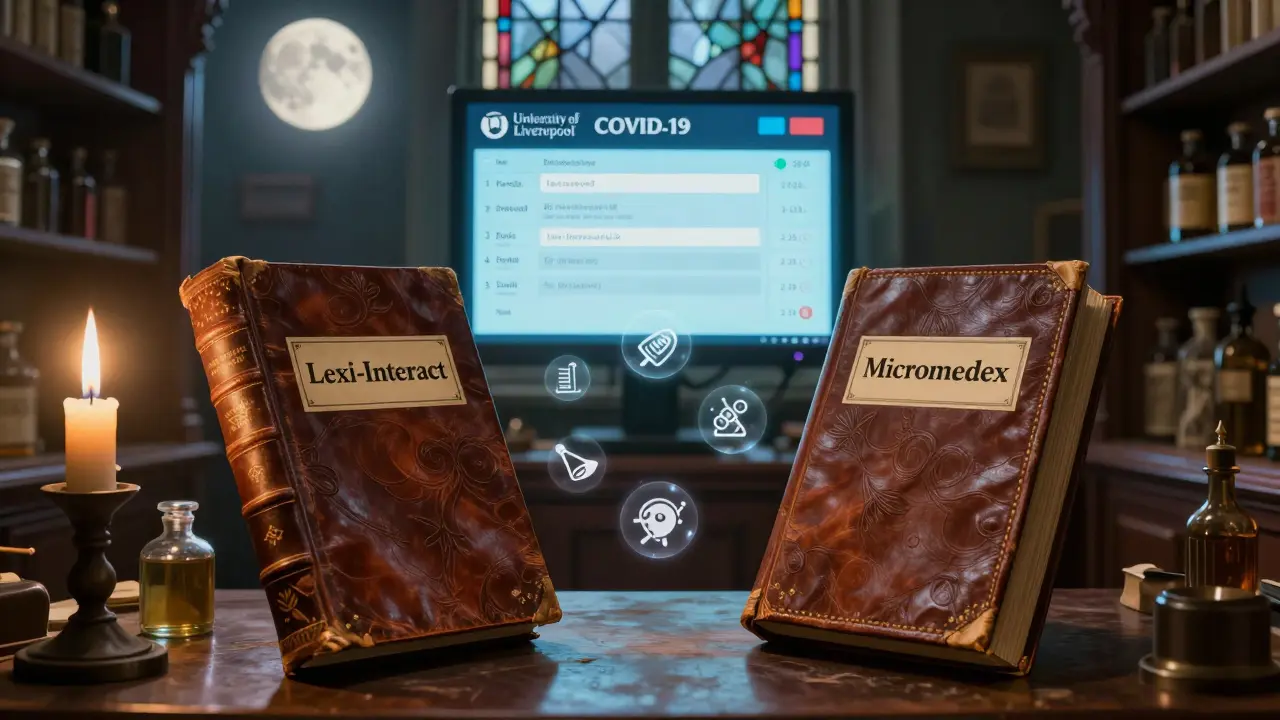
Not all checkers are created equal. Some are built for doctors. Others are meant for patients. And some are barely better than guesswork.For healthcare professionals, Lexi-Interact and Micromedex are the gold standards. Lexi-Interact catches more potential problems - it’s sensitive, meaning it flags almost everything. That’s good for safety, but it also means you’ll see a lot of alerts that aren’t actually dangerous. Micromedex is more selective. It misses fewer true dangers, but it also misses some of the weaker, yet still meaningful, interactions. In one study, Lexi-Interact detected 77% of serious interactions. Micromedex got 78% right when ruling out false alarms.
For everyday users, Drugs.com and WebMD offer free tools that are surprisingly useful. They’re easy to use, work on phones, and include supplements - something many clinical tools ignore. But don’t be fooled by their simplicity. Studies show these consumer tools only catch about 60% of clinically relevant interactions. That means one in every two real risks might slip through.
The standout exception is the University of Liverpool’s COVID-19 Drug Interactions Checker. Launched in 2020 and updated weekly, it’s the most accurate tool for checking interactions with Paxlovid (nirmatrelvir/ritonavir). It doesn’t just list risks - it suggests safer alternatives. It’s used by hospitals and pharmacists across the UK and US because it’s built on real-time evidence, not static databases.
How to Use It Without Getting False Reassurance
Here’s the biggest mistake people make: they check one drug, see a green light, and assume they’re safe. That’s dangerous.Take the case of a 68-year-old woman in Ohio who took sertraline (an antidepressant) and linezolid (an antibiotic) together. Her online checker showed no interaction. But this combo can cause serotonin syndrome - a life-threatening condition. She ended up in the ICU. The tool missed it because its database didn’t include that specific combination.
Here’s how to avoid that:
- Write down everything. Not just prescriptions. Include over-the-counter pills (like ibuprofen or antacids), vitamins, herbal supplements (like turmeric or ginkgo), and even recreational substances like alcohol or cannabis.
- Use two checkers. One tool might miss what another catches. Try Drugs.com and WebMD side by side. If both flag the same interaction, take it seriously.
- Look for red and orange alerts. Red means don’t mix. Orange means proceed with caution - dose changes or monitoring may be needed. Yellow means keep an eye out. Green doesn’t mean zero risk - just no known major interaction.
- Check for updates. New drugs come out all the time. A tool might not know about a new interaction until weeks or months after it’s reported. The University of Liverpool’s tool updates within 72 hours. Most others don’t.

Why Supplements Are the Wild Card
You might think herbal remedies are harmless. They’re not. In fact, 23% of clinically significant interactions involve supplements - not prescription drugs.St. John’s Wort, for example, can reduce the effectiveness of birth control pills, blood thinners, and even some cancer drugs. Garlic supplements can thin your blood - dangerous if you’re on warfarin. Ginkgo can increase bleeding risk during surgery. Many free checkers don’t include these in their databases. Epocrates, a popular app among pharmacists, has especially poor coverage of herbal products.
Always type in the full name. Don’t just say “vitamin C.” Say “ascorbic acid.” Don’t say “turmeric.” Say “curcumin.” Many tools recognize generic names better than brand names or common terms.
When to Trust the Tool - and When to Call Your Pharmacist
The American Society of Health-System Pharmacists says this clearly: no drug interaction checker replaces a pharmacist.Here’s when you should call:
- You’re taking five or more medications.
- You have kidney, liver, or heart disease.
- You’re pregnant or breastfeeding.
- You’ve had a bad reaction to a drug before.
- The checker shows conflicting results between tools.
Even the best systems have a 15-20% disagreement rate. One tool says avoid this combo. Another says it’s fine. That’s not a glitch - it’s science in progress. Pharmacists are trained to interpret these conflicts based on your full medical history, not just a list of names.
And if you’re on a new drug - especially one approved in the last year - assume the checker doesn’t fully know its risks yet. Clinical trials can’t test every possible combination before a drug hits the market. That’s why the FDA says no checker can replace pharmacist review for complex regimens.
What to Do After You Get Results
Don’t just read the alert and move on. Take action:- If there’s a red alert: Don’t take the combination. Call your doctor or pharmacist immediately. Ask if there’s a safer alternative.
- If there’s an orange alert: Schedule a follow-up. Ask whether you need blood tests, a different dose, or to space out the timing of your pills.
- If the tool says “no interaction” but you feel off: Trust your body. Some reactions don’t show up in databases yet. Talk to your provider.
Some tools, like the University of Liverpool’s, suggest alternatives. If your current statin interacts badly with your new antiviral, it might recommend a different statin that’s safer. That’s the kind of insight you can’t get from a generic checker.
The Bottom Line
A drug interaction checker is like a seatbelt - it won’t prevent every crash, but it saves lives when used correctly. It’s not a replacement for professional advice. It’s a tool to help you ask better questions.Use it before starting any new medication. Use it when your prescription changes. Use it when you buy a new supplement. And always, always double-check with your pharmacist. They’ve seen what the algorithms haven’t.
The numbers don’t lie: 6.7% of hospital admissions are caused by preventable drug interactions. Most of them happen because someone assumed they were safe. Don’t be one of them.
Can I rely on free drug interaction checkers like WebMD or Drugs.com?
Yes - but with limits. Free tools like WebMD and Drugs.com are good for quick checks and catching major red flags, especially for common prescription drugs. However, studies show they only detect about 60% of clinically significant interactions. They often miss interactions involving supplements, herbal products, or newly approved medications. Always cross-check with another tool and consult your pharmacist for high-risk combinations.
Do drug interaction checkers work for over-the-counter meds and supplements?
Some do, but many don’t. Prescription drug databases are well-maintained. Supplements? Not so much. Tools like Drugs.com and Lexi-Interact include more supplement data than most, but even they miss key herbs like St. John’s Wort, kava, or echinacea. Always enter the active ingredient (e.g., “curcumin” instead of “turmeric”) and be cautious if your supplement isn’t listed. When in doubt, assume it could interact.
Why do different drug interaction checkers give different results?
Because they use different databases, update at different frequencies, and apply different rules for what counts as a “significant” interaction. Lexi-Interact is designed to catch everything - even weak links - so it generates more alerts. Micromedex is tuned to reduce false alarms, which means it might miss some risks. The University of Liverpool’s tool focuses only on COVID-19 drugs and updates weekly based on real-time evidence. No single tool has all the answers. That’s why experts recommend using at least two.
Can a drug interaction checker replace a pharmacist’s advice?
No. The FDA and major pharmacy associations warn that no checker can replace a pharmacist’s clinical judgment, especially when you’re taking five or more medications or have complex health conditions. Checkers can’t assess your full medical history, kidney or liver function, allergies, or how you respond to drugs over time. They’re decision-support tools - not replacements for human expertise.
How often should I check for drug interactions?
Check every time you start a new medication, add a supplement, or change a dose. Also check before surgery or if you’re hospitalized - even if you’ve checked before. Drug interactions can change based on your health status, age, or other factors. If you’re on long-term medications, review your list with your pharmacist at least once a year.
What’s the most common interaction people miss?
One of the most common and dangerous missed interactions is between SSRIs (like sertraline or fluoxetine) and NSAIDs (like ibuprofen or naproxen). While neither is dangerous alone, together they can increase bleeding risk - especially in older adults. Many people don’t realize that common painkillers can interact with antidepressants. Another frequent miss is grapefruit juice with statins or blood pressure meds. Even one glass can cause a dangerous spike in drug levels.



Vicki Yuan
Just wanted to say this post is incredibly well-researched - especially the part about how free tools miss nearly 40% of clinically relevant interactions. I’ve seen people rely on WebMD like it’s gospel, and it’s terrifying. Always cross-check with Drugs.com, and if you’re on more than three meds, skip the app and call your pharmacist. They’ve seen things algorithms haven’t even dreamed of.
Uzoamaka Nwankpa
I’ve been on 7 medications since my heart scare last year. I used to trust the checkers. Now I print out every result and take it to my pharmacist. They laugh at me sometimes, but they also thank me. I’m alive because I stopped trusting screens.
Abhishek Mondal
Let’s be honest: these ‘drug interaction checkers’ are corporate distractions designed to make you feel in control while the pharmaceutical-industrial complex quietly expands its liability shield. Lexi-Interact? Micromedex? They’re all funded by the same drug manufacturers who profit when you take more pills. The real solution? Stop taking pills altogether. Your body doesn’t need 12 supplements and 4 prescriptions to function. It needs rest, water, and silence.
Oluwapelumi Yakubu
Man, I love how this post breaks it down like a Nigerian aunty explaining why your ‘natural remedy’ is gonna kill you. St. John’s Wort? Nah, baby - that thing is a silent assassin with a PhD in pharmacology. And don’t even get me started on ‘turmeric’ - if you type that into a checker, it’ll just blink at you like you asked it to solve world peace. Always use ‘curcumin’. Always. I learned that the hard way after my knees stopped swelling and my INR went nuclear. Lesson learned: if it’s from a tree, it’s probably dangerous with your blood thinner.
Jennifer Glass
One thing I wish more people understood: the green light doesn’t mean ‘safe.’ It just means ‘no known major interaction in the database.’ I had a friend on warfarin who took melatonin because she ‘heard it helped sleep.’ Checker said green. She ended up in the ER with a subdural hematoma. Melatonin isn’t even on most databases as a risk - but it affects platelet function. Always assume the tool is blind to something. That’s not a flaw - it’s the nature of the game.
Joseph Snow
These tools are all part of the medical surveillance state. Why do you think the FDA allows them to exist? To shift liability from doctors to patients. If you get hurt, you used the tool wrong - not because your doctor prescribed poorly. And who updates these databases? Big Pharma. They decide what’s ‘significant.’ The University of Liverpool’s tool? Cute. But it only exists because the pandemic forced their hand. Normal people? Still getting misled by 60% accurate apps while the real dangers - like polypharmacy in the elderly - are ignored. Wake up.
jigisha Patel
As a clinical pharmacologist with 18 years in hospital pharmacy, I can confirm: the 60% detection rate for consumer tools is conservative. In our internal audit last year, Drugs.com missed 7 out of 12 interactions involving anticoagulants and NSAIDs in patients over 70. WebMD failed to flag the interaction between fluoxetine and linezolid in 92% of test cases. The problem isn’t just database gaps - it’s algorithmic bias toward common prescriptions. Supplements, herbal extracts, and off-label uses are treated as noise. I’ve trained my residents to treat every ‘no interaction’ result as a hypothesis - not a conclusion. Always verify with a primary source: Lexi-Interact, Micromedex, or a live pharmacist. No exceptions.
Terri Gladden
OMG I JUST REALIZED I’VE BEEN TAKING IBUPROFEN WITH MY ANTIDEPRESSANT FOR 3 YEARS 😭😭😭 MY BLOOD IS PROBABLY JUST A SLOSHY MESS NOW I’M GOING TO THE ER I CAN’T BELIEVE NO ONE TOLD ME THIS IS THIS A CONSPIRACY???
Chris Cantey
There’s a deeper truth here: we’ve outsourced our biological intuition to algorithms. We’ve forgotten how to listen to our bodies because we’ve been taught to trust a screen. The checker didn’t miss the interaction between sertraline and linezolid - we did. We stopped asking, ‘Does this feel right?’ and started asking, ‘Does this say green?’ The tool didn’t fail us. We failed ourselves by surrendering agency. The real interaction isn’t between drugs - it’s between human vulnerability and technological illusion.