
DTx Medication Interaction Checker
Check Medication-Digital Therapeutic Interactions
Enter your medication and digital therapeutic to see potential interactions or compatibility information.
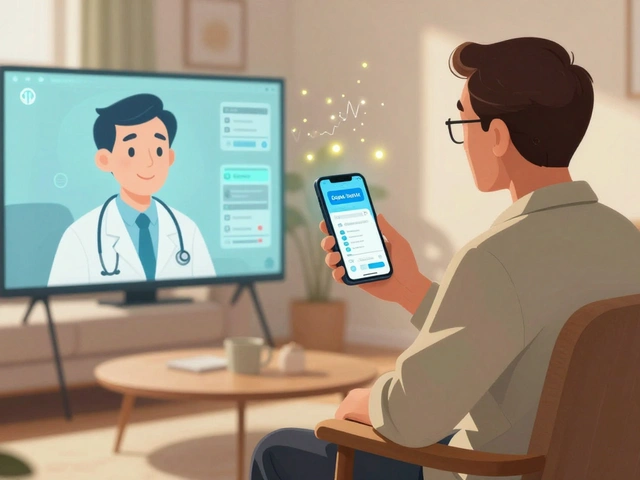
Imagine taking your blood pressure medication every day, but your app notices you’ve been skipping doses when you’re stressed - and then it sends you a personalized video from your doctor, not just a reminder. That’s not science fiction. It’s happening right now with digital therapeutics - software that acts like medicine, prescribed by doctors and backed by clinical trials.
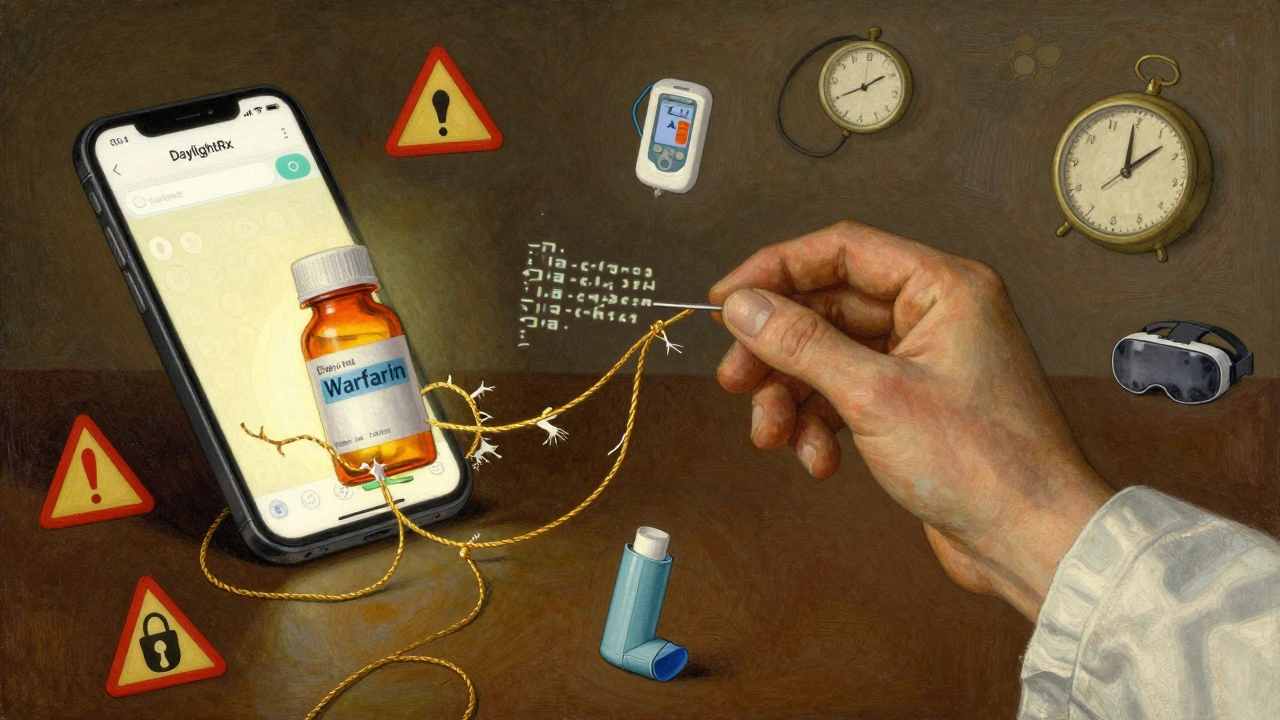
These aren’t fitness trackers or meditation apps. These are FDA-cleared programs like DaylightRx for anxiety, DarioEngage for diabetes, and EndeavorRx for ADHD. They’re designed to work alongside pills, not replace them. And that’s where things get complicated. What happens when your anxiety app talks to your antidepressant? When your insulin coach shares data with your blood thinner? These aren’t theoretical questions anymore. They’re daily realities for millions of patients - and doctors are scrambling to keep up.
What Exactly Are Digital Therapeutics?
Digital therapeutics (DTx) are software-based treatments. Not apps that suggest you drink more water. Not wellness trackers. These are medical devices approved by the FDA to treat, manage, or prevent disease. They deliver therapy through algorithms, behavioral science, and sometimes even virtual reality.
The first big win came in 2018 when the FDA cleared reSET for substance use disorder. Since then, the list has grown. In September 2024, DaylightRx became the latest prescription DTx - a 90-day cognitive behavioral therapy program for generalized anxiety disorder in adults. It’s not a supplement. It’s not a tool. It’s a treatment, prescribed like a pill.
They come in different forms:
- Mobile apps that track medication intake and nudge you when you’re late
- Web platforms that adjust insulin doses based on glucose readings and activity logs
- VR games that retrain attention in kids with ADHD
- IoT-connected inhalers that record usage and send alerts to your care team
They’re not meant to be used alone. Most are designed as adjuncts - meaning they boost the effect of traditional meds. A 2023 Medisafe study found DTx increased adherence by up to 25% in chronic conditions where patients typically miss 50% of doses. That’s huge when you’re on warfarin, insulin, or antiretrovirals - where one missed dose can mean hospitalization.
How DTx Changes Medication Management
Traditional pill reminders? They’re outdated. Most patients ignore them after a week. DTx doesn’t just remind you. It understands why you skip.
Take diabetes. DarioEngage doesn’t just tell you to take your insulin. It asks: Did you eat? Did you exercise? Are you stressed? It uses that data to suggest dose changes - and even connects you to financial aid if you can’t afford your meds. In a 6-month trial, patients using DarioEngage with their regular meds saw 1.2% greater HbA1c reduction than those on meds alone.
For mental health, DTx like DaylightRx delivers CBT modules tailored to your symptoms. But here’s the twist: it tracks your mood, sleep, and medication side effects in real time. If you report nausea after taking sertraline, the app adjusts its content - offering coping strategies instead of pushing you through another module.
Compare that to the old way: a 15-minute doctor visit every three months. You’re supposed to remember how you felt last week. Most don’t. DTx captures the data as it happens.
And it works. McKinsey & Company found DTx improved adherence by 22-28 percentage points in asthma and COPD patients compared to standard care. For patients over 65? Not so much. Without in-person help, 45% quit within months. That’s the catch.

When DTx and Medications Collide
This is where things get messy. Most doctors don’t know how to assess DTx interactions - because there’s no playbook yet.
Consider this: A patient takes fluoxetine for depression and uses a DTx app that tracks sleep, mood, and activity. The app detects worsening anxiety after 3 weeks. Is that a side effect of the drug? Or is the app’s CBT content too intense? Or is the patient skipping meals? The app can’t answer that alone. The doctor needs to connect the dots.
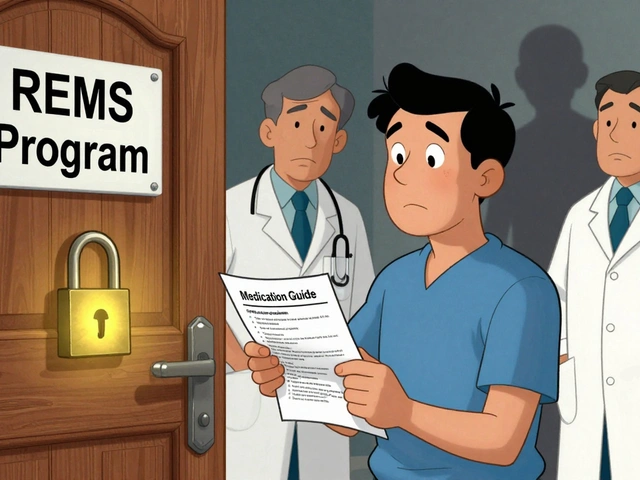
There’s no formal system for reporting DTx side effects. Unlike pills, which go through Phase III trials with thousands of patients, DTx often get FDA clearance based on smaller studies. The FDA admits this. They’re planning new guidance in mid-2025 focused on combination therapy - meaning how DTx works with drugs.
Some risks are already visible:
- EndeavorRx, a VR game for ADHD, caused dizziness, headaches, or nausea in 7% of users - twice the rate of the control group.
- Patients on buprenorphine for opioid use disorder saw a 16.3% greater reduction in drug use when paired with a DTx app - but only if they stuck with it.
- One Reddit user wrote: “DaylightRx’s modules felt generic. They didn’t address my meds’ side effects.” That’s not an anomaly. 37% of negative reviews mention this disconnect.
Worse, some DTx apps collect sensitive data - mood logs, medication schedules, location - but don’t use encryption. SAMHSA warns that mental health DTx are especially vulnerable to data breaches. No one’s auditing them.
Who’s Using DTx - And Who’s Being Left Behind
The market is exploding. The global DTx industry hit $3.8 billion in 2023 and is projected to hit $14.2 billion by 2028. Big pharma is all in: 78% of top pharmaceutical companies now bundle DTx with their high-cost drugs - like insulin or biologics - to improve adherence and justify pricing.
But access isn’t equal.
Younger patients? Tech-savvy? They love it. A Reddit user with type 1 diabetes said: “DarioEngage helped me drop my HbA1c from 9.8 to 7.2 in 4 months.”
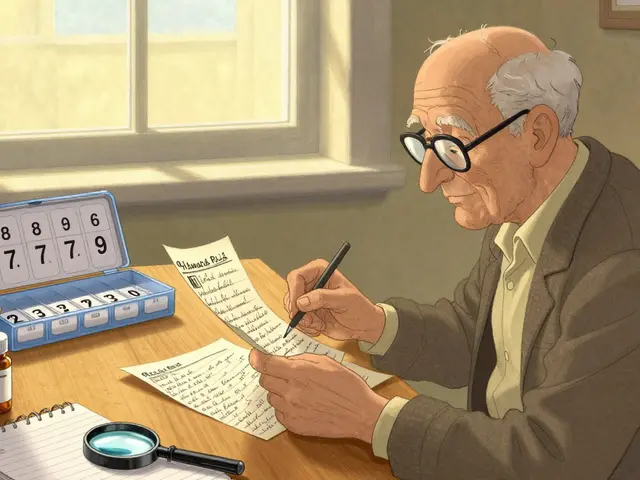
Older adults? Not so much. JMCP research shows 38% of patients over 70 quit DTx within 30 days without tech support. Many don’t know how to open an app. Others fear being “watched.” One 72-year-old told her nurse: “I don’t want my phone to know when I skip my pills.”
Even when patients stick with it, integration fails. G2 reviews show 62% of complaints are about poor syncing with pharmacy systems. You get a refill alert from your DTx app - but your pharmacy doesn’t know. You end up running out.
And reimbursement? A nightmare. Only 1 in 4 insurers cover DTx. Providers say 67% of them don’t know how to bill for it. That means many patients pay out of pocket - $50-$150/month. That’s not affordable for most.
What Needs to Change
DTx has potential. But right now, it’s like giving someone a Ferrari without a driver’s license.
Here’s what’s missing:
- Standardized safety monitoring. No central system tracks DTx side effects or interactions with drugs. We need a digital version of the FDA’s MedWatch.
- Clearer guidelines for doctors. How do you adjust a warfarin dose when your DTx app says your stress levels spiked? No training exists.
- Real interoperability. DTx apps need to talk to EHRs, pharmacy systems, and wearables - not just your phone.
- Support for vulnerable groups. Elderly, low-income, and non-English speakers need in-person onboarding. One-on-one help reduces dropout rates by 33%, according to ASCPT.
- Insurance coverage. If DTx is medicine, it should be covered like medicine. Right now, it’s treated like a luxury.
Some hospitals are starting to hire “DTx navigators” - staff who help patients set up apps, troubleshoot tech issues, and explain how the data connects to their meds. It’s working. But it’s not scalable yet.
The Future: DTx as Part of Your Treatment Plan
By 2026, analysts predict 40% of chronic disease management will include DTx. That means your diabetes, asthma, or depression treatment won’t just be a pill. It’ll be a pill + an app + a wearable + a care team that sees your data in real time.
Imagine this: Your insulin pump syncs with your DTx app. Your app notices your blood sugar drops after workouts. It adjusts your evening dose automatically - and sends a note to your endocrinologist. No phone call. No waiting. Just better control.
Or: Your anticoagulant app flags that you’ve been drinking more alcohol. It alerts your doctor. They pause your dose. You avoid a bleed.
This isn’t a dream. It’s coming. But only if we fix the gaps now.
For patients: Ask your doctor if a DTx is right for you. Don’t assume it’s just another app. Ask: “Is this FDA-cleared? How does it interact with my meds? Will my insurance cover it?”
For providers: Don’t just hand out an app link. Set up a 30-minute onboarding. Check in after two weeks. Treat DTx like a new prescription - because it is.
For regulators: Stop treating DTx like software. Treat it like medicine. Require long-term safety data. Force interoperability. Create a reporting system for side effects. The patients are counting on it.
Digital therapeutics aren’t replacing pills. They’re making them work better. But only if we treat them with the same care, caution, and clinical rigor as the drugs they’re paired with.
Are digital therapeutics the same as wellness apps?
No. Wellness apps suggest healthy habits - like meditating or tracking steps. Digital therapeutics (DTx) are FDA-cleared medical treatments designed to treat, manage, or prevent disease. They’re prescribed like medication and backed by clinical trials. DaylightRx for anxiety and DarioEngage for diabetes are examples. Apps like Headspace or MyFitnessPal are not DTx.
Can digital therapeutics replace my medication?
Sometimes, but rarely. Most DTx are meant to be used alongside medication - not instead of it. DaylightRx is one of the few DTx approved as a standalone treatment for generalized anxiety disorder. But for conditions like diabetes, hypertension, or ADHD, DTx enhances medication adherence and effectiveness. Never stop taking prescribed medication without talking to your doctor.
Do digital therapeutics interact with drugs like regular medications do?
Not in the same chemical way - but they can still affect how your meds work. For example, a DTx app that reduces stress might lower your blood pressure, making your antihypertensive too strong. Or, an app that reminds you to take your insulin might improve your glucose control, requiring a dose adjustment. The real risk is unmonitored interactions. Unlike pills, DTx side effects aren’t tracked in a centralized system. Always tell your doctor what DTx you’re using.
Is my data safe in a digital therapeutic app?
It depends. FDA-cleared DTx must follow HIPAA and security standards, but enforcement varies. Many apps collect sensitive data - mood logs, medication schedules, location - and not all use strong encryption. SAMHSA has raised concerns about mental health DTx being vulnerable to breaches. Always check the app’s privacy policy. Look for encryption, data minimization, and clear consent. If it’s not clear, ask your provider for a trusted option.
Why do older adults struggle with digital therapeutics?
Many older patients face digital literacy barriers - unfamiliar with smartphones, wary of tech, or afraid of being monitored. JMCP research found 45% of patients over 65 stop using DTx within months without in-person support. Some find the interface confusing. Others don’t trust apps with their health data. Solutions include onboarding sessions with a nurse, simplified interfaces, and family involvement. DTx navigators - trained staff who help patients use the tech - reduce dropout rates by 33%.
Will insurance cover digital therapeutics?
Not yet, consistently. Only about 25% of insurers cover DTx. Many require prior authorization or only cover specific apps tied to high-cost drugs. Medicare and Medicaid coverage is even sparser. Providers report that 67% struggle with unclear reimbursement rules. But the trend is shifting: Medisafe predicts that by 2027, 65% of specialty pharmacy prescriptions will require DTx enrollment for reimbursement. It’s coming - but not yet universal.





Desmond Khoo
This is actually kind of wild. I’ve been using DarioEngage for my diabetes and honestly? It’s saved my life. No more guessing games with insulin. My A1c dropped from 8.9 to 6.7 in 5 months. 🙌 The app knows when I’m stressed and slows down the nudges. Feels like a doctor who actually listens.
Ryan Sullivan
Let’s be clear: this isn’t medicine. It’s a corporate Trojan horse. Big Pharma bundles these apps with their $500/month biologics to justify price hikes. The FDA clears them based on 80-patient pilot studies. No long-term safety data. No real pharmacovigilance. You’re a beta tester. And your data? Sold to advertisers under ‘analytics.’
They call it ‘digital therapeutics.’ I call it surveillance capitalism with a stethoscope.
Wesley Phillips
Bro. I tried DaylightRx. Felt like my therapist was a chatbot that read too many Reddit threads. The modules were generic. Didn’t even acknowledge my meds were making me feel like a zombie. I quit after 12 days. Also, why does it ask for my location every 5 minutes? 👀
Nicholas Heer
They’re tracking your sleep, your mood, your insulin doses… and you’re cool with that? This is how they build your behavioral profile. Next thing you know, your insurance denies your claim because your ‘anxiety score’ was too high last month. This isn’t healthcare. It’s social credit for diabetics.
Sam Mathew Cheriyan
lol america thinks apps fix everything. In India we just call the doctor. No app. No data leak. No $150/month subscription. You people pay for tech to tell you to drink water. Meanwhile my uncle takes his pills and lives to 92. Simple works.
Oliver Damon
The real issue isn’t the tech-it’s the infrastructure. We’ve got FDA-cleared DTx but zero interoperability with EHRs. Clinicians can’t see the data. Pharmacies don’t sync. Patients get refill alerts but still run out. We’re building Ferrari dashboards on a horse cart road. The tools exist. The ecosystem doesn’t.
Until DTx data flows into Epic and Cerner like lab results, we’re just digitizing chaos.
Helen Maples
Stop calling it ‘tech.’ It’s medicine. If you wouldn’t prescribe a pill without knowing its interactions, don’t hand out an app without training. Doctors need CE credits on DTx-drug interactions. Nurses need protocols for onboarding elderly patients. This isn’t optional. It’s clinical responsibility.
And if your insurance won’t cover it? That’s not a market failure. That’s a moral one.
David Brooks
I’ve seen this work. My mom had COPD. Used the inhaler tracker app. Her ER visits dropped from 4 a year to zero. She cried when she realized she hadn’t needed her rescue inhaler in 6 months. This isn’t hype. It’s hope. We just need to stop treating it like a gimmick and start treating it like care.
Ted Rosenwasser
Let’s not pretend DTx is revolutionary. It’s just another monetized data grab wrapped in clinical jargon. The ‘90-day CBT program’? It’s a repackaged free CBT PDF with push notifications. The FDA clearance? A regulatory loophole. They call it ‘prescribed’-but no one’s auditing the algorithms. Who’s liable when the app misreads your mood and escalates your anxiety? Not them.
And don’t get me started on the ‘personalized’ claims. The algorithm uses your zip code, your phone model, and your last Spotify playlist to ‘tailor’ content. That’s not therapy. That’s behavioral profiling.
Jennifer Anderson
My grandma tried one. Couldn’t open the app. Got scared. Thought it was spying on her. We sat with her for 45 minutes. Walked through it. Showed her the privacy settings. Now she uses it every morning. It’s not the tech that fails-it’s the lack of human support. We need DTx navigators in every clinic. Not just for old folks-for anyone who’s ever felt lost in a digital maze.
Kyle Oksten
Every innovation gets framed as either a miracle or a dystopia. The truth is messy. DTx works for some, fails for others. The problem isn’t the software-it’s our refusal to treat it like medicine. We don’t hand out antibiotics without monitoring. Why do we hand out apps without follow-up? We need mandatory post-market surveillance. Real-time adverse event reporting. A national DTx registry. Not because we’re paranoid. Because we’re responsible.
Desmond Khoo
Also, if you’re still using a basic pill reminder app? You’re not using DTx. You’re using a glorified alarm clock. Real DTx adapts. Learns. Responds. If your app doesn’t change based on your data, it’s not therapy. It’s a notification.