
Quitting smoking isn’t just about willpower. It’s a biological battle. Nicotine rewires your brain’s reward system, and when you stop, your body screams for it. That’s why most people who try to quit cold turkey fail - not because they lack discipline, but because they don’t use the right tools. The good news? We have medications and strategies backed by decades of research that actually work. And if you’re serious about quitting, knowing which ones to use - and how - can make all the difference.
What Works Best: The Science Behind Quitting
The most effective single medication for quitting smoking is varenicline (Chantix). Approved by the FDA in 2006, it works by partially activating nicotine receptors in the brain. This reduces cravings and blocks nicotine from getting its full effect if you smoke. Clinical trials show it more than doubles your chances of quitting compared to placebo. In the landmark EAGLES study (2016), 21.8% of people using varenicline stayed smoke-free after six months, compared to just 9.4% on placebo.
That’s not just a small improvement - it’s life-changing. Varenicline is also more effective than other options. A 2022 meta-analysis found it’s 32% more effective than nicotine patches and 46% more effective than bupropion. Even better, it works well across different groups, including Black smokers, who often respond poorly to other medications. The American Thoracic Society and the U.S. Public Health Service both recommend it as the top choice for first-time quit attempts.
Other Medications: What Else Is Out There?
Not everyone can or wants to use varenicline. That’s where other options come in.
Nicotine Replacement Therapy (NRT) is the most widely used. It comes in patches, gum, lozenges, nasal sprays, and inhalers. Patches deliver steady nicotine to ease withdrawal. Gum and lozenges give quick relief when cravings hit. The EAGLES study showed 15.7% of people using NRT quit after six months. While less effective than varenicline, combining two forms - like a patch plus gum - can boost success rates. The CDC recommends this approach for people who smoke more than 10 cigarettes a day.
Bupropion (Zyban) is an antidepressant that also helps with quitting. It doesn’t contain nicotine but affects brain chemicals linked to cravings and mood. It’s been around since the 1990s and works for about 10-16% of users. What’s unique about bupropion is that some people with depression report feeling better emotionally while quitting - a rare double benefit. But it’s not for everyone. About 24% of users in one survey quit because of severe insomnia.
There’s also cytisine, a plant-based drug similar to varenicline. It’s cheaper and used widely in Eastern Europe. A 2024 study suggested it might be even more effective than varenicline, but it’s not yet approved in the U.S. Still, it’s a sign that better, more affordable options are on the horizon.
Combination Therapy: The Secret Weapon
If you really want to win this battle, don’t use just one tool - use two. The strongest evidence points to combining varenicline with NRT. A 2022 meta-analysis found that this combo had an odds ratio of 5.75 for long-term quitting - meaning it nearly six times increased your chances compared to placebo. That’s not a small boost. That’s the difference between trying and succeeding.
How does it work? Varenicline handles the deep cravings and brain rewiring. NRT handles the physical withdrawal - the jitters, irritability, and urge to chew or fidget. Together, they cover both sides of addiction. The U.S. Public Health Service recommends this approach for people who’ve tried quitting before and failed.
Here’s how to do it: Start varenicline 1-2 weeks before your quit date. Begin with 0.5 mg once daily for three days, then 0.5 mg twice daily for four days, then 1 mg twice daily. At the same time, use a 21mg nicotine patch and keep nicotine gum or lozenges on hand for sudden cravings. Stick with this for 12 weeks. If you’re still smoke-free, extend the varenicline for another 12 weeks. That’s 24 weeks total - long enough to rewire your brain.
Side Effects and What to Expect
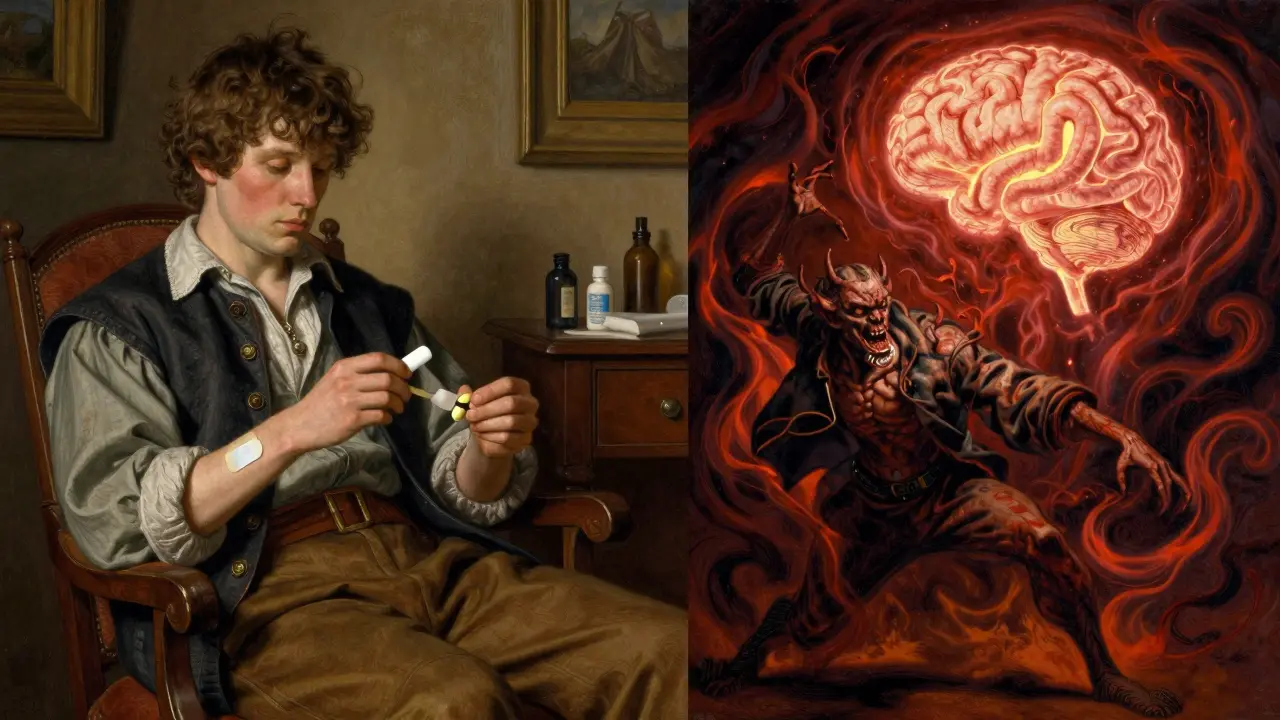
No medication is perfect. Varenicline’s biggest side effect? Vivid dreams. About 42% of users report them. Some are strange. Some are terrifying. A few people quit because of this. But here’s the thing - most side effects fade after the first two weeks. Nausea is common too (about 30% of users), but it usually gets better if you take the pill with food and water.
Bupropion can cause dry mouth, headaches, and insomnia. NRT can cause throat irritation (gum), skin redness (patches), or nasal burning (spray). None of these are dangerous, but they can be annoying. The key? Don’t quit the medication because of side effects. Talk to your doctor. Adjust the dose. Change the form. Try a different brand. Most people who stick with it for at least four weeks find the side effects manageable - and the freedom from cigarettes worth it.
Behavioral Support: You’re Not Alone
Medication alone isn’t enough. Even the best drugs work better with support. The CDC says even a 3-minute chat with a doctor increases quit rates by 30%. Why? Because quitting is emotional. You’re not just stopping a habit - you’re changing how you cope with stress, boredom, social pressure, and anxiety.
Free resources exist everywhere. The National Quitline (1-800-QUIT-NOW) offers free coaching. Apps like Smokefree.gov and QuitGuide provide daily tips and tracking. Online communities like Reddit’s r/stopsmoking have over a million members who share real stories - like how one man quit after 28 years using varenicline and a daily walk routine. He didn’t just stop smoking. He started running. And now he runs marathons.
Intensive counseling - four or more sessions - combined with medication gives you the highest success rate. If you’re struggling, don’t wait. Ask your doctor for a referral. Call the quitline. Download an app. You don’t have to do this alone.

Cost, Access, and Real-World Barriers
Varenicline costs about $500 for a 12-week course without insurance. That’s steep. But bupropion SR (150 mg) can be as cheap as $15 for a 30-day supply at Walmart. NRT patches cost $45 for a week at Walgreens. If cost is holding you back, ask about patient assistance programs. Many manufacturers offer discounts or free starter kits.
Insurance helps. About 68% of privately insured people in the U.S. have full coverage for cessation meds. But if you’re on Medicaid in a state that didn’t expand coverage, you might pay full price. That’s unfair. And it’s why 27% of low-income smokers never even try medication.
Age and education matter too. People over 45 are more likely to use medications. College graduates use them twice as often as those with only a high school diploma. These gaps aren’t about willpower. They’re about access, awareness, and stigma. If you’re in a group that’s often left out, know this: your quit attempt is just as valid. And the tools work for you, too.
What Happens After You Quit
Quitting isn’t a one-time event. It’s a process. The first 72 hours are the hardest - your body is detoxing. Cravings peak around day 3 and fade over 2-4 weeks. But the real test comes at 3, 6, and 12 months. That’s when relapse is most likely.
Don’t think of it as “I quit smoking.” Think: “I’m building a new life.” Replace the habit. Walk instead of lighting up. Drink water instead of coffee after meals. Call a friend when you feel the urge. Celebrate small wins. One day. One week. One month. Each one matters.
And if you slip? Don’t quit quitting. One cigarette doesn’t erase your progress. Most people try multiple times before they succeed. The average is 6-8 attempts. That doesn’t mean you failed. It means you’re learning.
Final Thoughts: This Is Possible
Smoking kills 480,000 Americans every year. That’s more than HIV, car accidents, illegal drugs, and alcohol combined. You’re not just quitting a habit - you’re choosing to live longer, breathe easier, and protect the people around you.
The science is clear. Varenicline is the most effective single option. NRT and bupropion work well too. Combining them boosts success even more. And no matter which path you take, support makes the difference.
You don’t need to be perfect. You just need to start. And you don’t have to do it alone. The tools are here. The evidence is strong. And your future self is already thanking you.





Paul Ratliff
varenicline changed my life. tried patches, gum, the whole nine yards. nothing. then i tried chantix. vivid dreams? yeah. but i stopped craving like my body forgot what smoke felt like. 2 years clean now. no regrets.
SNEHA GUPTA
The biological rewiring of addiction is often misunderstood as a moral failure. Quitting smoking is not a matter of discipline but of neurochemical recalibration. Medications like varenicline do not suppress willpower-they restore equilibrium. This post correctly frames cessation as a physiological reintegration, not a battle against oneself.
Gaurav Kumar
America has the best science but the worst access. In India, cytisine is available for $5 a month. Here, you pay $500 for the same mechanism? This is capitalism exploiting addiction. We need global equity in cessation tools, not corporate patents on survival.
David Robinson
I read this whole thing. Honestly? It’s too long. You say varenicline works best. Cool. Then why are you spending 8 paragraphs on NRT and bupropion? If it’s the #1 option, just say that. Don’t bury the lead. Also, 21.8% success rate? That’s still 78% of people failing. That’s not a solution. That’s a Band-Aid on a gunshot wound.
Jeremy Van Veelen
I’m not just quitting smoking-I’m rebirthing myself. Every time I feel that urge, I don’t just resist it. I transcend it. Varenicline didn’t just reduce cravings-it gave me back my soul. I can smell rain again. I can taste coffee without the ash. I’m not a smoker who quit. I’m a human who was freed.
Laura Gabel
patch gum whatever. i tried all that. got nauseous. slept terrible. still smoked. then i just stopped. no meds. no help. 3 days of hell and done. why make it so complicated? just quit. period.
Andrew Mamone
This is the most accurate breakdown of smoking cessation I’ve ever seen 🙌. The combo of varenicline + NRT is the real MVP. I did it. 18 months clean. The dreams were wild-once I was fighting a dragon made of cigarette smoke. But I won. And now I run 5Ks. Life after quitting? It’s not just better. It’s brighter.
MALYN RICABLANCA
I’m not just a former smoker-I’m a phoenix. The nicotine withdrawal was a spiritual crucifixion. I wept. I screamed into pillows. I called my mom at 3 a.m. because I couldn’t breathe without a cigarette. But varenicline? It was the angel that whispered, ‘You’re not broken-you’re rewired.’ Now I meditate. I journal. I breathe. And when people ask how I did it? I say: ‘I didn’t quit smoking. I surrendered to my own evolution.’
Stephen Habegger
You got this. I know it feels impossible right now. But every day you don’t smoke is a win. Even if you slip, you’re still ahead of where you were yesterday. The tools work. The science is real. And you’re not alone. I’ve been there. You’ve got this.