
Diabetes Medication Side Effect Comparison Tool
Metformin
- Gastrointestinal issues Common
- Low risk of hypoglycemia Low
- Vitamin B12 deficiency with long-term use Rare
Sulfonylureas
- High risk of hypoglycemia High
- Weight gain Medium
- Increased risk of cardiovascular events High
SGLT2 Inhibitors
- Urinary tract infections Common
- Genital yeast infections Common
- Increased risk of Fournier's gangrene Rare but serious
- Diabetic ketoacidosis risk Rare but serious
Thiazolidinediones
- Fluid retention High
- Heart failure risk High
- Weight gain Medium
Alpha-Glucosidase Inhibitors
- Gas and bloating High
- Diarrhea High
GLP-1 Agonists
- Mild nausea (often temporary) Common
- Weight loss High
- Low risk of hypoglycemia Low
When you’re managing diabetes, the goal isn’t just to lower your blood sugar-it’s to do it without making you feel worse. But too often, the very drugs meant to help end up causing new problems. Side effects from diabetes medications aren’t just annoying; they can derail your entire treatment plan. In fact, half of all people stop taking their diabetes meds within the first year because the side effects are too much to handle. That’s not just a number-it’s a pattern. And it’s happening because we don’t talk enough about what these drugs actually do to your body.
Metformin: The First-Line Drug with Hidden Costs
Metformin is the most prescribed diabetes medication in the world. It’s cheap, effective, and doesn’t cause low blood sugar. But for many, it comes with a price: a churning stomach. Around 20 to 30% of people on metformin deal with nausea, bloating, diarrhea, or just a constant feeling of being unwell. It’s not rare-it’s common. And it’s why so many quit.
Here’s the thing: most of these side effects aren’t permanent. Starting at a low dose-500 mg once a day with food-and slowly increasing helps. Many people find relief switching to the extended-release version (like Glucophage XR or Fortamet). But even then, about 1 in 5 still struggle. And there’s another quiet risk: long-term use can drain your vitamin B12. After four years or more, you might start feeling tired, dizzy, or short of breath without knowing why. Blood tests catch this early. Taking 1,500 mcg of B12 daily can prevent it.
Sulfonylureas: The Hidden Danger of Low Blood Sugar
Drugs like glipizide (Glucotrol) and glyburide (Glynase) work by forcing your pancreas to pump out more insulin. Sounds good-until your blood sugar drops too far. Hypoglycemia is the big risk here. About 15 to 20% of users have at least one episode where their blood sugar falls below 70 mg/dL. Symptoms? Shakiness, sweating, confusion, a racing heart. In severe cases, it can lead to seizures or unconsciousness.
What makes this worse? People don’t always recognize the signs. A 2022 study in JAMA Internal Medicine found that using a continuous glucose monitor (CGM) cuts severe low blood sugar events by 40%. But most patients aren’t offered one. And if you’re older, live alone, or drive for a living, this isn’t just inconvenient-it’s dangerous. The 15-15 rule (15 grams of sugar, wait 15 minutes, check again) works, but prevention is better than rescue.
SGLT2 Inhibitors: Weight Loss, Infections, and Rare but Serious Risks
Drugs like Jardiance, Farxiga, and Invokana work by making your kidneys flush out extra sugar through urine. That’s why they help with weight loss-patients typically lose 2 to 3 kg in six months. But that same mechanism causes problems. Urinary tract infections (UTIs) happen in 5 to 10% of users. Genital yeast infections? Up to 6% of women, 1 to 2% of men. It’s not a bug-it’s a feature of how the drug works.
And then there are the rare but terrifying complications. Fournier’s gangrene-a rare, fast-spreading infection of the genitals and perineum-has been reported in over 50 cases since 2013. The FDA now requires a black box warning. Ketoacidosis, usually linked to Type 1 diabetes, can also happen in Type 2 patients on these drugs. It’s rare-0.1 to 0.2%-but deadly if missed. And canagliflozin (Invokana) carries a slightly higher risk of leg amputations, especially in people with prior foot ulcers or poor circulation.
Still, for people with heart failure or kidney disease, these drugs can be lifesaving. The American College of Cardiology recommends them as first-line for those with cardiovascular disease. But if you’re healthy otherwise? The cost-$500 to $600 a month without insurance-might not be worth the small extra benefit.

Thiazolidinediones: The Weight Gain and Heart Failure Trade-Off
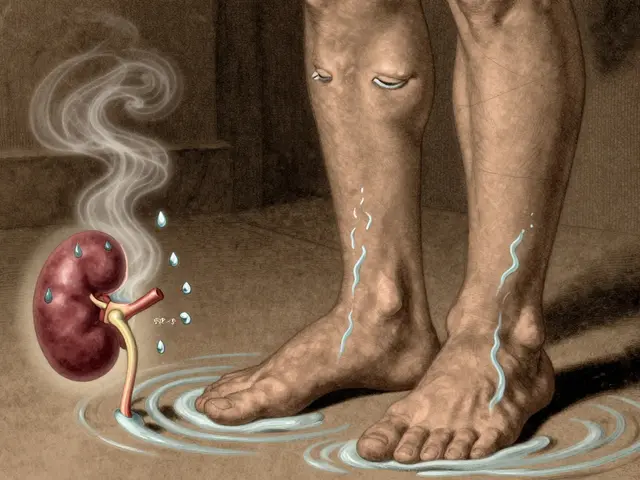
Actos and Avandia were once popular for improving insulin sensitivity. But they come with a heavy cost: fluid retention. That leads to swelling in the legs, rapid weight gain (2 to 5 kg), and a higher chance of heart failure. Rosiglitazone (Avandia) was pulled from the market in Europe and restricted in the U.S. after studies showed a 33% higher risk of heart attacks. Pioglitazone (Actos) is still used, but only in patients without heart failure. The American Diabetes Association advises against using these drugs in anyone with NYHA Class III or IV heart failure.
For someone who’s overweight and insulin resistant, the weight gain might seem like a trade-off worth making. But in reality, it often makes diabetes harder to control. Fat tissue becomes more resistant to insulin, creating a vicious cycle. Most endocrinologists now avoid these drugs unless other options have failed.
Alpha-Glucosidase Inhibitors: The Gas and Bloating Problem
Acarbose (Precose) and miglitol (Glyset) slow down how fast your body breaks down carbs. That helps flatten blood sugar spikes after meals. But the undigested carbs don’t disappear-they go straight to your colon. And that means gas. Bloating. Cramping. Diarrhea. Up to 30% of users can’t tolerate it. It’s not dangerous, but it’s socially crippling. Imagine canceling a lunch meeting because you’re afraid of the consequences.
These drugs are rarely used today. They’re outdated, require multiple doses per day, and have no proven benefit for heart or kidney health. Most providers only consider them if someone can’t take metformin or SGLT2 inhibitors and needs a non-insulin option.
How Side Effects Shape Treatment Decisions
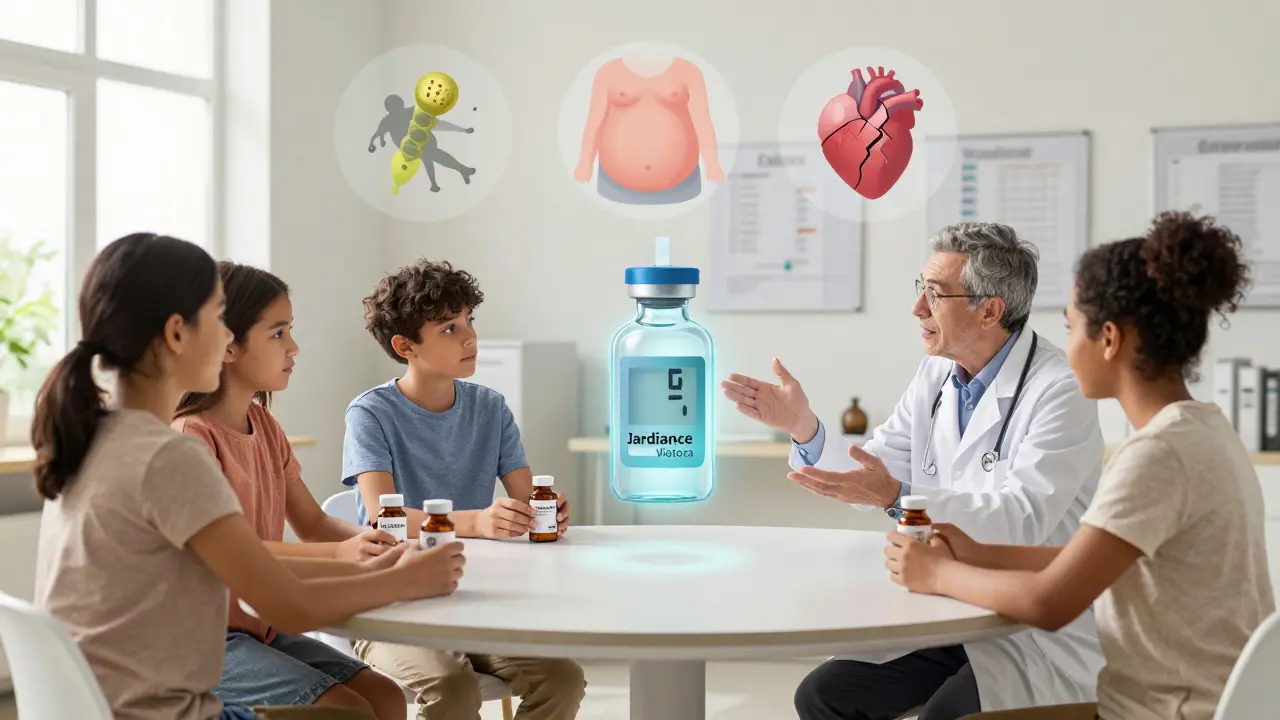
It’s not just about which drug works best-it’s about which one you can live with. A 2023 survey from Mayo Clinic found that 68% of patients felt their doctor never warned them about side effects before prescribing. That’s a failure in communication. You wouldn’t buy a car without knowing the maintenance costs. Why do we prescribe diabetes drugs without explaining the daily toll?
Doctors are shifting toward personalized choices. If you have heart disease, an SGLT2 inhibitor might be your best bet. If you’re older with kidney issues, metformin is still safer than newer drugs. If you’re young and prone to yeast infections, maybe avoid SGLT2 inhibitors altogether. And if you’ve had bad GI side effects before? Start metformin slow. Or skip it and go straight to GLP-1 agonists like semaglutide (Ozempic) or liraglutide (Victoza), which have fewer stomach issues and better weight control.
What’s Changing in 2025?
New developments are making things better. The FDA approved fixed-dose combos like Xigduo XR (dapagliflozin + metformin) in 2023. It cuts metformin’s stomach problems by 25% because the two drugs work together more smoothly. And research is moving into genetic testing. If you carry the ADL-1 variant, you’re over three times more likely to get severe GI side effects from metformin. A simple blood test could prevent months of suffering.
Also on the horizon: glucose-responsive insulin. It’s not here yet, but by 2030, it could replace most oral meds. Imagine a drug that only activates when your blood sugar is high-no more lows, no more side effects. Until then, we’re stuck with imperfect tools. The key is matching the drug to the person, not the other way around.
Real Talk: What Patients Are Saying
On Reddit’s r/diabetes, one user wrote: "Jardiance dropped my A1c from 8.2 to 6.8. But I got a UTI every other month. I switched to Victoza. No more infections. My A1c is still under 7." Another said: "I stopped metformin because I couldn’t eat dinner without feeling sick. My doctor said, ‘Just wait it out.’ I waited six months. It never got better. Now I’m on semaglutide-and I lost 18 pounds. No side effects. Life changed."
These aren’t outliers. They’re the norm. Side effects aren’t just clinical data-they’re lived experiences. And they’re why so many people give up on their meds. The system needs to change. We need to listen. We need to test. We need to switch drugs faster when they’re hurting more than helping.
Can diabetes medications cause long-term damage?
Yes, some can. Long-term metformin use may lead to vitamin B12 deficiency, which can cause nerve damage if untreated. SGLT2 inhibitors carry rare but serious risks like Fournier’s gangrene and ketoacidosis. TZDs like Avandia increase heart failure risk. But these aren’t guaranteed-they’re probabilities. Regular checkups, blood tests, and open communication with your provider can catch problems before they become damage.
Why do some people tolerate metformin and others don’t?
It’s partly genetics. People with the ADL-1 variant are 3.2 times more likely to have severe stomach side effects. But it’s also about how you take it. Taking it with food, starting low, and using extended-release versions helps a lot. Also, your gut microbiome plays a role-some people’s bacteria react badly to metformin. If you can’t tolerate it, it’s not your fault. There are other effective options.
Are newer diabetes drugs always better than older ones?
Not always. Newer drugs like SGLT2 inhibitors and GLP-1 agonists offer benefits for heart and kidney protection, but they’re expensive and come with new side effects. Metformin is still the safest, cheapest, and most studied option for most people. Sulfonylureas are older, cheaper, and effective-but they cause low blood sugar. The best drug isn’t the newest-it’s the one that fits your body, your lifestyle, and your risks.
What should I do if my diabetes drug is making me feel worse?
Don’t just quit. Talk to your provider. Track your symptoms: when they happen, how bad they are, and if they’re tied to meals or activity. Bring this info to your appointment. Ask if switching to a different class of drug might help. For example, if metformin gives you nausea, try a GLP-1 agonist. If you keep getting UTIs on an SGLT2 inhibitor, consider a DPP-4 inhibitor like sitagliptin. There are over 10 oral options. You deserve one that works without breaking you.
Can I avoid side effects by changing my diet or lifestyle?
Yes, but not completely. A low-carb diet can reduce the need for insulin-stimulating drugs like sulfonylureas, lowering hypoglycemia risk. Weight loss can improve insulin sensitivity, meaning you might need lower doses. But if your body can’t produce or use insulin well enough, you still need medication. Lifestyle changes support drugs-they don’t replace them for most people. Think of them as teammates, not substitutes.




Aisling Maguire
Metformin turned my gut into a war zone. I tried everything - slow start, XR version, food with every dose. Nothing. My doctor just shrugged like it was normal. Then I switched to semaglutide. Lost 22 lbs. No nausea. No diarrhea. Just peace. Why do we still treat side effects like they’re part of the package? They’re not. They’re a sign you’re on the wrong drug.
Also, B12 deficiency? Yeah, I got that too. My neurologist caught it before I lost feeling in my toes. Get tested. Seriously.
John Cyrus
People act like side effects are some kind of conspiracy but no one tells you to take metformin with food or start at 500mg. It’s not the drug’s fault it’s your dumbass execution. I’ve seen 3 people quit because they took 1000mg on an empty stomach and cried about bloating. Get your life together. Also stop blaming pharma. You’re just lazy.
John Smith
Bro. SGLT2 inhibitors are basically your kidneys screaming ‘I QUIT’ while flushing sugar like it’s a frat party. Yeast infections? Sure. UTIs? Yep. Fournier’s gangrene? Yeah, that’s a thing. But here’s the twist - if you’ve got heart failure or kidney disease, these drugs are basically a golden ticket. You don’t get to cry about side effects when your pancreas is on life support.
And don’t get me started on how people think lifestyle fixes everything. Nah. If your beta cells are dead, no amount of kale is gonna bring them back. Drugs aren’t villains. They’re tools. Use ‘em right or get out.
Shivam Pawa
Metformin + B12 deficiency is real. My uncle had neuropathy for years. No one linked it. Blood test showed B12 at 120. He was on metformin for 7 years. Now he takes supplements. Numbness gone.
Also, genetic testing for ADL-1 variant? Should be standard. Why make everyone suffer through trial and error? We have the tech. Use it.
Milad Jawabra
John Cyrus you’re a toxic idiot. Side effects aren’t about ‘execution’ - they’re about biology. Not everyone has the same gut flora, liver enzymes, or stress levels. You think it’s laziness? Try living with diarrhea 5x a day while holding down a job. I’m not ‘lazy’ - I’m alive because I switched to a GLP-1. And now I’m helping others do the same.
Stop pretending this is about discipline. It’s about science. And compassion. 🤝
Diane Croft
Just wanted to say thank you to everyone sharing their stories. This isn’t just about meds - it’s about dignity. No one should have to choose between control and comfort. I’m on semaglutide now. My A1c is 6.1. I’m not ‘cured’ - but I’m not suffering either. You’re not broken. You just haven’t found your match yet. Keep going. 💪
Darren Torpey
Let’s be real - sulfonylureas are the OG nightmare. I was on glyburide for 2 years. Hypoglycemia so bad I passed out in a Target parking lot. No one warned me. My mom thought I was drunk. Then I switched to sitagliptin. Zero lows. Zero drama. Just steady numbers.
Why are we still prescribing 1950s drugs like they’re magic? We’ve got better. Use ‘em.
Lebogang kekana
THEY DIDN’T WARN ME ABOUT THE YEAST INFECTIONS. I THOUGHT I HAD A UTI. I WENT TO THE ER. THEY LAUGHED. ‘OH HONEY, THAT’S FROM THE DRUG.’ I WAS 28. I FELT LIKE A JOKING STOCK PHOTO.
Now I’m on liraglutide. No infections. No crashes. Just me, my insulin, and my dignity. If you’re on an SGLT2 and you’re a woman - ask your doc about probiotics. It’s not a joke. It’s survival.
Sharon Lammas
It’s strange how we treat diabetes like a math problem - just lower the number. But the body isn’t a spreadsheet. It’s a living, breathing, emotional system. The side effects aren’t bugs - they’re signals. We need to listen before we prescribe. Not just to the HbA1c - but to the person behind it.
Maybe the best drug isn’t the one with the lowest A1c… but the one that lets you sleep, eat, and live without fear.