
Managing allergies during pregnancy isn’t just about sneezing and itchy eyes - it’s about making smart choices that protect both you and your baby. Around 1 in 3 pregnant people deal with allergic rhinitis, hives, or conjunctivitis, and many need medication to feel normal. But not all allergy drugs are created equal when you’re expecting. Some are safe. Others carry risks you can’t afford to ignore.
First Trimester: The Most Sensitive Window
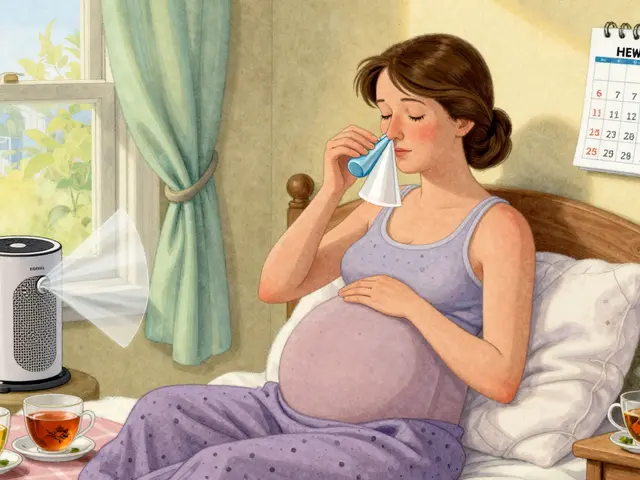
The first 12 weeks of pregnancy are when your baby’s organs are forming. That’s why doctors recommend avoiding all non-essential medications during this time. Even if a drug seems harmless, the lack of long-term data means it’s better to hold off unless symptoms are severe.Instead of reaching for pills, try non-drug solutions first. Use a saline nasal spray or rinse with a neti pot to clear congestion. Keep windows closed during high pollen seasons. Run a HEPA air filter in your bedroom. Wash bedding weekly in hot water to kill dust mites. These steps won’t cure allergies, but they can cut symptoms by 40-60% for many people.
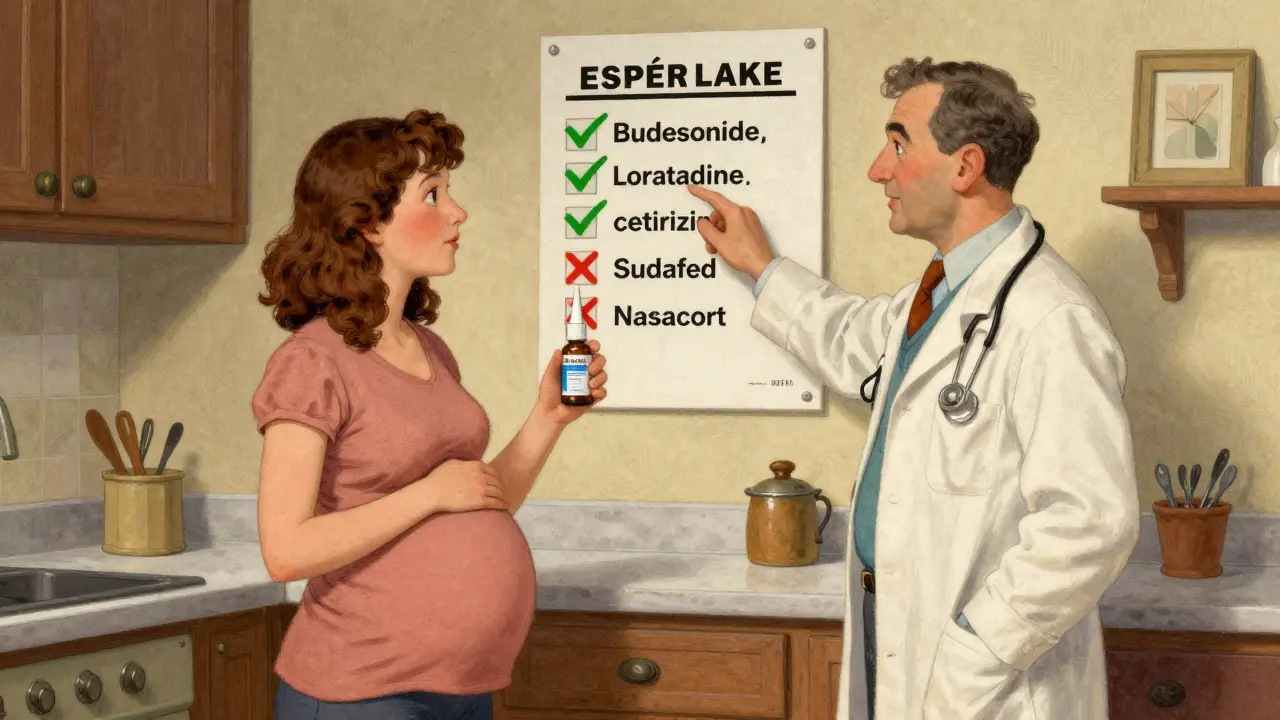
If you absolutely need something stronger, nasal corticosteroids are your best bet. Rhinocort (budesonide) has the most safety data of any nasal spray during early pregnancy. Flonase Sensimist (fluticasone furoate) and Nasonex (mometasone) are also considered low-risk. But avoid Nasacort (triamcinolone) - there’s not enough evidence to say it’s safe.
Oral Antihistamines: First-Gen vs. Second-Gen
Antihistamines are the most common oral treatment for allergies. But not all are equal in pregnancy.First-generation antihistamines like diphenhydramine (Benadryl) and chlorpheniramine (Chlor-Trimeton) have been used for decades. Over 200,000 pregnancies studied in a 2010 meta-analysis showed no increase in birth defects. They work. But they make you drowsy - sometimes so much that driving or caring for other kids becomes risky.
Second-generation options like cetirizine (Zyrtec), loratadine (Claritin), and fexofenadine (Allegra) are non-sedating. They’re preferred by many doctors because they don’t knock you out. Zyrtec and Claritin have strong safety records after the first trimester. Fexofenadine is trickier - it’s labeled Pregnancy Category C by the FDA, meaning animal studies showed some risk, but human data is limited. Still, no major red flags have popped up in real-world use.
Here’s the catch: never take Claritin-D, Zyrtec-D, or any medication with “-D” in the name. That “D” stands for pseudoephedrine, a decongestant. And decongestants? They’re risky.
Decongestants: The Big No-No (Especially Early On)
Pseudoephedrine (Sudafed) and phenylephrine are the two main oral decongestants. Both are linked to rare but serious birth defects - especially when taken in the first trimester.A 2009 study found that pseudoephedrine use in early pregnancy was tied to a 2.4 times higher risk of gastroschisis, a condition where the baby’s intestines develop outside the abdomen. That’s why most guidelines say: avoid it completely during the first 12 weeks.
After the first trimester, things get a little less strict. Mayo Clinic updated its guidance in December 2023 to say that if you have severe congestion and no other option, you *might* use pseudoephedrine in limited doses: 30-60 mg every 4-6 hours, not more than 240 mg in 24 hours. But only if you don’t have high blood pressure - which can be worsened by decongestants.
Phenylephrine, often found in cold medicines, has even less safety data. It’s also Pregnancy Category C, and experts don’t recommend it at all during pregnancy.
Even nasal decongestant sprays like Afrin (oxymetazoline) should be used cautiously. They’re okay for 3 days or less if you’re desperate, but they can cause rebound congestion and aren’t proven safe long-term. Better to stick with saline sprays.
What About Allergy Shots?
If you were already getting allergy shots before you got pregnant, you can usually keep going. The American College of Allergy, Asthma, and Immunology says it’s safe to continue a stable dose throughout pregnancy. But never start them while pregnant. Your immune system is already working overtime - adding a new treatment could trigger unexpected reactions.Same goes for asthma inhalers. If you have asthma (which affects about 8% of pregnant people), inhaled corticosteroids like budesonide or fluticasone are safe and often necessary. Oral steroids, though? Only use them if your asthma is life-threatening. The risks of uncontrolled asthma - like preterm birth or low oxygen to the baby - are far worse than the risks of the medication.
Dosing and Formulations: Small Details, Big Impact
It’s not just *what* you take - it’s *how* you take it.Always choose immediate-release tablets, not extended-release (ER) or sustained-release (SA) versions. Those are designed to last longer, but they also mean your baby is exposed to the drug for longer periods. For example, use regular Zyrtec 10 mg once daily, not Zyrtec-D 24-hour.
Also avoid multi-symptom cold and allergy products. They often combine antihistamines, decongestants, cough suppressants, and pain relievers. Even if one ingredient is safe, another might not be. Stick to single-ingredient medications so you know exactly what you’re giving your body.
What’s New in 2026?
The FDA stopped using the old A, B, C, D, X risk categories back in 2018. Instead, they now require detailed narrative summaries about risks and benefits. But many doctors and websites still use the old labels - so you might see “Category B” or “Category C” in older guides. Don’t rely on those alone. Look for the full explanation.Right now, the biggest development is the NIH’s Pregnancy Exposure Registry. Since 2018, over 15,000 pregnant women have enrolled to track how medications affect their babies. Early results from 2024 suggest that cetirizine and loratadine remain among the safest options. Final data is expected in late 2025, and that could lead to updated guidelines from the AAAAI and ACAAI.
For now, the advice stays simple: when in doubt, talk to your doctor. Don’t guess. Don’t scroll through Reddit. Don’t take what your cousin did. Your pregnancy is unique. Your allergies are unique. Your safest path is personalized.

Quick Reference: Safe vs. Unsafe
| Medication | Category | Safety in Pregnancy | Notes |
|---|---|---|---|
| Rhinocort (budesonide) | Nasal corticosteroid | Safe throughout pregnancy | Best-studied nasal spray; preferred choice |
| Flonase Sensimist (fluticasone furoate) | Nasal corticosteroid | Safe throughout pregnancy | Good alternative to Rhinocort |
| Nasonex (mometasone) | Nasal corticosteroid | Safe throughout pregnancy | Well-tolerated; minimal systemic absorption |
| Diphenhydramine (Benadryl) | First-gen antihistamine | Safe throughout pregnancy | Can cause drowsiness; avoid driving |
| Loratadine (Claritin) | Second-gen antihistamine | Safe after first trimester | Non-sedating; preferred for daily use |
| Cetirizine (Zyrtec) | Second-gen antihistamine | Safe after first trimester | Most studied second-gen option |
| Fexofenadine (Allegra) | Second-gen antihistamine | Generally safe, but limited data | Pregnancy Category C; use only if needed |
| Pseudoephedrine (Sudafed) | Oral decongestant | Avoid in first trimester | May increase risk of gastroschisis; limited use only after 12 weeks |
| Phenylephrine | Oral decongestant | Avoid | Poor safety data; not recommended |
| Nasacort (triamcinolone) | Nasal corticosteroid | Avoid | Limited safety evidence in pregnancy |
| Afrin (oxymetazoline) | Nasal spray decongestant | Use only 3 days max | Risk of rebound congestion; not proven safe long-term |
Frequently Asked Questions
Is Zyrtec safe during pregnancy?
Yes, cetirizine (Zyrtec) is considered safe after the first trimester. It’s one of the most studied second-generation antihistamines in pregnancy, with no increased risk of birth defects in large studies. The standard dose is 10 mg once daily. Avoid Zyrtec-D - that version contains pseudoephedrine, which is not safe in early pregnancy.
Can I take Benadryl while pregnant?
Yes, diphenhydramine (Benadryl) has been used safely for decades during pregnancy. It’s classified as Category B, meaning animal studies show no risk and human data supports its use. But it causes drowsiness, so don’t use it before driving or operating machinery. Stick to 25-50 mg every 4-6 hours as needed, and avoid long-term daily use unless advised by your doctor.
What’s the safest nasal spray for allergies during pregnancy?
Rhinocort (budesonide) is the most recommended nasal corticosteroid for pregnant people. It has the largest body of safety data across all trimesters. Flonase Sensimist and Nasonex are also safe options. Avoid Nasacort - there’s not enough evidence to confirm its safety.
Is Claritin-D safe in pregnancy?
No, Claritin-D is not safe during pregnancy. The “D” means it contains pseudoephedrine, a decongestant linked to rare but serious birth defects when taken in the first trimester. Even after the first trimester, it’s not preferred. Stick to plain Claritin (loratadine) without any added decongestants.
Can I use allergy shots if I’m pregnant?
If you were already receiving allergy shots before becoming pregnant, you can usually continue them at your current dose. But you should never start allergy shots while pregnant. Your immune system is more sensitive during pregnancy, and starting immunotherapy could increase your risk of a severe reaction.
Are asthma inhalers safe during pregnancy?
Yes, inhaled corticosteroids like budesonide and fluticasone are safe and recommended for pregnant people with asthma. Uncontrolled asthma poses a greater risk to your baby than the medication. Oral steroids should be avoided unless absolutely necessary. Always work with your doctor to keep your asthma under control.
What to Do Next
If you’re pregnant and struggling with allergies, don’t suffer in silence - but also don’t self-prescribe. Make an appointment with your OB/GYN or an allergist. Bring your current medications, even over-the-counter ones. Ask: “Is this safe for my baby?” and “Is there a better option?”Keep a symptom diary. Note when your allergies flare up, what triggers them, and how you feel after taking medication. That helps your doctor make smarter decisions.
And remember: your body is doing something incredible right now. You don’t need to fix every sneeze or itch. Sometimes, the best medicine is patience - and a good saline rinse.




Kyle King
lol so now the FDA is just *suggesting* stuff? 🤡 I’ve been taking Sudafed since week 4 and my kid’s got 12 fingers and a sixth sense for corporate lies. Wake up sheeple, they’re hiding the truth about decongestants. 🍿
Rachel Steward
This entire post is a beautifully constructed illusion of safety. You cite studies like they’re gospel, but you ignore the real issue: the pharmaceutical-industrial complex *wants* you to believe these drugs are ‘safe’ so you keep buying them. The fact that they retired the ABCDE categories? That’s not transparency - it’s obfuscation. You think Zyrtec is safe? Prove it. Show me the 30-year longitudinal data on neurodevelopmental outcomes. You can’t. So stop pretending you know anything.
Ryan Barr
Rhinocort > Flonase. End of story.
Joann Absi
I took Zyrtec during ALL THREE trimesters and my baby is now a Harvard freshman who speaks 4 languages and plays the cello. 🎻🇺🇸 You’re all overreacting because you’re scared of your own bodies. God gave us allergies so we’d learn to trust medicine, not fear it. 🙏❤️
Mukesh Pareek
The meta-analysis cited is methodologically flawed due to confounding variables in maternal BMI and gestational diabetes prevalence. Furthermore, the pharmacokinetic profile of fexofenadine demonstrates suboptimal placental barrier penetration, rendering Category C classification misleading. You must consider CYP3A4 polymorphisms in maternal metabolism - this is not a one-size-fits-all scenario.
Ashley S
I just took Benadryl because I was sneezing too hard. My baby’s fine. Why are people making this so complicated? It’s just allergies.
Paul Mason
I’ve been an allergist for 22 years and I tell my pregnant patients this every day: saline rinse first, then Zyrtec if needed. No decongestants. Ever. Simple. No drama. Just science. And yes, I’ve seen the data - it’s solid.
steve rumsford
i used to get so bad i couldnt sleep then i started using a neti pot and now i dont even need meds. weird how your body just figures it out when you stop fighting it. also i think the government is lying about everything but that’s just me
Andrew N
The study on gastroschisis risk has a confidence interval that overlaps with baseline population rates. Also, the sample size for phenylephrine is underpowered. The recommendation to avoid it entirely may be overcautious. But I wouldn’t take it either. Just saying.
Aparna karwande
In India, we’ve been using neem oil nasal drops for generations - no chemicals, no FDA, no corporate lies. You Americans think a pill fixes everything. Your allergies are not medical problems - they’re spiritual imbalances from processed food and Wi-Fi. Try yoga. Or at least stop eating soy.
Jessie Ann Lambrecht
If you’re reading this and feeling overwhelmed - you’re not alone. I was terrified during my pregnancy too. But I talked to my OB, used saline sprays, took Zyrtec after week 12, and my daughter is now a happy, healthy 3-year-old who loves bananas and hates hats. You’ve got this. Trust your doctor. Trust your body. And please, for the love of all that’s holy, skip the -D versions. 💪❤️