Narrow Therapeutic Index: What It Means and Why It Matters for Your Medications
When a drug has a narrow therapeutic index, the difference between a safe dose and a toxic one is very small. Also known as a narrow therapeutic window, this means your body can’t handle much variation — a little too much can hurt you, a little too little won’t help at all. This isn’t just a technical detail. It’s a safety red flag that affects how your doctor prescribes, how pharmacies fill your script, and why some generic drugs need extra scrutiny.
Drugs with a narrow therapeutic index include warfarin, lithium, digoxin, phenytoin, and tacrolimus. These aren’t random pills — they’re used for serious conditions like blood clots, seizures, heart failure, and organ transplants. If your blood level of warfarin drops just a bit, you could clot. If it rises too high, you could bleed internally. That’s why labs check your INR regularly. The same goes for lithium — too little and your mood doesn’t stabilize; too much and your kidneys or nerves get damaged. These drugs don’t play nice with changes. Even switching from one generic version to another can cause problems if the absorption rate isn’t exactly the same. That’s why bioequivalence isn’t just a buzzword here — it’s life-or-death precision.
It’s not just about the drug itself. It’s about your body, your other meds, and your diet. Grapefruit juice can spike levels of some narrow-index drugs. Antibiotics can mess with how your liver breaks them down. Even a change in your kidney function — from dehydration or aging — can throw things off. That’s why ECG monitoring matters for some, why blood tests are non-negotiable, and why pharmacists need to know every pill you take. This isn’t about being overly cautious. It’s about recognizing that for these drugs, there’s no room for guesswork.
You’ll find posts here that dig into real-world cases: how generic substitution laws vary by state, why some patients get ECGs before taking macrolides, how drug interactions with warfarin can turn a cold into a crisis, and why tacrolimus alternatives need careful comparison. These aren’t theory pieces. They’re practical guides written by people who’ve seen what happens when the numbers go off just a little. Whether you’re taking one of these drugs, caring for someone who is, or just want to understand why some meds come with so many warnings — this collection gives you the facts without the fluff.
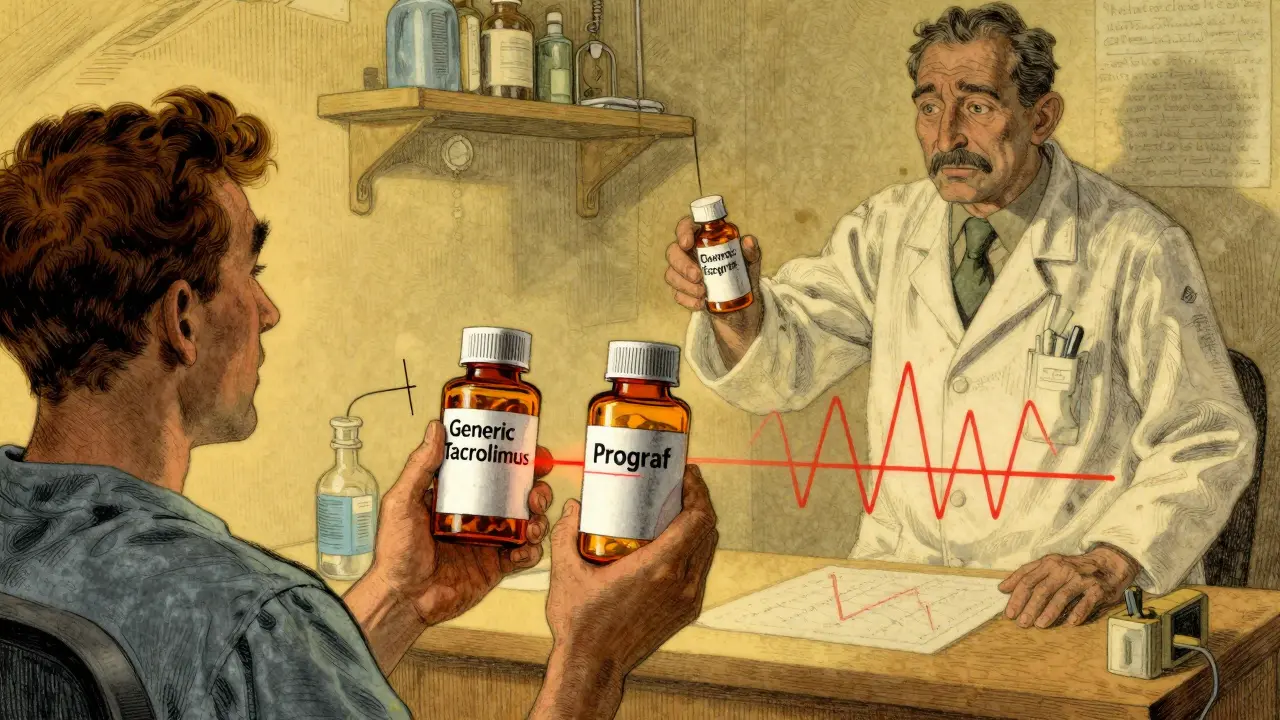
Cyclosporine and tacrolimus generics save money but carry serious risks for transplant patients due to their narrow therapeutic index. Learn why switching brands can trigger rejection, how to monitor levels safely, and what steps to take to protect your transplant.
Theophylline is a powerful but dangerous asthma and COPD medication with a narrow therapeutic window. Without regular blood testing, even small changes in dose or other medications can lead to life-threatening toxicity.