
Adverse Event Detection Accuracy Calculator
How Much Better is Machine Learning?
Compare traditional signal detection methods with modern AI approaches using real-world data from the FDA and pharmaceutical studies.
13% detection rate
64.1% detection rate
Improvement:
Detecting more events
For decades, drug safety monitoring relied on doctors and patients reporting side effects - a slow, patchy system where dangerous reactions often went unnoticed until hundreds or thousands of people were harmed. Today, that’s changing. Machine learning is now detecting hidden adverse drug reactions before they become public health crises. It’s not science fiction. It’s happening in real time, using data from electronic health records, insurance claims, and even social media posts.
Why Traditional Methods Are Falling Behind
The old way of finding drug risks used simple statistics. Systems like Reporting Odds Ratio (ROR) and Information Component (IC) looked for patterns in two-by-two tables: did more people report a side effect after taking Drug X than expected? Simple. But that simplicity came at a cost. These methods missed connections. They flagged false alarms. And they couldn’t see the bigger picture. Take a patient on an anticancer drug who develops a mild rash, then fatigue, then joint pain. Traditional systems saw three separate reports. Machine learning sees the pattern: hand-foot syndrome - a known but underreported side effect. It connects symptoms across time, dosage, age, and other medications. That’s why newer methods are catching signals 64% of the time that require medical intervention - compared to just 13% with random old reports.How Machine Learning Finds Hidden Signals
Modern signal detection doesn’t just count reports. It analyzes hundreds of features at once:- Demographics (age, gender, location)
- Drug dosage and duration
- Co-medications
- Lab results and hospital codes
- Patient-reported symptoms from online forums
Real-World Impact: The FDA’s Sentinel System
The U.S. Food and Drug Administration’s Sentinel System is the largest real-world example of this tech in action. Since its full rollout, it’s conducted over 250 safety analyses using data from 180 million patient records. Version 3.0, released in January 2024, now uses natural language processing to read through free-text adverse event reports and automatically judge whether a case is valid - no human reviewer needed. This isn’t just faster. It’s more accurate. One study showed that machine learning reduced false positives by 37% compared to manual methods. That means fewer unnecessary drug warnings and less panic among patients and doctors. It also means regulators can focus on real threats instead of noise.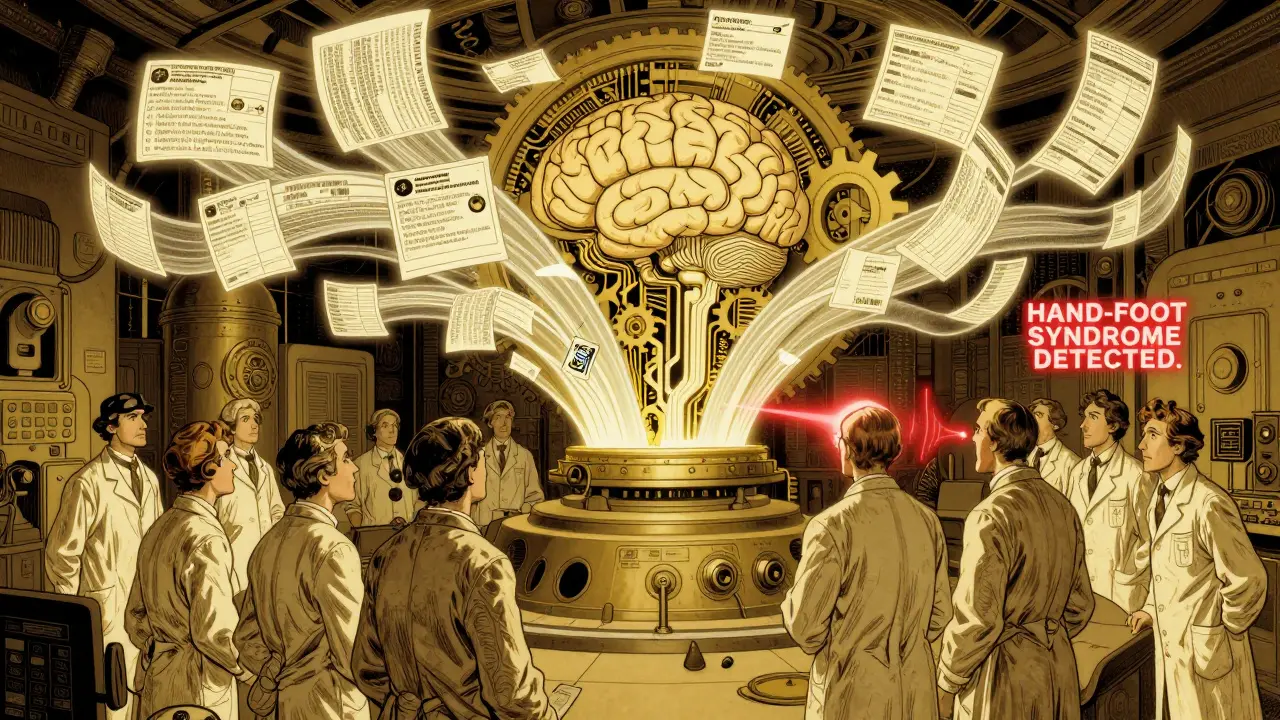
What’s Being Detected - And What’s Being Missed
Machine learning isn’t perfect. It’s only as good as the data it’s fed. Some rare reactions still slip through. Others get flagged because of poor data quality - like a patient misreporting a symptom or a hospital coding error. But here’s what it’s catching now:- Delayed reactions that appear months after starting a drug
- Interactions between drugs not listed in clinical trials
- Side effects specific to certain ethnic groups or age ranges
- Emerging patterns from social media, like patients complaining of heart palpitations after a new weight-loss drug
Challenges: The Black Box Problem
Not everyone is comfortable with this. Pharmacovigilance experts worry about the “black box.” If a machine says Drug Y causes seizures, but no one can explain how it figured that out, can regulators act on it? Can doctors trust it? The European Medicines Agency (EMA) is pushing for transparency. Their upcoming GVP Module VI, due in late 2025, will require clear documentation of how AI models make decisions. That means companies can’t just use a black box and call it done. They’ll need to show their math - even if it’s complex. Some teams are building explainable AI tools that highlight which data points drove a signal. Others are using hybrid models: machine learning to flag, humans to verify. That’s the sweet spot right now - speed with oversight.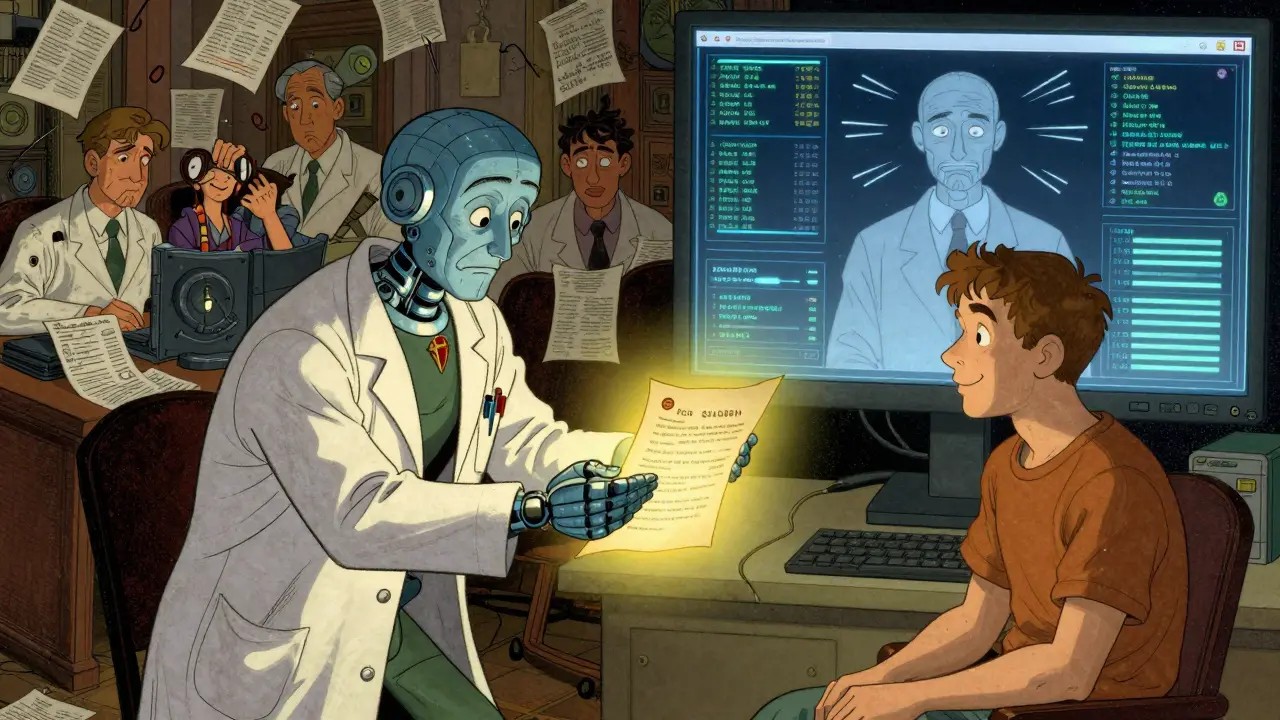
Who’s Using This - And How Fast
The industry is moving fast. As of mid-2024, 78% of the top 20 pharmaceutical companies have rolled out some form of machine learning in their safety teams. The global pharmacovigilance market is expected to hit $12.7 billion by 2028 - nearly double what it was in 2023. But adoption isn’t even. Big pharma can afford teams of data scientists. Smaller companies? They’re still struggling. Training a model takes months. Validating it takes longer. And integrating it with legacy safety databases? That’s a project in itself. Many start small - testing on one drug class, like anticoagulants or antidepressants. The Nature Scientific Reports study on infliximab began with just 10 years of cumulative data. It worked. Now, others are copying the approach.The Future: Multi-Source, Real-Time Monitoring
The next leap? Combining data from five sources at once:- Electronic health records
- Insurance claims
- Pharmacy dispensing logs
- Patient apps and wearables
- Social media and online patient communities
What This Means for Patients and Doctors
For patients, it means fewer surprises. Fewer drug recalls. Fewer cases where a side effect only becomes obvious after it’s too late. For doctors, it means better guidance. Instead of guessing whether a symptom is related to a drug, they’ll get alerts backed by real data. One study found that when clinicians received AI-flagged signals, 89% said they changed their prescribing habits - either by adjusting doses, switching drugs, or ordering more tests. And for the system? It’s becoming proactive instead of reactive. No longer waiting for a tragedy to happen. Detecting risks before they spread.How accurate are machine learning models in detecting adverse drug reactions?
Modern models like gradient boosting machines (GBM) achieve accuracy rates around 0.8 in detecting true adverse drug reactions - comparable to diagnostic tools for prostate cancer. In validation studies, GBM detected 64.1% of adverse events requiring medical intervention, far outperforming traditional methods that caught only 13% of relevant signals in random reports.
What data sources do machine learning systems use for signal detection?
These systems analyze electronic health records, insurance claims, pharmacy dispensing logs, patient registries, and increasingly, social media and patient forums. The FDA’s Sentinel System, for example, uses data from over 180 million patient records across 18 healthcare organizations. Multi-modal models now combine structured data (like lab results) with unstructured text (like patient descriptions) to improve detection.
Are machine learning methods replacing traditional pharmacovigilance?
No - they’re augmenting them. Traditional methods like Reporting Odds Ratio (ROR) are still used because they’re simple, well-understood, and accepted by regulators. But they’re too slow and noisy. Machine learning adds speed, depth, and precision. The best approach combines both: AI to flag potential signals, and human experts to validate and act on them.
Why is model interpretability a challenge in AI-based signal detection?
Many powerful models, especially deep learning systems, work like black boxes - they find patterns but can’t explain why. This makes it hard for regulators and clinicians to trust the results. If a model flags a drug as dangerous but can’t show which symptoms or patient factors triggered the alert, it’s hard to justify a label change. Solutions include hybrid models, explainable AI tools, and regulatory requirements for transparency - like the EMA’s upcoming GVP Module VI.
How long does it take to implement machine learning in a pharmacovigilance team?
It typically takes 6-12 months for pharmacovigilance professionals to become proficient with these tools, according to a 2023 survey by the International Society of Pharmacovigilance. Full enterprise-wide deployment can take 18-24 months, especially when integrating with legacy safety databases. Most organizations start with pilot projects on one drug class before scaling up.






Dean Jones
Machine learning in pharmacovigilance isn't just an upgrade-it's a paradigm shift. We used to wait for bodies to pile up before acting. Now we're seeing patterns in noise before anyone even notices something's wrong. The data doesn't lie, but it doesn't scream either. It whispers. And these algorithms? They're the ones leaning in to listen. The real win isn't just catching side effects-it's catching them before they become headlines. That’s not innovation. That’s responsibility, engineered.
Take hand-foot syndrome. A decade ago, it was buried under vague reports of 'rash' and 'fatigue.' Now, a model sees the sequence: chemo, then tingling, then peeling, then dose reduction. It connects dots no human would’ve linked in time. That’s the power of context. Not just volume. Not just frequency. But flow. Temporal, biological, pharmacological flow. We’re moving from reactive triage to predictive stewardship. And honestly? It’s about damn time.
The FDA’s Sentinel System isn’t magic. It’s math. It’s statistics with teeth. It’s 180 million records speaking in unison. And yet, we still treat this like a novelty. We’re not preparing clinicians for this shift. We’re not training pharmacists to interpret algorithmic flags. We’re just handing them a black box and saying, 'Trust it.' That’s not progress. That’s negligence dressed in code.
Explainability isn’t a luxury. It’s the foundation of trust. If a model flags a drug as dangerous, but can’t say whether it was the age, the co-medication, the lab trend, or the social media post that tipped it off-then we’re not safer. We’re just less aware. The EMA’s GVP Module VI is a step. But it’s not enough. We need real-time transparency dashboards. Not just for regulators. For every prescriber. For every patient. Because if you’re going to change how medicine works, you better make sure everyone understands why.
This isn’t about AI replacing humans. It’s about humans finally catching up to the data. And we’re still lagging.
So yes. It’s revolutionary. But revolution without education is just chaos with better analytics.
Sharon Lammas
I’ve been thinking about this a lot lately. Not just as a clinician, but as someone who’s watched loved ones get caught in the gaps of our old system. I remember my aunt-on a new antidepressant, started having weird tremors. She didn’t report it. Thought it was stress. The doctor dismissed it. Three months later, she was hospitalized. If a model had seen her EHR, her pharmacy fills, her vague forum post about 'shaky hands'-it might’ve flagged it. Not as a diagnosis. But as a pattern. A whisper. That’s what this is. Not automation. Not replacement. But attention. A system finally paying attention to the quiet signs we’ve ignored for decades.
I’m not scared of the algorithm. I’m scared we’ll stop listening to patients because we’re too busy staring at the dashboard. The machine doesn’t feel fear. But we should. And we should let it guide us-not replace our humanity.
Deborah Dennis
This is just another way for Big Pharma to cover their tracks. You think they’re really trying to protect patients? They’re just trying to avoid lawsuits. These 'AI models' are trained on data they control. They decide what’s a 'signal' and what’s noise. And guess what? The dangerous ones? They’re still buried.
Richard Elric5111
It is, indeed, a profound epistemological rupture in the domain of pharmacovigilance. The epistemic authority of the clinician, once anchored in phenomenological observation and anecdotal triangulation, is now being displaced by algorithmic assemblages that synthesize heterogenous data streams with non-human precision. We are witnessing not merely an enhancement of detection, but the ontological reconfiguration of adverse event recognition itself. The patient’s lived experience-once the primary locus of truth-is now a data point, subsumed into a vector space where symptoms are reduced to latent features. This is not progress. It is a quiet, algorithmic colonization of medical subjectivity. The black box, far from being an engineering limitation, is a metaphysical one: we have outsourced our moral responsibility to a system that cannot be held accountable, only audited. And so, we proceed-rational, efficient, and utterly, tragically blind.
John Smith
Let’s be real-this tech is wild. We went from doctors scribbling on clipboards to AI reading Reddit rants about heart palpitations after a new weight-loss pill. That’s not science fiction. That’s next-level. And yeah, the black box bugs me too-but if it catches a deadly interaction before the first death? I’ll take it. We’re not gonna wait for regulators to catch up. The data’s already moving faster than the bureaucracy. Let the suits argue about explainability. Meanwhile, patients are alive because a model noticed a pattern no human had time to see. That’s not magic. That’s just good engineering.
Lebogang kekana
THIS IS THE FUTURE AND WE’RE STILL TALKING ABOUT TRANSPARENCY LIKE IT’S A BONUS FEATURE? Listen-we’re talking about saving lives here. Not optimizing ad revenue. Not tweaking a recommendation engine. We’re talking about a diabetic patient who starts having liver issues and no one notices until their AST is through the roof. But the algorithm? It saw the spike in pharmacy refills, the drop in glucose logs from their app, the forum post about 'weird nausea,' and the EHR note about 'possible viral illness.' It connected them before the patient even told their doctor. That’s not a tool. That’s a guardian. And if you’re still worried about the black box, maybe you’re not ready to be in medicine anymore. The world doesn’t wait for perfect explanations. It waits for results. And right now? This is giving us results.
marjorie arsenault
I love how this is quietly changing things for the better. Not with fanfare, but with quiet accuracy. A lot of people think AI is cold or impersonal. But when it catches a rare side effect in an elderly patient on a common med-before they end up in the ER-that’s not cold. That’s care. I’ve seen it happen. A model flagged a combination of meds that no one had ever linked before. The patient was fine. Because we caught it early. That’s what this is. Not replacement. Not fear. Just better care, quietly working in the background.
Jessica Chaloux
I just posted about my weird dizziness after starting the new pill... and now I’m seeing this article? I didn’t even know I was part of a dataset. But I’m kinda glad? Like… I thought I was just being paranoid. Turns out the AI noticed too. Thank you, mysterious algorithm. You saved me from my own denial.
John Cyrus
They say AI catches 64 of signals but what about all the false alarms? Doctors are already overwhelmed and now they have to chase every little glitch from some algorithm? This is going to make prescribing worse not better. You think a nurse is gonna stop what theyre doing to check every flag? Nah theyll just ignore it or worse overprescribe to cover their asses. This isnt helping its just adding noise
Stephen Vassilev
Let’s not pretend this is about safety. Let’s be honest: the entire system is a surveillance infrastructure disguised as public health. Who owns the data? Who trains the models? Who decides what constitutes a 'signal'? The FDA? Big Pharma? A private contractor with no oversight? The 180 million records in Sentinel aren’t anonymized-they’re monetized. And now we’re told to trust an algorithm that can’t explain itself? That’s not science. That’s a contract signed in blood, written in code, and enforced by regulatory capture. The EMA’s 'transparency' requirements? A PR stunt. The models will still be proprietary. The data will still be siloed. And the patients? Still the last to know. This isn’t innovation. It’s a new kind of control. And we’re all complicit.
Darren Torpey
This is the kind of thing that makes you believe in progress again. No hype. No fluff. Just code doing the boring, vital work no human has time for. I used to think AI was just for self-driving cars and cat filters. Now I see it saving lives in quiet, unglamorous ways. Keep building. Keep refining. The world needs more of this.