
Calcium oxalate kidney stones are the most common type of kidney stone, making up about 70-80% of all cases. If you’ve had one, you know how painful they can be-and you probably want to make sure you never get another. The good news? Most of these stones can be prevented with simple, science-backed changes to how much you drink and what you eat. It’s not about cutting out everything you love. It’s about making smarter choices that work with your body, not against it.
Drink Enough Water-But Not Just Any Water
The single most powerful thing you can do to prevent calcium oxalate stones is to drink enough fluid. Not "a lot," not "when you’re thirsty." You need to produce at least 2.5 liters of urine per day. That’s about 10 cups of liquid, but remember: not all fluids are equal, and your body doesn’t count everything the same way.
Water is your best bet. Plain, clean, cold water. But you don’t have to drink it all straight. Coffee and beer, surprisingly, count toward your total. Studies show people who drink moderate amounts of coffee or beer have a lower risk of stones. Why? They help you stay hydrated without spiking your urine calcium or oxalate.
But avoid grapefruit juice. It’s one of the worst offenders. A 2013 study of over 80,000 women found that those who drank grapefruit juice daily had a significantly higher chance of forming stones. Same goes for fizzy drinks-especially colas. The phosphoric acid in them makes your urine more acidic, which helps stones form. If you like soda, occasional diet soda is fine. But make water your main drink.
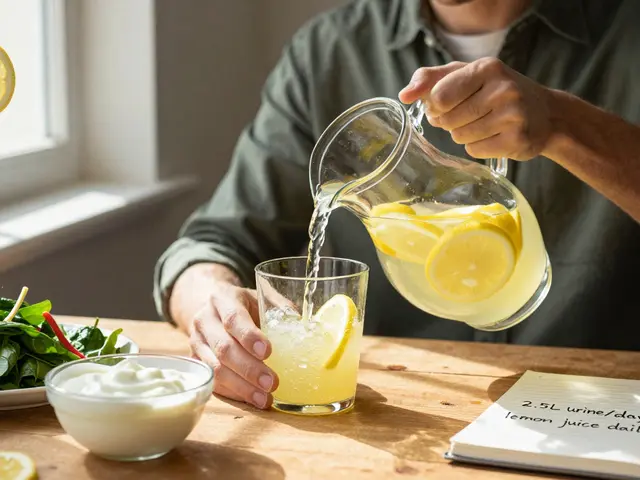
Here’s a practical tip: Add half a cup of fresh lemon juice to your water each day. That’s about the juice of two lemons. Lemon juice is packed with citrate, a natural blocker that stops calcium and oxalate from clumping together. Research shows this simple trick can boost urine citrate by over 120 mg per day-enough to cut your stone risk in half.
Don’t Cut Out Calcium-Eat More of It
Here’s where most people get it wrong. They hear "calcium stones" and assume they need to avoid calcium. That’s the opposite of what you should do.
When calcium is eaten with oxalate-rich foods, it binds to the oxalate in your gut. That means less oxalate gets absorbed into your bloodstream and ends up in your urine. If you don’t get enough calcium, your body pulls oxalate from food more easily, and that oxalate rushes into your kidneys. Boom-stone material.
Shoot for 1,000 to 1,200 mg of calcium per day from food. That’s about 2-3 servings of dairy: one cup of milk, one ounce of cheese, or three-quarters of a cup of yogurt. Kefir works too. If you’re lactose intolerant, try fortified plant milks like almond or soy (but check labels-some have added oxalate).
Never take calcium supplements without food. If you take a calcium pill on an empty stomach, it can increase calcium in your urine, which raises your risk. And avoid calcium carbonate supplements-they don’t help with citrate. If you need a supplement, choose calcium citrate. It’s better absorbed and actually adds citrate to your system.
Watch What You Eat-But Don’t Panic
Not all oxalate foods are created equal. You don’t need to eliminate spinach, almonds, or beans. You just need to pair them wisely.
High-oxalate foods include:
- Spinach (755 mg per half cup cooked)
- Rhubarb (541 mg per half cup)
- Almonds (122 mg per ounce)
- Navy beans (89 mg per half cup)
- Beet greens, sweet potatoes, and wheat bran
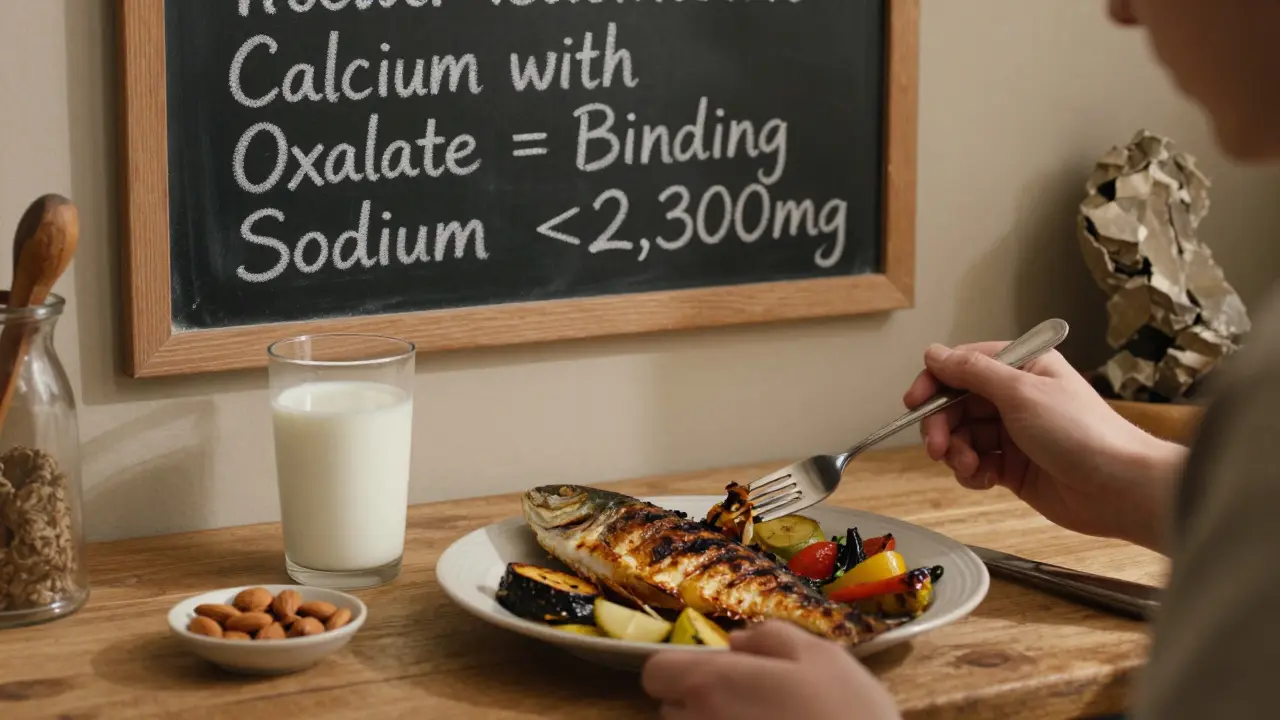
But here’s the key: eat these foods at the same time as your calcium-rich foods. Have yogurt with your spinach salad. Eat almonds with a glass of milk. Don’t snack on almonds alone. Don’t drink spinach smoothie on an empty stomach. Timing matters. A 2019 study showed that eating calcium 2 hours before or after oxalate-rich food cuts binding efficiency by 40-50%.
And don’t go overboard on sodium. Too much salt makes your kidneys dump more calcium into your urine. Aim for less than 2,300 mg of sodium per day. That’s about one teaspoon of salt. Most of it comes from processed food-canned soups, deli meats, sauces, and snacks. Cook more at home. Read labels. Swap salt for herbs and spices.
What About Protein, Vitamin C, and Supplements?
Animal protein-like red meat, chicken, and fish-can raise your risk. It lowers citrate and increases uric acid and calcium in your urine. You don’t need to go vegan. Just keep portions moderate. Aim for no more than 75 grams of animal protein per day. That’s about the size of two decks of cards.
Vitamin C supplements are tricky. If you take more than 1,000 mg a day, your body can turn extra vitamin C into oxalate. But eating vitamin C from oranges, strawberries, or broccoli? No problem. Studies show no link between dietary vitamin C and stones at doses under 500 mg per day.
And skip the mega-dose supplements. Calcium pills, vitamin C pills, and even some herbal kidney cleanses can do more harm than good. Stick to food-first. Your body handles nutrients better when they come from real meals.
When Medication Might Help
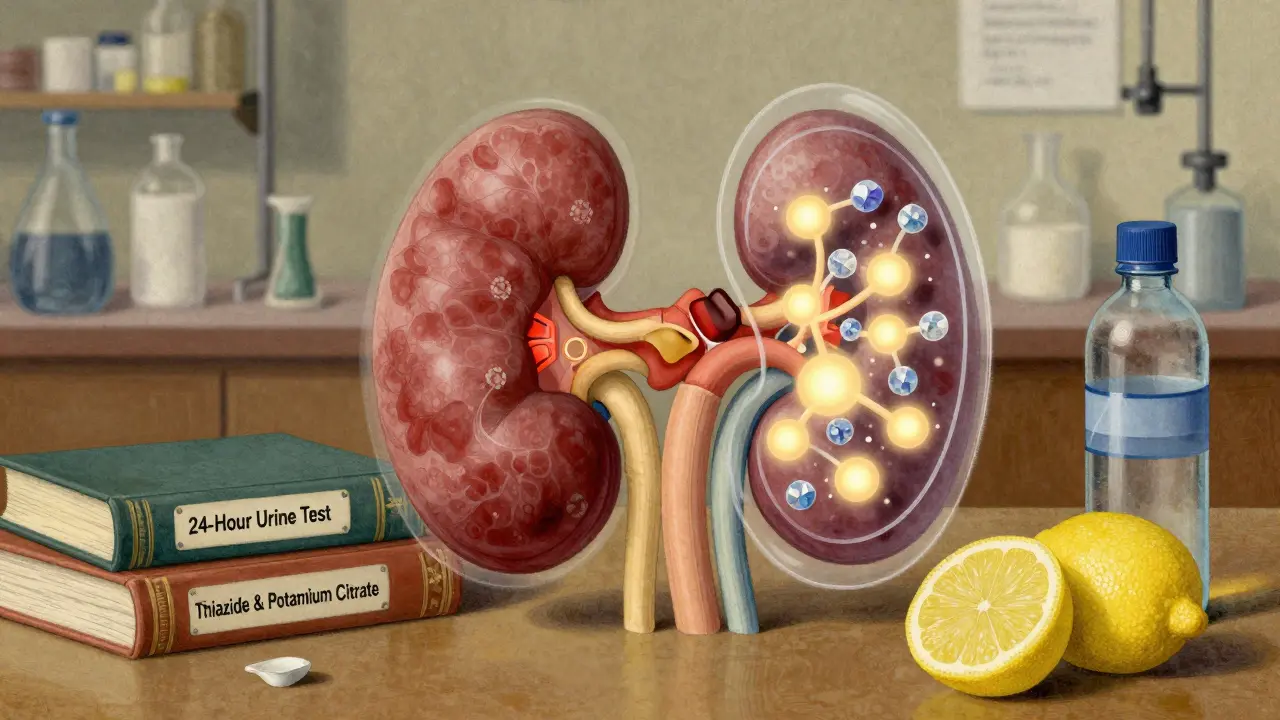
For some people, diet and fluids alone aren’t enough. That’s where medication comes in-but only after a 24-hour urine test confirms what’s going wrong.
If your urine calcium is too high (over 250 mg/day), a low-dose thiazide diuretic like hydrochlorothiazide can help. These drugs tell your kidneys to hold onto calcium instead of spilling it into your urine. They reduce recurrence by 30-50%.
If your citrate is low (under 320 mg/day), potassium citrate tablets can help. They make your urine less acidic and block crystal formation. Avoid sodium citrate-it can raise calcium levels.
If you have high uric acid in your urine (over 550 mg/day), allopurinol can help. It’s commonly used for gout, but it’s also effective for preventing stones in people with high uric acid levels.
These aren’t magic pills. They work best when combined with hydration and diet. And they require monitoring. Always work with your doctor before starting anything.
What to Track and How
Prevention isn’t guesswork. The best way to know if you’re on track is to get a 24-hour urine test. It measures:
- Urine volume (target: >2.5 L/day)
- Calcium (target: <250 mg/day)
- Oxalate (target: <40 mg/day)
- Citrate (target: >320 mg/day)
- Sodium (target: <200 mEq/day)
Most people don’t do this. But if you’ve had more than one stone, it’s worth it. It tells you exactly what’s going wrong. Maybe you’re drinking enough but eating too much salt. Or maybe your citrate is low, and lemon water alone won’t fix it.
And if you struggle to remember to drink water, try a hydration app. One study found that people who used apps to track their fluid intake were twice as likely to stick with it after a year. Set a goal: 10 cups a day. Mark it. Celebrate it.
Final Takeaways
Preventing calcium oxalate stones isn’t about perfection. It’s about consistency. Here’s what actually works:
- Drink 2.5+ liters of fluid daily-mostly water, with lemon juice added.
- Get 1,000-1,200 mg of calcium from food-not supplements-every day.
- Pair oxalate-rich foods with calcium-rich foods at the same meal.
- Keep sodium under 2,300 mg per day.
- Avoid grapefruit juice and fizzy drinks.
- Use a 24-hour urine test to guide your plan-don’t guess.
Stone recurrence is high-up to 50% within five years if you do nothing. But with these steps, you can slash that risk by more than half. You don’t need to live on a bland diet. You just need to make smarter choices, one meal and one glass at a time.
Can I still eat spinach if I’ve had kidney stones?
Yes, but not alone. Spinach is high in oxalate, but eating it with calcium-rich foods like yogurt, cheese, or milk helps bind the oxalate in your gut so less gets into your urine. Never have spinach smoothies or salads without a source of calcium. Pairing them reduces your risk significantly.
Is lemon water really that effective?
Yes. Lemon juice is rich in citrate, which naturally blocks calcium and oxalate from forming crystals. Studies show that drinking the juice of two lemons diluted in water daily can raise urine citrate by over 120 mg per day-enough to cut stone risk by nearly half. It’s one of the simplest, cheapest, and most effective prevention tools.
Should I take calcium supplements to prevent stones?
Only if you can’t get enough from food-and even then, choose calcium citrate, not calcium carbonate. Taking calcium supplements without food can increase stone risk. A 2012 study found calcium supplements raised stone risk by 20%. Food-based calcium binds oxalate safely. Supplements should be a last resort.
How much water should I drink if I live in a hot climate?
In hot climates, you need even more. Aim for at least 3 liters of fluid daily, and more if you sweat heavily. Your goal is still to produce over 2.5 liters of urine per day. Don’t wait until you’re thirsty. Drink consistently throughout the day, especially before and after activity. Carry a water bottle and refill it often.
Do I need to avoid all nuts to prevent stones?
No. Almonds are high in oxalate, but you can still eat them in moderation if you pair them with calcium. Have a small handful with a glass of milk or yogurt. Avoid snacking on nuts alone. Other nuts like peanuts and cashews are lower in oxalate and safer choices. Portion control and pairing matter more than total elimination.





Dinesh Dawn
I never knew coffee and beer could help prevent stones. I drink coffee every morning and a beer on weekends - guess I’m doing something right. Thanks for the clarity!
Gabrielle Conroy
OMG THIS IS SO HELPFUL!!! I had a stone last year and thought I had to give up spinach forever 😭 Turns out I just needed to eat it WITH yogurt?? Game changer. I’m adding lemon juice to my water tomorrow!! 🍋💧
Steven Pam
This is the kind of post that makes you feel like someone finally got it. No fear-mongering, no extreme diets - just smart, doable tweaks. I’ve been drinking 3 liters of water a day since I read this and honestly? My back feels lighter already. Keep it up!
Natanya Green
I tried the lemon water thing and it felt like magic. Like, I was skeptical but then I went from 3 stones in 18 months to ZERO for 2 years. I even convinced my mom to try it. She’s now obsessed with lemons. We have lemon water birthdays now. 🎉🍋
Matthew Brooker
The calcium myth is so dangerous. People think if it’s called a calcium stone they should avoid calcium. No no no. It’s the opposite. Your gut needs calcium to bind oxalate. If you’re low on calcium your body pulls oxalate from food like a vacuum. That’s when stones form. Food first always
lela izzani
I’ve been following this advice for 8 months now. I track my urine output with a smart bottle and hit 2.8L every day. No more pain. No more anxiety. I still eat spinach, almonds, and even the occasional cola. Just paired with dairy. It’s not about restriction. It’s about rhythm.
Gwen Vincent
I appreciate how this doesn’t villainize any food. So many health articles make you feel guilty. This just says: here’s what works. And that’s enough.
Lillian Knezek
I think the FDA and Big Pharma are hiding the truth about citrate. Why aren’t they pushing lemon juice as a drug? Why are they selling expensive potassium citrate pills? I’ve been drinking 2 lemons in water daily and my stones vanished. Coincidence? I think not. 🕵️♀️
Shalini Gautam
I’m from India and we drink lemon water every morning anyway. But I didn’t know about the calcium-oxalate binding. My grandma always said "eat dal with yogurt" - turns out she was a kidney stone expert. Indian grandmas knew before science did.