
Corticosteroid Taper Calculator
Safe Tapering Guide
This tool creates a personalized tapering schedule based on your steroid use. Abrupt cessation causes withdrawal in 78% of patients. Always follow your doctor's guidance.
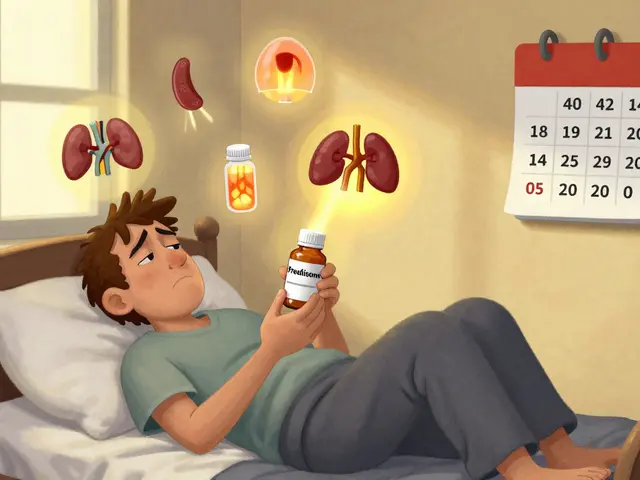
Stopping corticosteroids like prednisone or prednisolone isn’t as simple as taking your last pill and calling it done. If you’ve been on these meds for more than a few weeks, your body has stopped making its own cortisol. When you quit too fast, your adrenal glands can’t snap back in time-and that’s when the symptoms hit. Fatigue so deep it feels like your bones are made of lead. Joint pain that comes out of nowhere. Nausea, mood swings, trouble sleeping. These aren’t just side effects. They’re signs your body is in crisis.
Why Tapering Isn’t Optional
Corticosteroids suppress your hypothalamic-pituitary-adrenal (HPA) axis. That’s the system that tells your body when to make cortisol-the hormone that keeps your blood sugar steady, your blood pressure up, and your immune system from going haywire. When you take synthetic steroids for more than 2-4 weeks at doses above 7.5 mg of prednisolone daily, your body says, “Cool, I don’t need to make my own.” And it shuts down.That’s fine while you’re still on the drug. But when you stop suddenly, cortisol levels crash. In clinical trials, 78% of patients who quit abruptly developed withdrawal symptoms. That’s not rare. That’s the norm. The goal of tapering isn’t to make you feel better overnight. It’s to give your HPA axis time to wake up. Slowly. Gently. With support.
How Fast Should You Taper?
There’s no one-size-fits-all schedule. It depends on how long you’ve been on steroids, your dose, and what condition you’re treating-rheumatoid arthritis, lupus, Crohn’s disease, or something else.For high-dose therapy (over 20 mg prednisone daily), you can start by cutting 2.5 to 5 mg every 3 to 7 days. Once you hit 15 mg, slow down. Drop by 1 mg every 1 to 2 weeks. When you get below 5 mg, go even slower-sometimes 0.5 mg every week or two. Why? Because below 15 mg, your body starts to notice the drop. 63% of patients report withdrawal symptoms once they cross that threshold.
Short- or intermediate-acting steroids like prednisolone or hydrocortisone are preferred for the final stages. Take them in the morning. That mimics your body’s natural cortisol rhythm. Your adrenal glands respond better when they’re trained to expect a signal at 7 or 8 a.m., not midnight.
Differentiating Withdrawal, Flare, and Adrenal Insufficiency
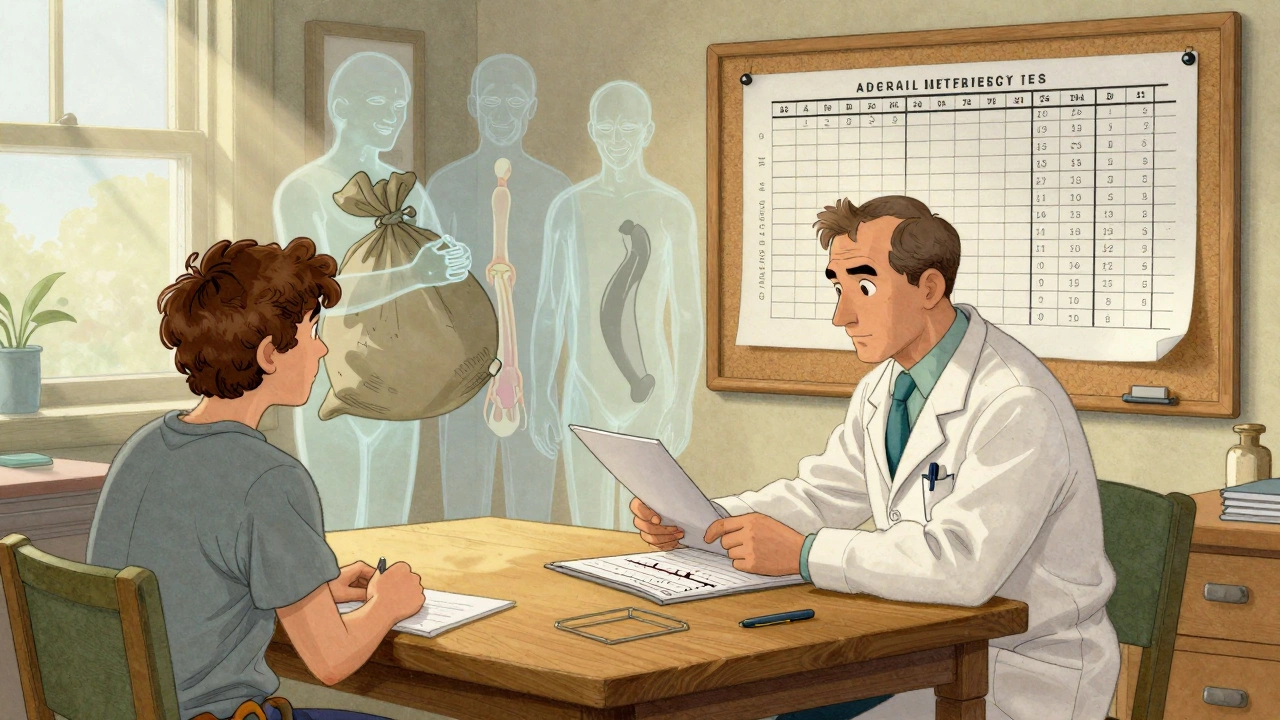
This is where things get messy. Many doctors misdiagnose what’s happening. And patients end up back on steroids longer than they need to.- Withdrawal syndrome feels like flu + exhaustion. Fatigue, muscle aches, joint pain, nausea, irritability, insomnia. No fever. No swelling. No new lab abnormalities.
- Disease flare brings back the original problem. Swollen joints in RA. Bloody diarrhea in Crohn’s. Rash in lupus. Inflammation markers go up.
- Adrenal insufficiency is dangerous. Low blood pressure when standing, dizziness, low sodium, low blood sugar. Can lead to adrenal crisis-life-threatening. Needs emergency hydrocortisone.
Doctors use a cosyntropin (ACTH) stimulation test to check adrenal function. If your cortisol spikes to over 400-500 nmol/L after the injection, your HPA axis is recovering. If it doesn’t? You’re not ready to stop.
What Actually Helps With Symptoms?
Tapering isn’t just about pills. It’s about lifestyle. And the data shows this isn’t just “feel-good advice.”Patients who did 20 minutes of daily walking or warm-water pool exercises saw a 42% drop in muscle and joint pain. Physical therapy cut pain scores from 7.2 to 3.1 on a 10-point scale in just four weeks. Sleep matters. Aim for 7-9 hours. Caffeine? Keep it under 200 mg a day-about two cups of coffee. Too much spikes cortisol and messes with your recovery rhythm.
Food plays a role too. A Mediterranean-style diet-lots of vegetables, fish, olive oil, nuts-reduced symptom severity by 55% in a Mayo Clinic study of over 1,200 patients. Why? It lowers inflammation and supports blood sugar stability.
And mental health? Huge. Cognitive behavioral therapy (CBT) cut anxiety and depression related to withdrawal by 68% in a trial by the American Addiction Centers. Tapering isn’t just physical. It’s psychological. You’re grieving the loss of a drug that kept you functional. That’s real.
What Patients Are Really Experiencing
Reddit’s r/Prednisone community has over 12,500 members. In a 2023 survey, 68% said they still got withdrawal symptoms-even with a “proper” taper. 41% described crushing fatigue that lasted 3 to 8 weeks. On Drugs.com, the average symptom duration was 22.7 days. But 18% suffered for more than two months.Why? Inconsistent protocols. Doctors who don’t explain what to expect. Patients told to “just cut back a little” without a plan. One patient wrote: “My rheumatologist said, ‘Take half a pill less every week.’ I had no idea what that meant for my body. I ended up in the ER.”
Those who succeeded had three things: a written schedule, support from multiple specialists, and patience. One 45-year-old with rheumatoid arthritis tapered from 40 mg to zero over 26 weeks using the European League Against Rheumatism protocol. Zero symptoms. No relapse. Just slow, steady progress.

What to Do If You’re Struggling
If you’re tapering and symptoms hit hard:- Don’t panic. Don’t immediately go back to your old dose.
- Check your blood pressure lying down and standing. If it drops more than 20 mmHg systolic, you might have adrenal insufficiency. Call your doctor.
- Keep a symptom journal. Note timing, intensity, and what you ate, slept, or did that day.
- Ask for a referral to an endocrinologist. They specialize in HPA axis recovery.
- Get a steroid emergency card. It should list your maximum physiological dose (20-30 mg hydrocortisone equivalent) in case of injury, infection, or surgery.
Twenty-two percent of patients need a temporary dose increase during tapering. That’s not failure. It’s medicine. The goal isn’t to suffer through it. It’s to get off safely.
The Bigger Picture
Only 43% of primary care doctors follow evidence-based tapering guidelines. Gastroenterologists and rheumatologists do better-around 70%. But if you’re seeing your GP for a steroid taper, make sure they’re not winging it.Every year, corticosteroid withdrawal sends over 100,000 people to the ER in the U.S. alone. It costs $1.2 billion. Most of it preventable.
New tools are coming. Mayo Clinic’s digital tapering assistant, launched in March 2024, cut complications by 37% in its pilot group. Researchers are testing salivary cortisol tests to personalize taper speed. AI-driven systems are being tested to predict recovery based on your genetics, age, and duration of use.
But right now? The best tool is a clear plan, patience, and a team that listens. You’re not weak for needing help. You’re smart for asking for it.
What’s Next?
If you’re starting a taper, get a written schedule. Ask your doctor: “What’s my target dose? How often should I check in? What symptoms mean I need to slow down?”Don’t rely on memory. Don’t guess. Write it down. Share it with your pharmacist. Print it. Put it on your fridge.
And if you’ve already been through this? Tell your story. Help others. Because too many people are told, “Just tough it out.” They shouldn’t have to.
Can I stop prednisone cold turkey if I’ve only been on it for a week?
If you’ve been on prednisone for less than two weeks and at a low dose (under 7.5 mg daily), you likely won’t need a taper. Your HPA axis probably didn’t shut down. But if you were on a higher dose-even for a short time-consult your doctor. It’s safer to be cautious.
How long does it take for the HPA axis to recover?
Recovery time depends on how long you were on steroids. If you took them for less than three weeks, your body usually rebounds in 1-2 weeks. For 3-12 months of use, expect 2-6 months. If you were on high doses for over a year, full recovery can take 6-12 months or longer. Blood tests and symptom tracking help guide this.
Are there natural ways to boost cortisol during tapering?
No. Supplements like licorice root or adaptogens won’t safely replace cortisol. They can interfere with your HPA axis recovery or cause side effects. The only reliable way to restore cortisol production is time, proper tapering, sleep, nutrition, and stress management. Don’t risk your health with unproven remedies.
What should I do if I get sick during my taper?
Illness, infection, or injury increases your body’s need for cortisol. If you’re on a taper and get sick, you may need a temporary increase in your steroid dose-this is called a “stress dose.” Always carry your steroid emergency card and contact your doctor immediately. Don’t wait until you feel worse.
Can I exercise while tapering?
Yes-and you should. Gentle movement like walking, swimming, or yoga helps reduce fatigue and joint pain. Avoid intense workouts if you’re feeling weak or dizzy. Start slow. Even 20 minutes a day improves recovery speed and mood. Physical therapy is often recommended for patients with chronic conditions.
Why do some people have worse withdrawal than others?
It’s not just about dose or duration. Genetics, age, stress levels, sleep quality, and nutrition all play a role. People with anxiety or depression before starting steroids often have worse psychological withdrawal. Those with poor access to care or inconsistent medical advice also struggle more. It’s not weakness-it’s biology and environment combined.
Is it normal to feel worse before I feel better?
Yes. Withdrawal symptoms often peak between weeks 2 and 6 after starting the taper. This is when your body is trying to restart cortisol production. It’s not the drug coming back-it’s your body learning to function without it. Most people start feeling better after 8-12 weeks. Keep going. Don’t quit the taper unless your doctor says to.






Ruth Witte
OMG THIS POST IS A LIFESAVER 🙏 I tapered off 30mg of prednisone over 14 weeks and thought I was dying at week 6… turns out my body was just relearning how to breathe. Walking 20 mins a day was the only thing that kept me from crying in the shower. You’re not weak-you’re healing.
Noah Raines
Finally someone who gets it. Docs act like tapering is just ‘take half a pill next week’ like it’s a diet. Bro, your adrenals aren’t a light switch. I went from 40mg to zero in 8 weeks and ended up in the ER with low BP. Slow. Down.
Katherine Rodgers
lol so the solution to a 12 month steroid regimen is… more meds? and yoga? and a mediterranean diet? wow. revolutionary. next you’ll tell me drinking water helps with dehydration. 🤡
Gilbert Lacasandile
I’m 6 months out from stopping 20mg daily for 18 months. Still get tired after lunch. But I’m alive. And I didn’t relapse. This post? It’s the roadmap I wish I’d had. Thanks for writing it.
Lola Bchoudi
HPA axis reactivation requires neuroendocrine recalibration under circadian entrainment. Non-negotiable. Morning dosing aligns with diurnal cortisol rhythm-critical for adrenal priming. Combine with low-glycemic load nutrition to reduce HPA hyperreactivity. And yes, CBT modulates limbic hyperactivity during withdrawal. You’re not just ‘toughing it out’-you’re rebuilding a system.
Kathy Haverly
68% still have symptoms? That’s not a taper. That’s a death march. This whole thing is a scam. Doctors just want you hooked. You don’t need to taper-you need to stop. Let your body figure it out. All this ‘slow’ nonsense is just fear-mongering.
ian septian
Walk. Sleep. Eat real food. Don’t panic. You’ll be fine.
Tejas Bubane
American medical industry at its finest. Overcomplicate everything. In India we just stop. No schedules. No journals. No ‘stress doses’. Body knows what to do. You overthink too much. Just quit.
Ajit Kumar Singh
I am from India and I say this with love and truth: your body is not a machine to be programmed. You cannot control cortisol with a spreadsheet. You must surrender to nature. I stopped cold turkey after 6 months. I wept. I slept 18 hours. I ate mangoes. I lived. You are not broken. You are becoming.
Angela R. Cartes
I read this and thought ‘wow, this is so well-researched’… until I saw the Mayo Clinic study cited. That’s the same one that claimed avocado toast prevents cancer. 🤦♀️
Andrea Beilstein
We treat the body like a broken phone you fix with a firmware update. But what if the problem isn’t the hormone? What if it’s the life you were living when you needed it? The anxiety. The pressure. The trauma you medicated away? Tapering doesn’t fix that. It just makes you sit with it. And that’s the real withdrawal.
Lisa Whitesel
Stop. Just stop. You don’t need a 2000 word essay to tell you to not quit steroids cold turkey. This is basic med school stuff. Why are people even asking this?
Larry Lieberman
Wait so if I’m on 5mg and I feel like garbage, I should wait 2 weeks before dropping to 4.5? But what if I’m also stressed about my job? Does cortisol from stress interfere with the taper? Like… is my anxiety making my body think it’s in crisis? 🤯