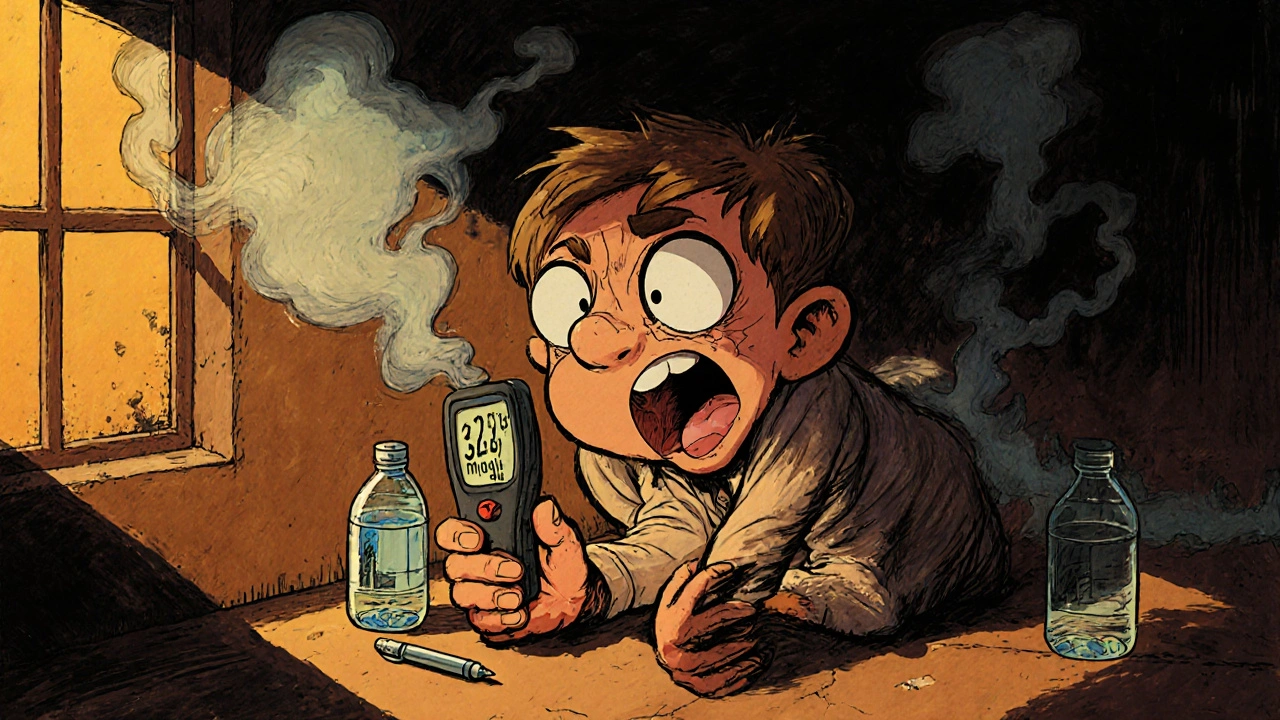
Diabetic Ketoacidosis: Causes, Signs, and What You Need to Know
When your body doesn’t have enough insulin, it can’t use sugar for energy, so it starts burning fat instead. That process creates acids called ketones, which build up in your blood and can turn deadly. This condition is called diabetic ketoacidosis, a life-threatening complication of diabetes caused by severe insulin deficiency and high blood sugar levels. Also known as DKA, it most often affects people with type 1 diabetes, an autoimmune condition where the pancreas stops producing insulin, but it can also happen in type 2 diabetes under stress, illness, or missed insulin doses.
Diabetic ketoacidosis doesn’t come on slowly. You might feel unusually thirsty, urinate a lot, get really tired, or notice a fruity smell on your breath. Nausea, vomiting, stomach pain, and confusion can follow fast. If you’re diabetic and your blood sugar is over 250 mg/dL with ketones in your urine or blood, don’t wait. This isn’t a "wait and see" situation—it’s a medical emergency. People often mistake DKA for the flu, but it’s not a virus. It’s your body screaming because it’s running out of fuel and drowning in acid. Left untreated, it can lead to coma or death. Even if you’ve had diabetes for years, skipping insulin, getting sick with an infection, or having a heart attack can trigger it.
What makes DKA so dangerous isn’t just the high sugar—it’s the acid. Your kidneys try to flush out the extra sugar, pulling water and electrolytes with it. That’s why you get dehydrated, dizzy, and weak. Your blood becomes too acidic, which messes with your heart rhythm, brain function, and breathing. Doctors treat it with fluids, insulin, and electrolytes—fast. The good news? If caught early, DKA is reversible. The key is knowing your risk and acting before it gets bad. If you’re on insulin, always have a ketone test strip on hand, especially when you’re sick. Check your blood sugar more often. If it’s high and you feel off, test for ketones. Don’t assume it’s just a bad day. It might be your body warning you.
Many people think DKA only happens to kids or newly diagnosed patients. But adults who forget insulin, skip doses because of cost, or don’t know how to adjust during illness are just as at risk. It’s not about being careless—it’s about not having the right tools or support. That’s why understanding the triggers, knowing your symptoms, and having a plan matters more than ever. Below, you’ll find real, practical guides on managing diabetes complications, spotting early signs, and avoiding dangerous situations before they become emergencies.
Diabetic ketoacidosis is a life-threatening condition that requires immediate hospital care. Learn the early warning signs, how it's treated in the hospital, and how to prevent it before it becomes an emergency.