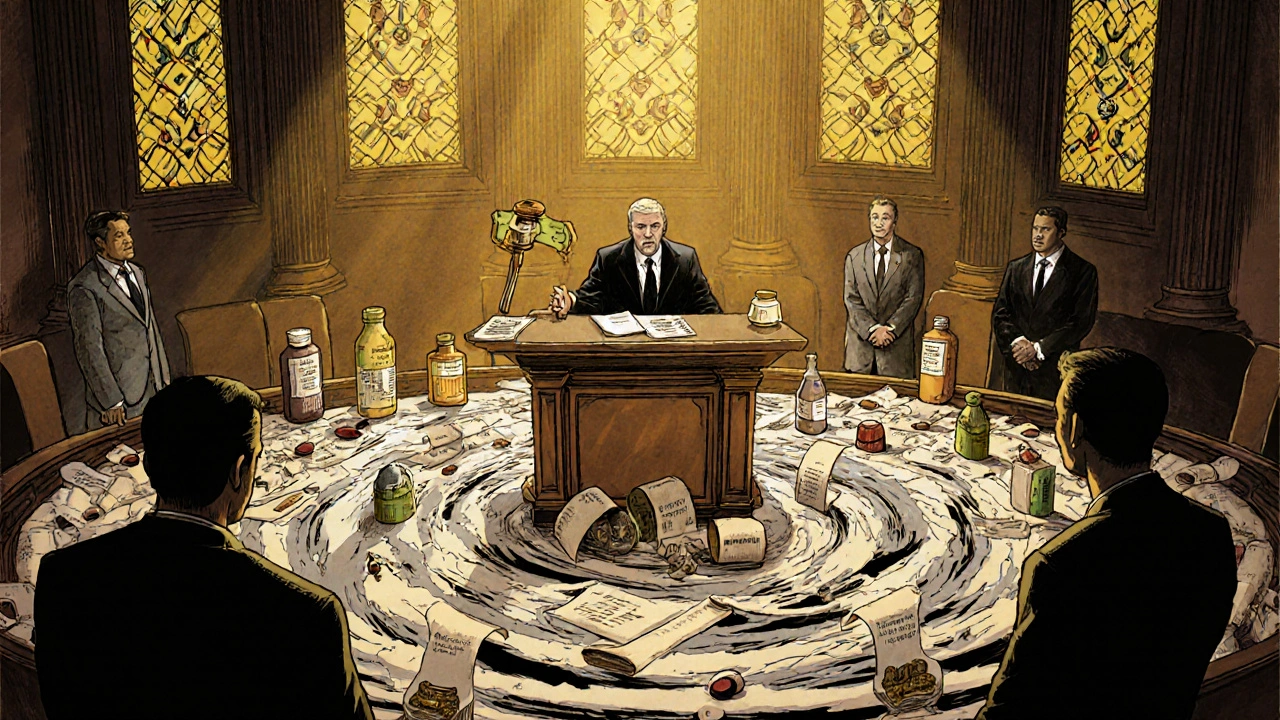
ANDA: What It Means for Generic Drugs and Your Prescription Savings
When you pick up a generic pill that looks different from the brand-name version but costs half as much, you’re holding something called an ANDA, Abbreviated New Drug Application, the FDA’s official pathway for approving generic medications. Also known as generic drug application, it’s the legal and scientific process that lets pharmacies swap expensive brand drugs for cheaper versions without sacrificing safety or effectiveness. This isn’t just a paperwork shortcut—it’s the reason millions of Americans can afford insulin, blood pressure meds, and antidepressants every month.
Every generic drug on the shelf started with an ANDA. The FDA doesn’t require generic makers to repeat expensive clinical trials. Instead, they must prove their product has the same active ingredient, strength, dosage form, and route of administration as the original. It must also be absorbed into the body at the same rate and to the same extent. That’s called bioequivalence. If it passes, the FDA approves the ANDA and lists the drug as therapeutically equivalent. That’s why your pharmacist can legally substitute a generic unless your doctor specifically says no. And that’s why states have laws pushing pharmacists to make the switch—because it saves billions.
But ANDA isn’t just about cost. It’s about access. Without it, many people would skip doses or skip pills entirely because they can’t afford the brand. That’s why ANDA-related posts here cover everything from why generics look different (thanks to U.S. trademark laws) to how state substitution rules can sometimes cause confusion or even shortages. You’ll find real examples of how ANDA impacts your care: from how generic substitution affects critical meds like warfarin, to why some patients worry about switching from Prograf to its generic version. We also break down how pharmaceutical companies sometimes delay generics by exploiting loopholes, and how the FDA keeps tabs on quality—even when manufacturing happens overseas.
What you won’t find here are vague claims about generics being "just as good." You’ll find facts grounded in FDA rules, real-world outcomes, and patient experiences. Whether you’re a first-time patient trying to understand your prescription, someone managing a chronic condition on a tight budget, or just curious why your pill changed color, this collection gives you the straight story behind the ANDA system. Below, you’ll see how this single regulatory process connects to medication safety, drug interactions, counterfeit risks, and even how your insurance handles copays. It’s the hidden engine behind affordable healthcare—and you deserve to know how it works.
The Federal Circuit Court has exclusive authority over all U.S. pharmaceutical patent cases, shaping how generics enter the market, what dosing regimens can be patented, and where lawsuits can be filed. Its rulings directly impact drug prices and innovation.