A Comprehensive Medication Review is a structured consultation where a pharmacist reviews every single thing you put into your body, from prescription pills to herbal teas, to ensure they work together safely. Unlike a quick five-minute chat at the pharmacy counter, this is a deep dive into your health history. Because it's mandated by the Medicare Modernization Act of 2003, your Medicare Part D plan is required to offer this to eligible members. But here is the catch: the review is only as good as the information you provide. If you forget to mention a supplement or a generic brand of aspirin, the pharmacist can't protect you from a potential interaction.
Who Actually Qualifies for a CMR?
You don't just get a CMR because you have Medicare. The program targets "high-risk" beneficiaries to maximize the impact on health outcomes. While rules shift slightly each year, current guidelines generally focus on people who meet specific markers of complexity. For instance, you're likely eligible if you have at least three core chronic health conditions and take several Part D-eligible drugs. Recent 2025 updates have actually lowered the cost threshold for eligibility to about $1,623 in annual out-of-pocket expenses, meaning more people can now access this professional oversight.
If you've been flagged for a review, your insurance provider will reach out. Don't ignore this call. The National Board of Medication Therapy Management (NBMTM) emphasizes that these plans are expected to actively engage you, not just send a passive flyer in the mail. Whether the review happens in person or via a telehealth call, the goal is to create a roadmap for your health over the next twelve months.
The Essential Pre-Review Checklist
Walking into a CMR empty-handed is a bit like going to a mechanic and asking them to fix a sound you can't describe. To get the most value out of your time, you need to gather your data. Research shows that patients typically omit two to three medications from their self-reported lists, which is exactly where the danger lies. To avoid this, follow these steps:
- Gather Every Container: Don't rely on memory. Collect every single prescription bottle, over-the-counter (OTC) pain reliever, vitamin, and herbal supplement. If you take fish oil or a specific tea for sleep, bring those too.
- Create a Medication Timeline: Note when you started each drug and when the dosage last changed. This helps the pharmacist see if a new symptom coincided with a new medication.
- Log Your Side Effects: Keep a simple diary of any dizziness, nausea, or fatigue you've felt lately. Mentioning that you've been "feeling a bit off" is too vague; saying "I feel dizzy 30 minutes after taking my morning pill" is a goldmine for a pharmacist.
- Review Recent Health Events: Bring notes on any recent hospitalizations, new lab results, or changes in your health status that happened since your last review.
Depending on how complex your regimen is, set aside some real time for this. If you're taking eight or more medications, plan for 60 to 90 minutes of prep. For those with a simpler routine of four to seven drugs, 30 to 45 minutes should be plenty. This preparation is the difference between a generic conversation and a life-saving intervention.
| Feature | Standard Consultation | Comprehensive Medication Review (CMR) |
|---|---|---|
| Scope | Focuses on a specific prescription | Reviews all meds, OTCs, and supplements |
| Duration | Usually 2-5 minutes | Extended interactive consultation |
| Outcome | Drug dispensed with basic instructions | Written Medication Action Plan (MAP) |
| Goal | Immediate medication access | Long-term therapy optimization |

What Happens During the Actual Consultation?
Once you've done your homework, the actual review begins. The pharmacist won't just look at what you're taking; they'll look at why you're taking it and if there's a better way. They are searching for "medication-related problems," such as therapeutic duplications (taking two different drugs that do the same thing) or adverse interactions.
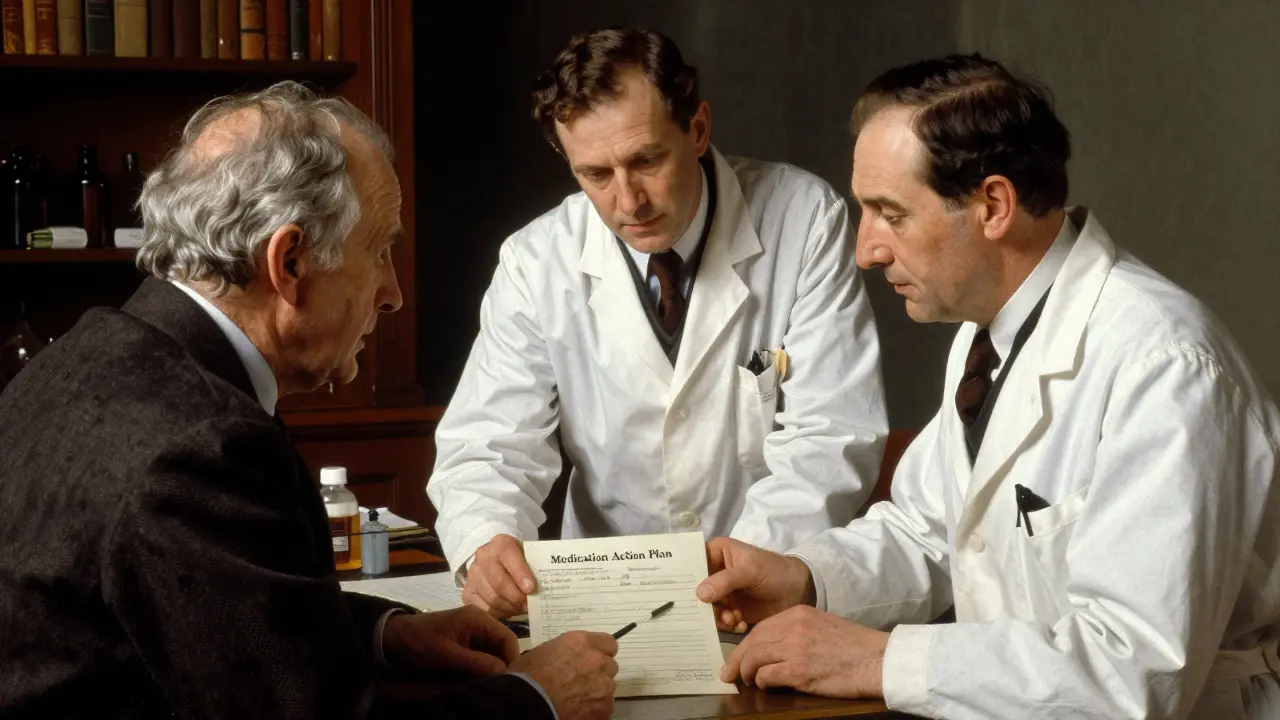
The process follows a strict CMS MTM Program Standardized Format. You won't just leave with a verbal "you're doing great." You will receive a written summary consisting of three parts: a Consultation Letter, a Medication Action Plan (MAP), and a Personal Medication List (PML). The MAP is particularly valuable because it addresses specific barriers-like a pill that's too hard to swallow or a cost that's too high-and provides a concrete strategy to fix them.
If you're nervous or struggle to remember details, bring a family member or a trusted friend. Having a second set of ears ensures that the instructions are clear and that no question goes unanswered. This is also the perfect time to ask about cost-effective alternatives. Pharmacists often know about generic switches or manufacturer coupons that can significantly lower your monthly spend.
Common Pitfalls to Avoid
The biggest mistake beneficiaries make is assuming the pharmacist already has all the information. While many plans use electronic health records, those records are often incomplete. They might show what was paid for, but not what you actually took or what you bought at a grocery store checkout lane.
Another common error is neglecting the "non-drug" part of the review. Many seniors forget that herbal supplements like St. John's Wort can drastically change how prescription blood thinners or antidepressants work. If it goes into your mouth, it belongs in the review. Finally, avoid the temptation to "clean up" your list. If you stopped taking a medication because it made you feel sick, tell the pharmacist. Knowing why a medication failed is just as important as knowing what is currently working.
Is the Medicare Annual Medication Review free?
Yes, for those eligible, the Comprehensive Medication Review (CMR) is a covered service provided through your Medicare Part D prescription drug plan at no additional cost to you.
Can I do the review over the phone or video call?
Yes. CMS regulations allow for the CMR to be conducted via telehealth technologies or person-to-person. You can choose the method that is most convenient for you, though bringing your physical bottles to a video call is still necessary.
What if I don't think I'm eligible but really need a review?
Eligibility is based on specific health and cost thresholds. If you don't meet the CMR criteria, you can still ask your primary doctor for a medication review or speak with your local pharmacist, although it won't follow the official CMS structured format and action plan.
How often does this review happen?
The Comprehensive Medication Review is offered once every 365 days. However, some patients may also receive Targeted Medication Reviews (TMRs) quarterly if specific follow-up interventions are needed.
What should I do if I lose my written summary?
Contact the pharmacist or the Part D plan sponsor who conducted the review. They maintain records of the consultation and can provide a replacement copy of your Personal Medication List and Action Plan.
Next Steps and Troubleshooting
Once your review is finished and you have your Medication Action Plan (MAP) in hand, the real work begins. Don't just file the paperwork in a drawer. Review the suggested changes with your primary care physician immediately. The pharmacist identifies the problems, but your doctor must authorize the changes in your prescriptions.
If you find that the pharmacist suggested a change that your doctor refuses to make, don't get discouraged. Use the written summary from the CMR as a talking point. It's much easier for a doctor to consider a change when it's backed by a structured professional review rather than a casual mention during a visit.
For those who find the process overwhelming, consider using a pill organizer or a medication tracking app. These tools not only help with daily adherence but make the preparation for next year's review much faster, as you'll have a clear record of exactly what you're taking and when.